Civilians are still murdered and women sexually violated in Darfur, the United Nations High Commissioner for Human Rights said Monday accusing the Sudanese Government of inaction.
Speaking to reporters in Geneva, Louise Arbour, the UN High Commissioner for Human Rights said: "Human rights violations seemed to be continuing of the same nature and practically on the same scale," Louise Arbour.
Darfur was still a matter of "grave preoccupation." After four-and a-half-years of conflict in the west of Sudan, she said there had seemed to have been "very little progress on national efforts on the ground to combat the culture of impunity." Read more >>>>
Monday, September 17, 2007


Be prepared for betrayal, UN Darfur force warned
The former commander of the failed UN peacekeeping force in Rwanda yesterday warned the newly appointed head of a similar force in Darfur that he faced "long odds" against success and predicted he would be betrayed by the very officials and governments meant to be backing the mission.
In an open letter Roméo Dallaire, now a Canadian senator, advised Martin Agwai, the Nigerian general given the task of stopping the bloodshed in Darfur, to demand a clear chain of command, a broad mandate, proper resources and a rapid deployment. He also cautioned him to watch his back. Read more >>>>>>>>>>>>>
In an open letter Roméo Dallaire, now a Canadian senator, advised Martin Agwai, the Nigerian general given the task of stopping the bloodshed in Darfur, to demand a clear chain of command, a broad mandate, proper resources and a rapid deployment. He also cautioned him to watch his back. Read more >>>>>>>>>>>>>
U.N. says violence increasing in Darfur camps

By Simon Apiku
KHARTOUM (Reuters) - Violence is increasing in camps for displaced people in Darfur, where nearly a quarter million people have been displaced so far this year, a U.N. report said on Monday.
The United Nations said rising violence in the overcrowded camps of the remote region of western Sudan was making it harder to carry out humanitarian aid work to help the thousands of newcomers arriving each week.
"Over 240,000 people have been newly displaced or re-displaced during 2007," the U.N. report said. "In many IDP (internally displaced people) camps, armed elements are present, and violent incidents are increasing."
"During August, humanitarian activities had to be suspended in several camps due to insecurity," the report added.
More than four years of ethnic and political conflict in Darfur has left 200,000 dead and driven another 2.5 million from their homes, international experts say. Khartoum says that is an exaggeration, and puts the death toll at 9,000. Read more >>>>
Desmond Tutu to head peace mission by world leaders to Sudan
JOHANNESBURG, South Africa (AP) - A council of peacemaking world leaders and Nobel laureates launched by former president Nelson Mandela is taking up Darfur as its first mission, with a trip to Sudan planned later this month, the organization said Monday.
Archbishop Desmond Tutu, who chairs the group known as The Elders, will lead a delegation that will include former U.S. president Jimmy Carter; Mandela's wife Graca Machel, a long time campaigner for children's rights; and Lakhdar Brahimi, a former United Nations envoy to Iraq. Mandela will not be part of the mission.
"We want the suffering to end - and we hope to contribute to that," Tutu said in a statement.
More than 200,000 people have died in Darfur and 2.5 million have been displaced in four years of fighting between rebel groups and government-backed militias. Read more >>>>>>>>>>>
Archbishop Desmond Tutu, who chairs the group known as The Elders, will lead a delegation that will include former U.S. president Jimmy Carter; Mandela's wife Graca Machel, a long time campaigner for children's rights; and Lakhdar Brahimi, a former United Nations envoy to Iraq. Mandela will not be part of the mission.
"We want the suffering to end - and we hope to contribute to that," Tutu said in a statement.
More than 200,000 people have died in Darfur and 2.5 million have been displaced in four years of fighting between rebel groups and government-backed militias. Read more >>>>>>>>>>>
Sunday, September 16, 2007
First picture of Darfur war crime suspect wanted by ICC

By Wasil Ali
(KHARTOUM) — The International Criminal Police Organization (Interpol) issued “Red Notice” for the arrest of a Sudanese militia leader accused by the International Criminal Court (ICC) of war crimes.
Ali KushaybThe Interpol issued the notice requesting the arrest Ali Mohamed Ali Abdel-Rahman, also know as Ali Kushayb on its website yesterday.
The judges of the ICC issued their first arrest warrants for suspects accused of war crimes in Sudan’s Darfur region in early May.
The warrants were issued for Ahmed Haroun, state minister for humanitarian affairs, and militia commander Ali Kushayb. Sudan has so far rejected handing over the two suspects. Read more >>>>>>>>>>>
DARFUR CRISIS

Hundreds of thousands of people have died and millions more have been displaced since the start of the conflict in Darfur in 2003.
A man weeps on returning to find his home in the village of Nami, north Darfur, burned down. Adam Saleh said janjaweed militia rode in and shot dead 10 villagers, forcing the ret to flee.
Campaigners demand action on Darfur
Hundreds of demonstrators marched through London to call for immediate action to end the conflict in Darfur.
The rally was part of a Global Day for Darfur, which saw events taking place in more than 30 countries around the world, as campaigners called for their governments to step up to their responsibilities in the war-torn region.
In London, protesters marched from the Sudanese embassy near St James's Park to Downing Street, waving placards bearing the slogans: "Darfur: Don't Look Away" and "Protest Darfur".
More than two million people have been displaced since Janjaweed militias - allegedly backed by the Arab-dominated government in Khartoum - started reprisals against ethnic African rebels in Darfur.
According to the UN, up to 200,000 people have died from starvation, disease and killings since 2003. Read more >>>>>>>>>>
The rally was part of a Global Day for Darfur, which saw events taking place in more than 30 countries around the world, as campaigners called for their governments to step up to their responsibilities in the war-torn region.
In London, protesters marched from the Sudanese embassy near St James's Park to Downing Street, waving placards bearing the slogans: "Darfur: Don't Look Away" and "Protest Darfur".
More than two million people have been displaced since Janjaweed militias - allegedly backed by the Arab-dominated government in Khartoum - started reprisals against ethnic African rebels in Darfur.
According to the UN, up to 200,000 people have died from starvation, disease and killings since 2003. Read more >>>>>>>>>>
Saturday, September 15, 2007
Global Day for Darfur IV
Please join milions around the globe to tell the UN General Assembly that it should not look away now and demand for swift deployment of AU-UN hybrid peacekeeping force for civilian protection. Please do not forget to sign in the follwoing link:
http://www.globefordarfur.org/act_now/index.php
http://www.globefordarfur.org/act_now/index.php
The Genocide Games
An international outcry over Beijing's hosting of the 2008 Olympic Games has grown steadily louder in recent months. How, it is being asked, can the premier event in international sports be hosted by a nation complicit in the most heinous international crimes? The Chinese regime is guilty of perpetrating the ongoing destruction of Tibet, supporting the vicious Myanmar junta, engaging in gross domestic human rights abuses, and, perhaps worst of all, facilitating genocide in Darfur.
Despite the controversy, President Bush announced last week that he will attend the Games. It's an unprecedented move--apparently no American president has ever attended an Olympic Games held abroad--and China's human rights violations make Bush's decision seem all the more unwarranted. But perhaps he'll be able to shield himself from criticism next summer by sharing a view of the Games with Steven Spielberg, who agreed in March to serve as an artistic consultant for the opening and closing ceremonies. Read more >>>>>>>>>
Despite the controversy, President Bush announced last week that he will attend the Games. It's an unprecedented move--apparently no American president has ever attended an Olympic Games held abroad--and China's human rights violations make Bush's decision seem all the more unwarranted. But perhaps he'll be able to shield himself from criticism next summer by sharing a view of the Games with Steven Spielberg, who agreed in March to serve as an artistic consultant for the opening and closing ceremonies. Read more >>>>>>>>>
Justice for Darfur
Those of you who know me know I’m much of a believer. I think I’ve even been called a self-hating Jew on this very forum. But I must say that the time between Rosh Hashanah and Kippur serves a purpose of quiet contemplation in my life. It’s a time for me to come to an understanding with my conscience. This does not only mean introspection, but also a deep reassessment of my place in the grand scheme of things in the universe.
This year, again, I find that I live in a world I sometimes don’t like or understand. The mass killing in Darfur is a stain on the conscience of the world, a world that has turned its head for too long.
I write to you today full of rage but also of hope.
This Sunday, as part of the project 24 hours for Darfur, we will be screening video messages across from the UN headquarters in New York. Please check out the video project and sign the petition. Read more >>>>>>>>>>>>
This year, again, I find that I live in a world I sometimes don’t like or understand. The mass killing in Darfur is a stain on the conscience of the world, a world that has turned its head for too long.
I write to you today full of rage but also of hope.
This Sunday, as part of the project 24 hours for Darfur, we will be screening video messages across from the UN headquarters in New York. Please check out the video project and sign the petition. Read more >>>>>>>>>>>>
'Devil' deftly documents Darfur tragedy, ex-soldier's activism
The haunting documentary "The Devil Came on Horseback" tells two intertwined stories - of the ongoing genocide in Sudan's Darfur region and an ex-Marine's progression from observer to activist.
Capt. Brian Steidle had just left the U.S. Marine Corps in 2003 and was looking for a job. On the Internet he found a job posting by the African Union, to monitor the cease-fire in the 20-year civil war in Sudan.
What Steidle saw was a genocide in progress. Villages in Darfur, a province in Sudan's west side, were being systematically looted and burned, and their residents killed or displaced. (The most recent figures show at least 400,000 killed and some 2.5 million displaced.) The culprits were a militia group called the Janjaweed (the name translates to "devil on a horse"), which received weapons and tactical support from the Sudanese government (though the government has always denied this). Read more >>>>>
Capt. Brian Steidle had just left the U.S. Marine Corps in 2003 and was looking for a job. On the Internet he found a job posting by the African Union, to monitor the cease-fire in the 20-year civil war in Sudan.
What Steidle saw was a genocide in progress. Villages in Darfur, a province in Sudan's west side, were being systematically looted and burned, and their residents killed or displaced. (The most recent figures show at least 400,000 killed and some 2.5 million displaced.) The culprits were a militia group called the Janjaweed (the name translates to "devil on a horse"), which received weapons and tactical support from the Sudanese government (though the government has always denied this). Read more >>>>>
Hollywood puts spotlight on Darfur in new documentary
TORONTO (AFP) — A major Hollywood studio and top US screen star have unveiled a new documentary addressing the bloody conflict that has raged without resolution for four years in Sudan's Darfur region.
Darfur won a prominent place at this year's Toronto film festival, with the debut of the politically minded documentary produced by studio giant Warner Brothers and featuring actor Don Cheadle.
In "Darfur Now," US director Ted Braun chooses not to focus on the constant violence in western Sudan, but instead on the efforts of six people trying to find an end to the war that the United Nations says has killed 200,000 people and displaced two million.
The goal of the production was not to go to the front line but "to show the hope" embodied by those trying to end the bloodshed, said Braun, who spent four months filming in Sudan.
Along with Cheadle, star of "Hotel Rwanda," Braun's team follows a prosecutor with the International Criminal Court, Luis Moreno-Ocampo, an American activist, and a Darfur woman who joined rebel forces after the death of her son. Read more >>>>>>>>>>>
Darfur won a prominent place at this year's Toronto film festival, with the debut of the politically minded documentary produced by studio giant Warner Brothers and featuring actor Don Cheadle.
In "Darfur Now," US director Ted Braun chooses not to focus on the constant violence in western Sudan, but instead on the efforts of six people trying to find an end to the war that the United Nations says has killed 200,000 people and displaced two million.
The goal of the production was not to go to the front line but "to show the hope" embodied by those trying to end the bloodshed, said Braun, who spent four months filming in Sudan.
Along with Cheadle, star of "Hotel Rwanda," Braun's team follows a prosecutor with the International Criminal Court, Luis Moreno-Ocampo, an American activist, and a Darfur woman who joined rebel forces after the death of her son. Read more >>>>>>>>>>>
Thursday, September 13, 2007
Nicholas Kristof: Don't Blame Darfur on Climate Change

New York Times columnist Nicholas Kristof spoke about the genocide in Darfur today. Like most people with a pulse and a conscience, I know about what's going on there -- but the stories he told and pictures he showed were soul-wrenching. It's hard to believe that people are capable of such evil -- and in many cases, it appears the actions weren't even prompted by ancient hatreds or racial hostility, but pure sadism and the promise of a paycheck.
Afterwards, I asked Kristof whether there was a role for scientific and technological knowledge in the context of Darfur. Most such thinking, he said, has involved making a connection between global warming and Darfur, which we've covered before on WiSci: one effect of climate change is droughts that triggered conflict between nomadic and settled tribes now competing for the same resources.
What does Kristof think of this? Read more about the subject >>>>>>>>>>>>>>
Arabs displaced in Darfur amid fight over land-US
As a result of the ethnic and political conflict, international experts estimate 200,000 people have died and 2.5 million have fled their homes in the last 4-1/2 years. Many now live in squalid camps.
Natsios said he had talked to the Sudanese government about the new displacement and said some people claimed the Sudanese government was encouraging the trend.
"There is evidence the Sudanese are doing a population resettlement programme where they are bringing Arabs from Niger and Chad into western Darfur, giving them land and citizenship papers so they can vote in the election," he said.
Natsios also said mortality rates had risen in the last few months in Darfur due to a strong rainy season and floods. Read more >>>>>>>>>>>>>>>
Natsios said he had talked to the Sudanese government about the new displacement and said some people claimed the Sudanese government was encouraging the trend.
"There is evidence the Sudanese are doing a population resettlement programme where they are bringing Arabs from Niger and Chad into western Darfur, giving them land and citizenship papers so they can vote in the election," he said.
Natsios also said mortality rates had risen in the last few months in Darfur due to a strong rainy season and floods. Read more >>>>>>>>>>>>>>>
Wednesday, September 12, 2007
Help Darfur

Elkaar bevechtende gewapende groepen die zich - soms met steun van de autoriteiten - uitleven in wetteloze plunderingen, liquidaties en verkrachtingen.
Honderdduizenden doden. Miljoenen van huis en haard verdreven mannen, vrouwen en kinderen.
Kapotgeschoten en platgebrande dorpen, onveilige vluchtelingenkampen, ziekte-epidemieën. Gebrek aan tenten, eten, drinken en medicijnen. Vermoorde hulpverleners. Dat is het drama van Darfur. Lees meer >>>>>>>>>>>

'Don't Look Away Now'.

On Sunday September 16th, thousands of activists will come together in cities around the world to send off their country's delegations to the United Nations General Assembly in New York with a united message: 'Don't Look Away Now'.
This will be the 4th 'Day for Darfur' celebrated across the globe, with hundreds of events having taken place in more than 200 cities since the campaign began in September 2006. Read more >>>>>>>>>>>>>>>>>>>>>>>>>>>>>>>>>>>>
Internal forces unable to lead Darfur
By: Mahmood Mamdani
Significant changes are currently taking place on the ground in Darfur. The peacekeeping forces of the African Union (AU) are being replaced by a hybrid AU-UN force under overall UN control. The assumption is that the change will be for the better, but this is questionable.
The balance between the military and political dimensions of peacekeeping is crucial.
Once it had overcome its teething problems – and before it ran into major funding difficulties – the AU got this relationship right: it privileged the politics, where the UN has tended to privilege the military dimension, which is why the UN-controlled hybrid force runs the risk of becoming an occupation force.
What is the solution? I asked General Anyidoho, who has recently been appointed joint deputy special representative for the hybrid force. “Threefold,” he replied, military fashion. “First, a complete ceasefire.”
(This would require a political agreement among all the fighting forces.) ‘“Second, talks involving a cross-section of Darfurians. They must agree. And third, the government has a big role to play.
This is not a failed state; there is a sitting government.’ What about the Janjawiid? ‘They are nomadic forces on horseback; they have always been there. They are spread across Sahelian Africa: Niger, Sudan, Chad, the Central African Republic.
The problem is that the AK-47 has replaced the bow and arrow. The Janjawiid should be disarmed before the rebels turn in their arms.” “The camps are becoming militarised. Women go out to collect firewood and they are raped. Rape has become a weapon of war. Read more >>>>>>>>>>>>>>
Significant changes are currently taking place on the ground in Darfur. The peacekeeping forces of the African Union (AU) are being replaced by a hybrid AU-UN force under overall UN control. The assumption is that the change will be for the better, but this is questionable.
The balance between the military and political dimensions of peacekeeping is crucial.
Once it had overcome its teething problems – and before it ran into major funding difficulties – the AU got this relationship right: it privileged the politics, where the UN has tended to privilege the military dimension, which is why the UN-controlled hybrid force runs the risk of becoming an occupation force.
What is the solution? I asked General Anyidoho, who has recently been appointed joint deputy special representative for the hybrid force. “Threefold,” he replied, military fashion. “First, a complete ceasefire.”
(This would require a political agreement among all the fighting forces.) ‘“Second, talks involving a cross-section of Darfurians. They must agree. And third, the government has a big role to play.
This is not a failed state; there is a sitting government.’ What about the Janjawiid? ‘They are nomadic forces on horseback; they have always been there. They are spread across Sahelian Africa: Niger, Sudan, Chad, the Central African Republic.
The problem is that the AK-47 has replaced the bow and arrow. The Janjawiid should be disarmed before the rebels turn in their arms.” “The camps are becoming militarised. Women go out to collect firewood and they are raped. Rape has become a weapon of war. Read more >>>>>>>>>>>>>>
Hollywood new documentary puts spotlight on Darfur
DARFUR, Sudan, September 12 -- A major Hollywood studio and top US screen star unveil a new documentary addressing the bloody conflict that has raged without resolution for four years in in Sudan's Darfur region.
Darfur won a prominent place at this year's Toronto film festival, with the debut of the politically-minded documentary produced by studio giant Warner Brothers and featuring actor Don Cheadle.
In "Darfur Now," US director Ted Braun chooses not to focus on the constant violence in western Sudan, but instead on the efforts of six people trying to find an end to the war that the United Nations says has killed 200,000 people and displaced two million.
The goal of the production was not to go to the front line but "to show the hope" embodied by those trying to end the bloodshed, said Braun, who spent four months filming in Sudan.
Along with Cheadle, star of "Hotel Rwanda," Braun's team follows a prosecutor with the International Criminal Court, Luis Moreno-Ocampo, an American activist, and a Darfur woman who joined rebel forces after the death of her son. Read more >>>>>>>
Darfur won a prominent place at this year's Toronto film festival, with the debut of the politically-minded documentary produced by studio giant Warner Brothers and featuring actor Don Cheadle.
In "Darfur Now," US director Ted Braun chooses not to focus on the constant violence in western Sudan, but instead on the efforts of six people trying to find an end to the war that the United Nations says has killed 200,000 people and displaced two million.
The goal of the production was not to go to the front line but "to show the hope" embodied by those trying to end the bloodshed, said Braun, who spent four months filming in Sudan.
Along with Cheadle, star of "Hotel Rwanda," Braun's team follows a prosecutor with the International Criminal Court, Luis Moreno-Ocampo, an American activist, and a Darfur woman who joined rebel forces after the death of her son. Read more >>>>>>>
Secretary-General alarmed by deadly air, ground attack on South Darfur town
Secretary-General alarmed by deadly air, ground attack on South Darfur town
Secretary-General Ban Ki-moon today expressed deep concern at the Sudanese Government’s “brutal aerial and ground attack” on a South Darfur town that has left at least 25 civilians dead and took place just days after the United Nations chief visited the war-torn region.
Mr. Ban told the Security Council that the attack indicated that “we must all renew our strong appeals to the parties to show restraint in the lead-up to political negotiations in October” that are being held to try to resolve the conflict that has engulfed Darfur since 2003. Read more >>>>>>>>>>>>>>
Secretary-General Ban Ki-moon today expressed deep concern at the Sudanese Government’s “brutal aerial and ground attack” on a South Darfur town that has left at least 25 civilians dead and took place just days after the United Nations chief visited the war-torn region.
Mr. Ban told the Security Council that the attack indicated that “we must all renew our strong appeals to the parties to show restraint in the lead-up to political negotiations in October” that are being held to try to resolve the conflict that has engulfed Darfur since 2003. Read more >>>>>>>>>>>>>>
Monday, September 10, 2007
Libya: An honest broker in Darfur?
By Anne Bartlett
So the idiocy continues. First the Genocide Olympics, now peace talks hosted by Colonel Gadaafi one of the major architects of strife in the region. For the uninitiated at least, peace negotiations deserve a neutral third party whose interest in the outcome is benevolent. Yet what we have instead is an attempt to put the fox in charge of the chickens. A fox who is neither interested in the welfare of the people of Darfur or Chad, nor interested in taking care of the natural resources of the region – an issue that is apparently now dear to Mr. Ban’s heart.
For the sake of a little clarity here, let’s examine Col. Gadaafi’s qualifications for the role of peacemaker in chief. To do this, why not start with his relations with rebels? Far from trying to reduce conflict between rebel groups, Col. Gadaafi has actually worked hard to create them. Running his own rebel school he has created such luminaries as Charles Taylor and Foday Sankoh. Then of course he has hosted the Taureg rebels from Mali, other criminal elements from Niger and elsewhere. Let’s also not forget his support for the Red Army Faction, the IRA, ETA and a variety of other terrorist operations together with his interference in Cote d’Ivoire, Algeria, Saudi Arabia and Nigeria. The list goes on.
Then of course, we could look at his “honest broker” role in the Darfur Crisis, which itself has a long history. Starting with his neighbors in Chad and his designs on the Aouzou strip, Gadaafi struck a deal with the then Prime Minister Sadiq al-Mahdi to use Darfur as an arms cache. Read more >>>>>>>>>>>>>>>
So the idiocy continues. First the Genocide Olympics, now peace talks hosted by Colonel Gadaafi one of the major architects of strife in the region. For the uninitiated at least, peace negotiations deserve a neutral third party whose interest in the outcome is benevolent. Yet what we have instead is an attempt to put the fox in charge of the chickens. A fox who is neither interested in the welfare of the people of Darfur or Chad, nor interested in taking care of the natural resources of the region – an issue that is apparently now dear to Mr. Ban’s heart.
For the sake of a little clarity here, let’s examine Col. Gadaafi’s qualifications for the role of peacemaker in chief. To do this, why not start with his relations with rebels? Far from trying to reduce conflict between rebel groups, Col. Gadaafi has actually worked hard to create them. Running his own rebel school he has created such luminaries as Charles Taylor and Foday Sankoh. Then of course he has hosted the Taureg rebels from Mali, other criminal elements from Niger and elsewhere. Let’s also not forget his support for the Red Army Faction, the IRA, ETA and a variety of other terrorist operations together with his interference in Cote d’Ivoire, Algeria, Saudi Arabia and Nigeria. The list goes on.
Then of course, we could look at his “honest broker” role in the Darfur Crisis, which itself has a long history. Starting with his neighbors in Chad and his designs on the Aouzou strip, Gadaafi struck a deal with the then Prime Minister Sadiq al-Mahdi to use Darfur as an arms cache. Read more >>>>>>>>>>>>>>>
Darfur rebels disappointed by Ban's visit
By Abigail Hauslohner
(Reuters) - Darfur rebel leaders on Friday expressed disappointment with the U.N. Secretary General's visit to Sudan over the last three days and said they had low expectations for peace talks next month.
U.N. Secretary General Ban Ki-Moon and the Sudanese government on Thursday set a date and venue for talks between Khartoum and Darfur rebels to push for peace ahead of the deployment of 26,000 peacekeepers in Darfur.
But some rebel leaders said Ban, who visited a Darfur refugee camp during his trip and later met Sudan's President Omar Hassan al-Bashir, had failed to pressure Sudan to acknowledge key Darfur grievances, which they said would be necessary for the October 27 talks in Libya to succeed.
"(Ban) has not met the expectation of the people of Darfur," a leader of the Sudan Liberation Army, Ahmed Abdel Shafie, told Reuters by telephone from Uganda.
"The U.N. needs to put pressure on Sudan to stop the settlement that is taking place in Darfur. There are new Arab tribes that the government brought from Niger and Chad and the government is settling them in Darfur to change the demography of the region before elections," he said.
"I was shocked the UN did not condemn the government for that behavior ... We expected Ban to take measures to put pressure on Sudan for this issue," he added. Read more >>>>
(Reuters) - Darfur rebel leaders on Friday expressed disappointment with the U.N. Secretary General's visit to Sudan over the last three days and said they had low expectations for peace talks next month.
U.N. Secretary General Ban Ki-Moon and the Sudanese government on Thursday set a date and venue for talks between Khartoum and Darfur rebels to push for peace ahead of the deployment of 26,000 peacekeepers in Darfur.
But some rebel leaders said Ban, who visited a Darfur refugee camp during his trip and later met Sudan's President Omar Hassan al-Bashir, had failed to pressure Sudan to acknowledge key Darfur grievances, which they said would be necessary for the October 27 talks in Libya to succeed.
"(Ban) has not met the expectation of the people of Darfur," a leader of the Sudan Liberation Army, Ahmed Abdel Shafie, told Reuters by telephone from Uganda.
"The U.N. needs to put pressure on Sudan to stop the settlement that is taking place in Darfur. There are new Arab tribes that the government brought from Niger and Chad and the government is settling them in Darfur to change the demography of the region before elections," he said.
"I was shocked the UN did not condemn the government for that behavior ... We expected Ban to take measures to put pressure on Sudan for this issue," he added. Read more >>>>
Stop China from enabling mass murder in Darfur
By: Errol Louis
If everyone reading this column takes one action to end the genocide going on in Darfur, the world will be many steps closer to stopping the slaughter. Right now, there's a window of opportunity in which small acts of protest can have a huge impact.
The window has opened because China - which provides weapons, financing and diplomatic support to the murderous military dictator of Sudan, Omar Hassan al-Bashir - is unusually vulnerable to international pressure these days.
China, desperate to improve its image in advance of next year's summer Olympics in Beijing, has been working overtime in recent weeks to shine up its image, which has been hammered by reports of the country's mass export of tainted drugs, poisoned pet food and defective products - including children's toys contaminated with lead paint currently being recalled by American companies like Mattel.
The Communist bosses in Beijing have reacted with a round of deadly scapegoating: In July, the regime announced the execution of Zheng Xiaoyu, who once ran the country's food and drug safety agency.
But that hasn't quieted global outrage. Now China has another headache on its hands: Beijing is drawing condemnation all over the world for supporting Sudan, where Bashir's regime has killed an estimated 400,000 Darfuris and chased more than 2 million off their land. Read more >>>>>>>>>>
If everyone reading this column takes one action to end the genocide going on in Darfur, the world will be many steps closer to stopping the slaughter. Right now, there's a window of opportunity in which small acts of protest can have a huge impact.
The window has opened because China - which provides weapons, financing and diplomatic support to the murderous military dictator of Sudan, Omar Hassan al-Bashir - is unusually vulnerable to international pressure these days.
China, desperate to improve its image in advance of next year's summer Olympics in Beijing, has been working overtime in recent weeks to shine up its image, which has been hammered by reports of the country's mass export of tainted drugs, poisoned pet food and defective products - including children's toys contaminated with lead paint currently being recalled by American companies like Mattel.
The Communist bosses in Beijing have reacted with a round of deadly scapegoating: In July, the regime announced the execution of Zheng Xiaoyu, who once ran the country's food and drug safety agency.
But that hasn't quieted global outrage. Now China has another headache on its hands: Beijing is drawing condemnation all over the world for supporting Sudan, where Bashir's regime has killed an estimated 400,000 Darfuris and chased more than 2 million off their land. Read more >>>>>>>>>>
Save us from hell of Darfur, say refugees
Women who have fled the violence of Sudan are facing discrimination in a culture which fails to distinguish between adultery and rape
There are some stories you instantly want to forget, but they are often the ones that remain with you forever. In a hushed and claustrophobically hot room in eastern Chad, sitting on a hard mud floor scattered with rush mats, my own worst nightmares were brought to life by another woman's story.
You will have read about the conflict in Darfur, of the rapes and mutilations, of an estimated 200,000 people dead and 2.5 million forced to flee their homes in search of safety for themselves and their families. Read more >>>>>>>>>>>>>>>
There are some stories you instantly want to forget, but they are often the ones that remain with you forever. In a hushed and claustrophobically hot room in eastern Chad, sitting on a hard mud floor scattered with rush mats, my own worst nightmares were brought to life by another woman's story.
You will have read about the conflict in Darfur, of the rapes and mutilations, of an estimated 200,000 people dead and 2.5 million forced to flee their homes in search of safety for themselves and their families. Read more >>>>>>>>>>>>>>>
Sudanese government forces resumed air strikes in Darfur
By ALFRED de MONTESQUIOU
KHARTOUM, Sudan (AP) - Sudanese government forces resumed air strikes in Darfur on Monday with an attack on a town that killed more than a dozen civilians, African Union peacekeepers and rebels said.
Air raids on Darfur are banned by the United Nations and in breach of several cease-fire agreements. Despite frequent accusations by the international community, Sudan's military regularly denies it conducts air strikes, as was the case Monday.
The attack comes days after U.N. Secretary General Ban Ki-moon visited Sudan and announced new peace talks between the government and rebel groups to end four years of fighting that have killed more than 200,000 people in Darfur.
The raid on the small town of Haskanita in northern Darfur started at about 9 a.m. local time with heavy bombardments by Sudanese army planes and helicopter gunships, said Abdelazziz Ushar, a commander from the Justice and Equality rebel group in the area.
"We just finished the fighting, there are many casualties," Ushar told The Associated Press by satellite phone from Haskanita. Read more >>>>>>>>>
KHARTOUM, Sudan (AP) - Sudanese government forces resumed air strikes in Darfur on Monday with an attack on a town that killed more than a dozen civilians, African Union peacekeepers and rebels said.
Air raids on Darfur are banned by the United Nations and in breach of several cease-fire agreements. Despite frequent accusations by the international community, Sudan's military regularly denies it conducts air strikes, as was the case Monday.
The attack comes days after U.N. Secretary General Ban Ki-moon visited Sudan and announced new peace talks between the government and rebel groups to end four years of fighting that have killed more than 200,000 people in Darfur.
The raid on the small town of Haskanita in northern Darfur started at about 9 a.m. local time with heavy bombardments by Sudanese army planes and helicopter gunships, said Abdelazziz Ushar, a commander from the Justice and Equality rebel group in the area.
"We just finished the fighting, there are many casualties," Ushar told The Associated Press by satellite phone from Haskanita. Read more >>>>>>>>>
Sunday, September 09, 2007
ECHOES OF GENOCIDE IN DARFUR AND EASTERN CHAD
Is the genocide in Darfur over? Is what is happening now in Darfur and eastern Chad a matter of anarchy, chaos, and "inter-tribal" warfare?
Reports in major news outlets suggest that genocidal attacks by Khartoum-sponsored militia are a thing of the past and that Darfur's agony is borne of anarchy. Clearly, the violence in Darfur has escalated—but suggesting that the crisis there is now a free-for-all, with the moral equivalency that phrase implies, ignores the political logic driving a catastrophe that appears, on the surface, to be defined by armed chaos. The reality is far different—and for the recently-authorized AU-UN peacekeeping force and upcoming peace negotiations to be successful, that reality must be understood. Read more >>>>>>>>>>>
Reports in major news outlets suggest that genocidal attacks by Khartoum-sponsored militia are a thing of the past and that Darfur's agony is borne of anarchy. Clearly, the violence in Darfur has escalated—but suggesting that the crisis there is now a free-for-all, with the moral equivalency that phrase implies, ignores the political logic driving a catastrophe that appears, on the surface, to be defined by armed chaos. The reality is far different—and for the recently-authorized AU-UN peacekeeping force and upcoming peace negotiations to be successful, that reality must be understood. Read more >>>>>>>>>>>
Don't let Darfur genocide continue
Why does the genocide in Darfur continue to escalate? Why are the U.N. peacekeepers not allowed into Darfur where the Sudanese government has displaced millions of refugees seeking shelter in camps? Might China's alliance with Sudan be responsible? Have China's huge financial donations to the Sudanese government, its excessive dependence on Sudan's oil, and its U.N. voting in support of Sudan have anything to do with the inability to bring some sanity to the ravages of Darfur in southern Sudan?
Will the Chinese government mask its alliance with Sudan by hosting the Olympics in 2008? Can we stand by and allow China and Sudan to perpetuate the atrocities in Darfur? Read more >>>>>>>>>>>
Will the Chinese government mask its alliance with Sudan by hosting the Olympics in 2008? Can we stand by and allow China and Sudan to perpetuate the atrocities in Darfur? Read more >>>>>>>>>>>
Wednesday, September 05, 2007
Darfur war crimes suspect leads Sudan rights probe
Darfur war crimes suspect leads Sudan rights probe
KHARTOUM, Sept 5 (Reuters) - Rights activists on Wednesday criticised a move by Sudan's government and its main political partner to authorise a committee headed by a Darfur war crimes suspect to investigate human rights complaints.
The committee was initially set up by the ruling National Congress Party (NCP) and the Sudan People's Liberation Movement (SPLM) of former southern rebels to monitor the security situation between the country's north and south. Read more >>>>>>>
KHARTOUM, Sept 5 (Reuters) - Rights activists on Wednesday criticised a move by Sudan's government and its main political partner to authorise a committee headed by a Darfur war crimes suspect to investigate human rights complaints.
The committee was initially set up by the ruling National Congress Party (NCP) and the Sudan People's Liberation Movement (SPLM) of former southern rebels to monitor the security situation between the country's north and south. Read more >>>>>>>
Tuesday, September 04, 2007
.N. official: Darfur a 'ticking bomb'
KHARTOUM, Sudan, Sept. 4 (UPI) -- The United Nations' special envoy to Sudan's embattled Darfur region said in Khartoum that land-grabbing has created a "a ticking bomb."
Envoy Jan Eliasson told Voice of America frustration, tension and anger were mounting in refugee camps. He said tribal clashes are more frequent and deadly than fighting between government-backed militia and separatist rebel groups
"Also due to the fact that many of the villages are being reoccupied by people who do not own that land ... this is like a ticking bomb," Eliasson said. "We need to stop that process and instead move to the political talks, which in turn would mean the beginning of normalization of the situation on the ground." Read more >>>>>>>>>>>>>
Envoy Jan Eliasson told Voice of America frustration, tension and anger were mounting in refugee camps. He said tribal clashes are more frequent and deadly than fighting between government-backed militia and separatist rebel groups
"Also due to the fact that many of the villages are being reoccupied by people who do not own that land ... this is like a ticking bomb," Eliasson said. "We need to stop that process and instead move to the political talks, which in turn would mean the beginning of normalization of the situation on the ground." Read more >>>>>>>>>>>>>
Monday, September 03, 2007
UN must pressure Sudan on Darfur suspects: ICC prosecutor
THE HAGUE (AFP) — The UN must pressure Sudan to bring to justice two suspects wanted over atrocities committed in Darfur, the International Criminal Court's prosecutor said in an interview with AFP Monday.
Prosecutor Luis Moreno-Ocampo made the comments as UN Secretary General Ban Ki-moon arrived in Khartoum ahead of a massive joint UN-African Union peacekeeping operation in the strife-torn Sudanese region of Darfur.
Moreno-Ocampo met Ban on Wednesday in New York.
"I asked him to bring up the arrest warrants," he said.
Countries that are members of the ICC must also do more on the issue, he said.
"This is the law ... The state parties have to assume their responsibilities," he said. "In four years, the court has become operational, more mature. We want to go farther, we have to get more support. We need consistency." Read more >>>>>>>>>
Prosecutor Luis Moreno-Ocampo made the comments as UN Secretary General Ban Ki-moon arrived in Khartoum ahead of a massive joint UN-African Union peacekeeping operation in the strife-torn Sudanese region of Darfur.
Moreno-Ocampo met Ban on Wednesday in New York.
"I asked him to bring up the arrest warrants," he said.
Countries that are members of the ICC must also do more on the issue, he said.
"This is the law ... The state parties have to assume their responsibilities," he said. "In four years, the court has become operational, more mature. We want to go farther, we have to get more support. We need consistency." Read more >>>>>>>>>
Sunday, September 02, 2007
Government of Sudan continues repopulating Darfur with aliens
By Edmund Sanders, Los Angeles Times | September 2, 2007
TULUS, Sudan - Three years after it was burned to the ground, the village of Tulus in Darfur is springing back to life.
Corn and sesame sprout from fertile fields. Children play around newly built huts. Smoke from cooking fires again rises from the land.
Problem is, those rebuilding Tulus are not the original inhabitants, who were chased away by pro-government Sudanese militias in 2004 and are afraid to return. Instead, their place has been taken by Arabs from Chad, who recently crossed the border to flee violence in their own country.
"It's comfortable here," said Sheik Algooni Mohammed Zeean, 42, leader of 150 Chadian Arabs who in March settled on a grassy plain not far from the ruins of the village's abandoned houses and school. Gesturing toward the fields bearing their first harvest in Sudan, he smiled. "I feel like this is my home now."
Over the past six months, nearly 30,000 Chadian Arabs have crossed into Sudan, many of them settling on land owned by Darfur's pastoral tribes that were driven into displacement camps, aid groups say.
This migration has become the latest obstacle to peace in Western Sudan, drawing protests from those displaced from Darfur, who accuse the Sudanese government of orchestrating an "Arabization" scheme by repopulating burned-out villages with foreigners.
"This is a government plot to give our land to Chadian Arabs," said Mohammed Abakar Mohammed Adam, 27, a farmer from the village of Bechabecha, which was abandoned after armed nomadic tribes known as janjaweed, believed to be backed by the government, attacked in 2003. Read more >>>>>>>>>>>>>>>>>>>>
TULUS, Sudan - Three years after it was burned to the ground, the village of Tulus in Darfur is springing back to life.
Corn and sesame sprout from fertile fields. Children play around newly built huts. Smoke from cooking fires again rises from the land.
Problem is, those rebuilding Tulus are not the original inhabitants, who were chased away by pro-government Sudanese militias in 2004 and are afraid to return. Instead, their place has been taken by Arabs from Chad, who recently crossed the border to flee violence in their own country.
"It's comfortable here," said Sheik Algooni Mohammed Zeean, 42, leader of 150 Chadian Arabs who in March settled on a grassy plain not far from the ruins of the village's abandoned houses and school. Gesturing toward the fields bearing their first harvest in Sudan, he smiled. "I feel like this is my home now."
Over the past six months, nearly 30,000 Chadian Arabs have crossed into Sudan, many of them settling on land owned by Darfur's pastoral tribes that were driven into displacement camps, aid groups say.
This migration has become the latest obstacle to peace in Western Sudan, drawing protests from those displaced from Darfur, who accuse the Sudanese government of orchestrating an "Arabization" scheme by repopulating burned-out villages with foreigners.
"This is a government plot to give our land to Chadian Arabs," said Mohammed Abakar Mohammed Adam, 27, a farmer from the village of Bechabecha, which was abandoned after armed nomadic tribes known as janjaweed, believed to be backed by the government, attacked in 2003. Read more >>>>>>>>>>>>>>>>>>>>
Saturday, September 01, 2007

Could prosecutors use images by Darfur’s children showing civilians under attack as evidence in a future war crimes trial?
By Rebekah Heil in London and Katy Glassborow in The Hague (AR No. 126, 14-Aug-07)
Anna Schmitt was in eastern Chad interviewing Sudanese refugees from the Darfur region when the women at a displacement camp gave her some advice.
“If you want information, you should ask the children.”
So she did just that. During her research for the non-government organisation Waging Peace, Schmitt sat in a classroom with the camp’s children, many of whom had been forced from their homes three or four years ago.
Through interpreters who spoke Arabic and the languages of Darfur, she asked the children about their hopes and dreams. Many answered that they wanted to be doctors or teachers or join the civil service.
One 16-year-old boy said, “I don’t want to become a rebel. I want to be educated and continue school, so I can help my people.”
When he was 14, his father had been killed in front of him in Darfur.
Schmitt asked the children to write down their memories when one of them asked, ‘Would we be allowed to draw instead?’
The children, between the ages of five and 18, drew pictures showing their villages full of tanks and armed men on horseback, houses ablaze and helicopters circling the skies. Read more >>>>>>>>>>>
Global Darfur campaigners announce September 16 as day to ‘send off’ world leaders to U.N. General Assembly

Darfur activists from around the world have marked September 16 as the day to "send off" their respective world leaders to the U.N. General Assembly with a call to "not look away" from the Darfur atrocities. Advocates in dozens of countries will host local events urging their leaders to help end the ongoing crisis in the western region of Sudan.
September 16th marks the formal opening of the UN General Assembly and the second anniversary of the ‘responsibility to protect agreement,' when governments agreed to act to stop genocide and mass atrocities. Two years following that declaration, campaigners will draw attention to the international community's failure to fulfill their promises in Darfur where over 200,000 have been killed.
The events follow the U.N. Security Council's passing of Resolution 1769, authorizing a hybrid U.N. - AU peacekeeping mission in Darfur and calling for an immediate cessation of hostilities. Globe for Darfur, an international group of non-governmental organizations organizing this fourth global day of action, is warning that despite the welcome passing of the resolution nothing has changed on the ground and that if governments look away now, thousands of lives will be put at risk. Read more >>>>>>>>>>
Malnutrition in Darfur reaching emergency levels
Malnutrition in Darfur reaching emergency levels
UNITED NATIONS (Reuters) - Malnutrition is on the rise in Darfur as a surge in violence prevents aid workers from reaching more people in need, a senior U.N. official said.
Eighteen spot surveys by U.N. agencies and independent humanitarian groups in three Darfur provinces indicated the emergency threshold of 15 per cent of the population suffering from malnutrition had increased to more than 17 percent in some areas, the U.N. deputy emergency relief coordinator, Margareta Wahlstrom, said on Friday. Read more >>>>>>>>>
UNITED NATIONS (Reuters) - Malnutrition is on the rise in Darfur as a surge in violence prevents aid workers from reaching more people in need, a senior U.N. official said.
Eighteen spot surveys by U.N. agencies and independent humanitarian groups in three Darfur provinces indicated the emergency threshold of 15 per cent of the population suffering from malnutrition had increased to more than 17 percent in some areas, the U.N. deputy emergency relief coordinator, Margareta Wahlstrom, said on Friday. Read more >>>>>>>>>
Thursday, August 30, 2007
Khartoum continues bombing Darfur
KHARTOUM — Darfur rebels accused the government of bombing South Darfur on Thursday, the latest attack in an aerial campaign that has driven thousands of people from their homes over the past month.
"There is aerial bombardment on a daily basis -- bombing by MiG 29 and by Antonov (in South Darfur)," Justice and Equality Movement (JEM) commander Abel Aziz el-Nur Ashr Ashr said.
Mr. Ashr said 20,000 people in the area south west of Adila town near the eastern border of Darfur had fled their homes to the bush without access to clean water during the fighting which has been ongoing for the past month.
Mr. Ashr said bombers attacked again in South Darfur early on Thursday. The army was not immediately available to comment. Read more >>>>>>>>>>>>>>>
"There is aerial bombardment on a daily basis -- bombing by MiG 29 and by Antonov (in South Darfur)," Justice and Equality Movement (JEM) commander Abel Aziz el-Nur Ashr Ashr said.
Mr. Ashr said 20,000 people in the area south west of Adila town near the eastern border of Darfur had fled their homes to the bush without access to clean water during the fighting which has been ongoing for the past month.
Mr. Ashr said bombers attacked again in South Darfur early on Thursday. The army was not immediately available to comment. Read more >>>>>>>>>>>>>>>
Wednesday, August 29, 2007
ICC berates Sudan on war criminals
New York, US - The Hague-based International Criminal Court (ICC), says Sudan is not co-operating to facilitate the arrests of two war crimes suspects.
The two Sudanese, a top government official and a rebel leader, were alleged to have committed war crimes and crimes against humanity in Sudan's war-torn Darfur region.
The ICC Prosecutor Luis Moreno-Ocampo, who spoke to PANA at the UN, described Sudan's attitude as “totally unacceptable” and called on Khartoum to cooperate “immediately” with the court to bring the suspects to book.
Moreno-Ocampo said one of the two suspects, Ahmad Muhammad Harun, is currently Sudan's Minister of State for Humanitarian Affairs.
“He was coordinating actions to remove people from their own villages and push them into IDP (internally Displaced Person) camps, and now he basically controls them,” he said.
“Harun is still in charge, effectively, of the same people. He is like the fox being in charge of the chickens,” the prosecutor noted. Read more >>>>>>>>>>>>>>>>>>
The two Sudanese, a top government official and a rebel leader, were alleged to have committed war crimes and crimes against humanity in Sudan's war-torn Darfur region.
The ICC Prosecutor Luis Moreno-Ocampo, who spoke to PANA at the UN, described Sudan's attitude as “totally unacceptable” and called on Khartoum to cooperate “immediately” with the court to bring the suspects to book.
Moreno-Ocampo said one of the two suspects, Ahmad Muhammad Harun, is currently Sudan's Minister of State for Humanitarian Affairs.
“He was coordinating actions to remove people from their own villages and push them into IDP (internally Displaced Person) camps, and now he basically controls them,” he said.
“Harun is still in charge, effectively, of the same people. He is like the fox being in charge of the chickens,” the prosecutor noted. Read more >>>>>>>>>>>>>>>>>>
China aids Darfur genocide
“China continues to provide equipment to Sudan despite the fact Sudan is using these supplies to commit genocide,” said one. “The Olympic Games and China cannot co-exist,” said another.
USA Today reported that, “U.S. actress Mia Farrow leads torch relay against African genocide.” China’s support of the Khartoum regime is blatant. Aside from supplying money and arms China has shielded Khartoum from international sanctions over its actions in Darfur.
Among the global activists trying to stop the Darfur genocide who gathered recently at Montreal’s Darfur Conference was the Hon. David Kilgour.
He is rallying world-wide support to pressure China to stop aiding and abetting the criminal Khartoum regime that is committing these atrocities. He gave a powerful indictment of China’s complicity in the Darfur genocide. Read more >>>>>>>>
USA Today reported that, “U.S. actress Mia Farrow leads torch relay against African genocide.” China’s support of the Khartoum regime is blatant. Aside from supplying money and arms China has shielded Khartoum from international sanctions over its actions in Darfur.
Among the global activists trying to stop the Darfur genocide who gathered recently at Montreal’s Darfur Conference was the Hon. David Kilgour.
He is rallying world-wide support to pressure China to stop aiding and abetting the criminal Khartoum regime that is committing these atrocities. He gave a powerful indictment of China’s complicity in the Darfur genocide. Read more >>>>>>>>
Tuesday, August 28, 2007
Olympics, China & Darfur
LATEST: Actress and activist MIA FARROW has put pressure on the Chinese government to help the inhabitants of the war-torn Darfur region of Sudan. China has a massive oil interest in the African nation, and Farrow claims the country is effectively funding attacks on the people of Darfur.
The 62-year-old spoke out after starting an torch relay through countries that have suffered genocide. Her plea comes less than a year before the Chinese capital Beijing will host the 2008 Olympic Games. Farrow said, "China is hosting the Olympic Games and their slogan for the games is 'One world, One dream' but there is one nightmare - that China is not allowed to sweep under the rug - and that nightmare is Darfur." Read more >>>>>>>>>>>>>
The 62-year-old spoke out after starting an torch relay through countries that have suffered genocide. Her plea comes less than a year before the Chinese capital Beijing will host the 2008 Olympic Games. Farrow said, "China is hosting the Olympic Games and their slogan for the games is 'One world, One dream' but there is one nightmare - that China is not allowed to sweep under the rug - and that nightmare is Darfur." Read more >>>>>>>>>>>>>
Monday, August 27, 2007

By Mona Ghuneim
A delegation of U.S. advocates for Darfur says Friday that conditions in refugee camps in Sudan and Chad are appalling and that the population in Darfur continues to suffer a genocide by attrition in those camps. From VOA's New York Bureau, Mona Ghuneim reports.
The advocates recently returned from Chad where they saw first-hand what they called the deplorable condition of refugees suffering from sickness, malnutrition, trauma and inadequate supplies. They say the genocide is continuing in slow motion. Read more >>>>>>
I am a witness to Darfur's suffering
My first visit to Darfur was in 2004. It changed the way I needed to live my life. I have just returned from my seventh trip to the region. I don't think I have the words to adequately represent what I have seen and heard there.
Incomprehensibly, it has now been more than four years since the killing began. Some experts believe half a million human beings have died thus far. Others bicker about the exact death toll - as if it makes a shred of difference to how we must respond.
Only the perpetrators dispute that hundreds of thousands of innocent men women and children have been killed, in ways that cannot be imagined or described. It is all the more appalling that we cannot know - that no one is yet able to count the dead. And the dying continues.
We can, however, know with certainty that more than four million people are dependent on food aid because their homes, villages, and the fields that sustained them, are ashes now. We also know that two and a half million human beings are struggling to exist amid deplorable conditions in squalid camps across Darfur and eastern Chad. I am a witness to their suffering. Read more >>>>>>>>>>>>>>>>>>>
Incomprehensibly, it has now been more than four years since the killing began. Some experts believe half a million human beings have died thus far. Others bicker about the exact death toll - as if it makes a shred of difference to how we must respond.
Only the perpetrators dispute that hundreds of thousands of innocent men women and children have been killed, in ways that cannot be imagined or described. It is all the more appalling that we cannot know - that no one is yet able to count the dead. And the dying continues.
We can, however, know with certainty that more than four million people are dependent on food aid because their homes, villages, and the fields that sustained them, are ashes now. We also know that two and a half million human beings are struggling to exist amid deplorable conditions in squalid camps across Darfur and eastern Chad. I am a witness to their suffering. Read more >>>>>>>>>>>>>>>>>>>
Sunday, August 26, 2007
Sudan: New photographs show further breach of UN arms embargo on Darfur

Amnesty International today released new photographs showing that the Sudanese government is continuing to deploy offensive military equipment in Darfur despite the UN arms embargo and peace agreements.
"The Sudanese government is still deploying weapons into Darfur in breathtaking defiance of the UN arms embargo and Darfur peace agreements. Once again Amnesty International calls on the UN Security Council to act decisively to ensure the embargo is effectively enforced, including by the placement of UN observers at all ports of entry in Sudan and Darfur," said Brian Wood, Amnesty International’s Arms Control Research Manager.
The photographs, sent to Amnesty International and the International Peace Information Service in Antwerp by eyewitnesses in Darfur, reinforce evidence provided in Amnesty International's May 2007 report “Sudan: Arms continuing to fuel serious human rights violations in Darfur”. Taken in July at El Geneina airport in Darfur, the new photographs show:
1) Containers being offloaded by Sudanese army soldiers from an Antonov aircraft onto military trucks at the military apron of El Geneina airport. The Russian-supplied Antonov 12 freighter aircraft with registration number ST-ASA is listed as operated by Azza Transport, itself under investigation by the UN Panel of Experts on the Sudan arms embargo for arms transfers into Darfur (photograph 1).
2) A Russian-supplied Mi-17 military helicopter (registration number 534) belonging to the Sudanese Air Force at El Geneina (photograph 2). Russia signed a deal to supply at least 15 such helicopters for delivery in 2005 and 2006.
3) A Russian-supplied Mi-24 attack helicopter with registration number 928 redeployed to El Geneina airport from Nyala, Darfur (photograph 3). Russia supplied 12 such attack helicopters to Sudan in 2005. Read more >>>>>>>>>>>>>>>>>>>>>>>>>>>>>>
Darfur Betrayed Again: The UN/AU "Hybrid" Force Steadily Weakens
Less than a month after passage of UN Security Council Resolution 1769, the force authorized is devolving into the “African Union-Plus” of a year ago
By: Eric Reeves
Bending to the will of Khartoum’s brutal National Islamic Front (National Congress Party) regime, African Union leaders are engaged in a process of eviscerating whatever potential may have existed for the force authorized by UN Security Council Resolution 1769 (July 31, 2007). As it did in defying UN Security Council Resolution 1706 (August 31, 2006), Khartoum has apparently ensured that any force deploying to Darfur will be little more than an enlarged version of the present African Union mission in Darfur, known as AMIS (African Union Mission in Sudan).
We are seeing, in short, an updated version of the “African Union-Plus,” first proposed following the rapid collapse of international support for Resolution 1706. Leading the way in abandoning any commitment to the UN resolution was Jan Pronk, then-Secretary General Kofi Annan’s incompetent special representative for Sudan. Out of Pronk’s insistence that the only option was augmenting the AU, the notion of an “African Union-Plus” was born, leading by a tortuous diplomatic path to the misconceived and ominously unprecedented AU/UN “hybrid” force, first promulgated at a “High Level Consultation on the Situation in Darfur” (Addis Ababa, November 2006). Read more >>>
By: Eric Reeves
Bending to the will of Khartoum’s brutal National Islamic Front (National Congress Party) regime, African Union leaders are engaged in a process of eviscerating whatever potential may have existed for the force authorized by UN Security Council Resolution 1769 (July 31, 2007). As it did in defying UN Security Council Resolution 1706 (August 31, 2006), Khartoum has apparently ensured that any force deploying to Darfur will be little more than an enlarged version of the present African Union mission in Darfur, known as AMIS (African Union Mission in Sudan).
We are seeing, in short, an updated version of the “African Union-Plus,” first proposed following the rapid collapse of international support for Resolution 1706. Leading the way in abandoning any commitment to the UN resolution was Jan Pronk, then-Secretary General Kofi Annan’s incompetent special representative for Sudan. Out of Pronk’s insistence that the only option was augmenting the AU, the notion of an “African Union-Plus” was born, leading by a tortuous diplomatic path to the misconceived and ominously unprecedented AU/UN “hybrid” force, first promulgated at a “High Level Consultation on the Situation in Darfur” (Addis Ababa, November 2006). Read more >>>
Chancellor Merkel to Press China for Help in Darfur
Chancellor Angela Merkel has said she will discuss ways to improve the human rights situation in the war-torn Darfur region of Sudan when she meets Chinese leaders on the first leg of a trip to Asia starting on Sunday.
In her weekly podcast, Merkel said that China has close ties to Africa and "we will obviously talk about what we can do now to combat the appalling human rights violations in Sudan's Darfur region."
Merkel arrives in China on Monday and will meet President Hu Jintao, Premier Wen Jiabao as well as cultural and civil rights groups. She heads to Japan on Wednesday where she will talk to leaders there about climate change and economic issues. Read more >>>>>
Thursday, August 23, 2007
How many deaths in Darfur?
How many people have died as a result of Khartoum's genocidal counter-insurgency campaign in Darfur? What is overall mortality since February 2003? These questions have been much in the news recently, particularly in the wake of a decision by Britain's Advertising Standards Authority (ASA) that an advertisement by the Save Darfur Coalition and Aegis Trust had inappropriately represented as fact a death toll of 400,000, when this was a matter on which opinions diverged. Notably, the ASA did not find, as erroneously asserted by Sam Dealey in the New York Times, that the advertisement "violated codes of objectivity and truthfulness". Nor is the ASA likely to be the best source for understanding the complexities attending the competing claims of various mortality estimates, ranging from Khartoum's figure of 9,000 to the figure of well over 450,000 generated by this writer. Read more >>>>>>>>>
Rapes detailed in UN report on Darfur
By Eliane Engeler,
GENEVA -- A UN report released yesterday describes gruesome new details about the rapes of dozens of Darfur women last year, saying they were sexually assaulted in front of each other, beaten with sticks, and forced to cook and serve food to their attackers.
Some of the victims became pregnant as a result of rapes, allegedly carried out by the Sudanese soldiers and allied militiamen, the report by the UN's top human rights office said. It accused the Sudanese government of failing to investigate the rapes. "The abuses may also constitute war crimes," said the report by the office of Louise Arbour, UN high commissioner for human rights.
The report alleged Sudanese forces and militiamen subjected about 50 women to multiple rapes and other violence in an attack on the eastern Darfur village of Deribat in late December. They also abducted many children, it said.
Darfur has been the scene of a four-year conflict between government-backed militias known as the janjaweed and rebel forces. More than 200,000 people have died and at least 2.5 million have been driven from their homes, according to UN estimates. Read more >>>>>>>.
GENEVA -- A UN report released yesterday describes gruesome new details about the rapes of dozens of Darfur women last year, saying they were sexually assaulted in front of each other, beaten with sticks, and forced to cook and serve food to their attackers.
Some of the victims became pregnant as a result of rapes, allegedly carried out by the Sudanese soldiers and allied militiamen, the report by the UN's top human rights office said. It accused the Sudanese government of failing to investigate the rapes. "The abuses may also constitute war crimes," said the report by the office of Louise Arbour, UN high commissioner for human rights.
The report alleged Sudanese forces and militiamen subjected about 50 women to multiple rapes and other violence in an attack on the eastern Darfur village of Deribat in late December. They also abducted many children, it said.
Darfur has been the scene of a four-year conflict between government-backed militias known as the janjaweed and rebel forces. More than 200,000 people have died and at least 2.5 million have been driven from their homes, according to UN estimates. Read more >>>>>>>.
Darfur rebel faction threatens to pull out of peace talks over refugee camp raid
KHARTOUM, Sudan: One of the main rebel factions battling the Sudanese government in the war torn western Darfur region threatened Thursday to reconsider its participation in peace talks following a raid by government forces on a refugee camp.
Police entered the Kalma refugee camp in South Darfur province on Tuesday following an attack two days earlier on a nearby security post, the official Sudanese News Agency reported. Authorities arrested at least nine people and seized drugs and weapons, it added.
The Sudanese Liberation Movement/Army faction, led by Ahmed Abdel Shafi, said in a statement that 1,000 Sudanese troops were involved in the raid, which he claimed resulted in 40 arrests and five deaths. Read more >>>>
Police entered the Kalma refugee camp in South Darfur province on Tuesday following an attack two days earlier on a nearby security post, the official Sudanese News Agency reported. Authorities arrested at least nine people and seized drugs and weapons, it added.
The Sudanese Liberation Movement/Army faction, led by Ahmed Abdel Shafi, said in a statement that 1,000 Sudanese troops were involved in the raid, which he claimed resulted in 40 arrests and five deaths. Read more >>>>
Sunday, August 19, 2007
DARFUR: "WE ARE NOT SATISFIED!"
As we reflect on the horrors of Darfur we must say today that “We are still not satisfied!” For how can any of us – if any conscience be left in us at all – be satisfied with our ungracious self-absorption and inelegant consumerism when people are still being exterminated because of the color of their skin? How can we be satisfied when millions find rest and shelter only in the misery of refugee camps?
How can we be satisfied when some sixty years after the Nuremberg Principles and the United Nations Declaration of Human Rights the devastated of Darfur find themselves disenfranchised from humanity and bereft of the dignity owed each and every living soul? To paraphrase King, the authors of these magnificent documents wrote promissory notes to all human beings. And those notes are coming back NSF. Our responsibility, in this age of instant communication and instant destruction, is to make sure those promises are kept. To make sure that the banks of justice do not default. Read more >>>>>>>
How can we be satisfied when some sixty years after the Nuremberg Principles and the United Nations Declaration of Human Rights the devastated of Darfur find themselves disenfranchised from humanity and bereft of the dignity owed each and every living soul? To paraphrase King, the authors of these magnificent documents wrote promissory notes to all human beings. And those notes are coming back NSF. Our responsibility, in this age of instant communication and instant destruction, is to make sure those promises are kept. To make sure that the banks of justice do not default. Read more >>>>>>>
Darfur: Shadow of genocide at the bowl
By: Nat Hentoff,
Next Jan. 1, millions worldwide will be watching the televised 94th Rose Bowl Game in Pasadena, and the 199th Rose Bowl Parade with its celebratory floats. One of those floats, saluting the 2008 Chinese Olympics, has already stirred worldwide protests because of China's many human rights violations against its own people as well as China's large-scale financial partnership with Sudan, perpetrator of the continuing genocide in Darfur.
In the July 19 story "Roses Are Red," in the Pasadena Weekly, Joe Piasecki reported that both local and international human rights organizations are urging the Tournament of Roses Association and the Pasadena City Council to speak out about how the Olympics in China will be a chilling caricature of what Tournament President C.L. Keedy — justifying the inclusion of the float in the parade — said:
"The Olympics, which brings nations together, is the epitome of a global celebration — providing a worldwide spirit of cooperation, supporting athletes in peaceful competition." But there are no celebrations among the many victims of China's chronic cruelty. Read more >>>>>>>>>>>>>>>>>>>>>>>>>>>>>>
Next Jan. 1, millions worldwide will be watching the televised 94th Rose Bowl Game in Pasadena, and the 199th Rose Bowl Parade with its celebratory floats. One of those floats, saluting the 2008 Chinese Olympics, has already stirred worldwide protests because of China's many human rights violations against its own people as well as China's large-scale financial partnership with Sudan, perpetrator of the continuing genocide in Darfur.
In the July 19 story "Roses Are Red," in the Pasadena Weekly, Joe Piasecki reported that both local and international human rights organizations are urging the Tournament of Roses Association and the Pasadena City Council to speak out about how the Olympics in China will be a chilling caricature of what Tournament President C.L. Keedy — justifying the inclusion of the float in the parade — said:
"The Olympics, which brings nations together, is the epitome of a global celebration — providing a worldwide spirit of cooperation, supporting athletes in peaceful competition." But there are no celebrations among the many victims of China's chronic cruelty. Read more >>>>>>>>>>>>>>>>>>>>>>>>>>>>>>
Saturday, August 18, 2007
Sudanese government allows Arab refugees to settle in the villages of the displaced Darfurs
Arab refugees from neighbouring Chad work the land near Tulus, Darfur, the land that had belonged to the displaced Sudanese.
Three years after it was burned to the ground, the village of Tulus in Darfur is springing back to life.
Corn and sesame sprout from fertile fields. Children play around newly built huts. Smoke from cooking fires again rises from the land.
The problem is, those rebuilding Tulus are not the original inhabitants, who were chased away by pro-government Sudanese militias in 2004 and are afraid to return. Instead, their place has been taken by Arabs from Chad, who recently crossed the border to flee violence in their own country.
"It's comfortable here,'' said Sheik Algooni Mohammed Zeean, 42, leader of 150 Chadian Arabs who in March settled on a grassy plain not far from the ruins of the village's abandoned homes and school. Gesturing toward the fields bearing their first harvest in Sudan, he smiled. "I feel like this is my home now.''
Over the last six months, nearly 30,000 Chadian Arabs have crossed into Sudan, many of them settling on land owned by Darfur's pastoral tribes that were driven into displacement camps, aid groups say.
This migration quickly has become the latest obstacle to peace in western Sudan, drawing the attention of international observers and protests from those displaced from Darfur, who accuse the Sudanese government of orchestrating an "Arabization'' scheme by repopulating burned-out villages with foreigners.
"This is a government plot to give our land to Chadian Arabs,'' said Mohammed Abakar Mohammed Adam, 27, a farmer from the village of Bechabecha, which was abandoned after armed nomadic tribes known as "janjaweed,'' believed to be backed by the government, attacked in 2003. Read more >>>>>>>>>>>>
Three years after it was burned to the ground, the village of Tulus in Darfur is springing back to life.
Corn and sesame sprout from fertile fields. Children play around newly built huts. Smoke from cooking fires again rises from the land.
The problem is, those rebuilding Tulus are not the original inhabitants, who were chased away by pro-government Sudanese militias in 2004 and are afraid to return. Instead, their place has been taken by Arabs from Chad, who recently crossed the border to flee violence in their own country.
"It's comfortable here,'' said Sheik Algooni Mohammed Zeean, 42, leader of 150 Chadian Arabs who in March settled on a grassy plain not far from the ruins of the village's abandoned homes and school. Gesturing toward the fields bearing their first harvest in Sudan, he smiled. "I feel like this is my home now.''
Over the last six months, nearly 30,000 Chadian Arabs have crossed into Sudan, many of them settling on land owned by Darfur's pastoral tribes that were driven into displacement camps, aid groups say.
This migration quickly has become the latest obstacle to peace in western Sudan, drawing the attention of international observers and protests from those displaced from Darfur, who accuse the Sudanese government of orchestrating an "Arabization'' scheme by repopulating burned-out villages with foreigners.
"This is a government plot to give our land to Chadian Arabs,'' said Mohammed Abakar Mohammed Adam, 27, a farmer from the village of Bechabecha, which was abandoned after armed nomadic tribes known as "janjaweed,'' believed to be backed by the government, attacked in 2003. Read more >>>>>>>>>>>>
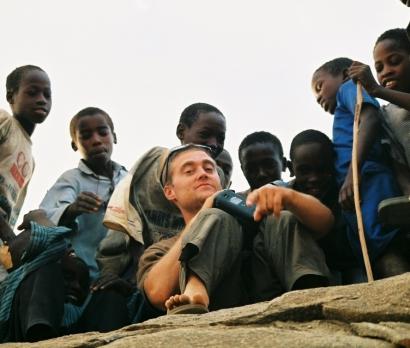
By Ty Burr, Globe Staff | August 17, 2007
"The Devil Came on Horseback" is a documentary about the human-rights crisis in Darfur. It's also about our response to the human-rights crisis in Darfur -- not just the West as a whole, but you and me and the guy down the hall. You don't want to think about another faraway ethnic cleansing? Fine; here are pictures. You still don't want to think about it? All right -- why?
If that sounds like a self-righteous guilt trip, the movie's anything but. Rather, filmmakers Annie Sundberg and Ricki Stern have built an engrossing, thought-provoking moral position paper on the back of one Brian Steidle, an ex-Marine who found himself working as a cease-fire monitor in Sudan in early 2004.
Steidle got the job via the Internet and quickly realized how deeply he was in over his head. The cease-fire between the Muslim government forces in the north of the country and the black animist revolutionaries in the south held everywhere but in the primarily Muslim western province of Darfur, where government-backed militias known as "janjaweed" -- "the devil on a horse" -- massacred entire villages, man, woman, and child. Read more >>>>>>>>>>>>>>>>>>
Thursday, August 16, 2007
Darfur Needs Most Efficient, Trained Troops Immediately
The nationalities of troops should not impede the urgent establishment of the most effective peacekeeping force possible for Darfur, Human Rights Watch said today in letters to the chairman of the African Union Commission and to the United Nations under-secretary-general for peacekeeping operations.
The new African Union-United Nations hybrid peacekeeping force must have military and civilian components, including police, that are experienced, well-trained and well-equipped if it is to deliver on its promise to protect civilians in Darfur.
Human Rights Watch welcomed the announcement from the African Union that African countries have pledged troops for the force, but warned that the difficulties the African Union Mission in Sudan (AMIS) has faced indicate that it may not be possible to source from Africa the full range of skills, expertise and experience required for either the military or the civilian contingent, and particularly for the police. Read more >>>>>>>>>>>>>>>>
The new African Union-United Nations hybrid peacekeeping force must have military and civilian components, including police, that are experienced, well-trained and well-equipped if it is to deliver on its promise to protect civilians in Darfur.
Human Rights Watch welcomed the announcement from the African Union that African countries have pledged troops for the force, but warned that the difficulties the African Union Mission in Sudan (AMIS) has faced indicate that it may not be possible to source from Africa the full range of skills, expertise and experience required for either the military or the civilian contingent, and particularly for the police. Read more >>>>>>>>>>>>>>>>
Wednesday, August 15, 2007
China a key to Darfur peace-activists
KIGALI, Aug 15 (Reuters) - China must stop supplying weapons to Sudan and curb ties with the country to help halt killings in the war-torn region of Darfur, activists said on Wednesday.
Olympic Dream for Darfur, a U.S.-based advocacy campaign, appealed to the Chinese government as hosts of the Olympics next year to use its influence in Sudan to boost security.
"Genocide can only stop if there's willingness (in the) international community to stop it, and for Darfur that power lies in China," said Jill Savitt, director of the Olympic Dream for Darfur.
The activists accused China of continuing to carry out oil deals with Sudan and supplying weapons to the Khartoum government, which end up in the hands of Darfur militias.
China, the biggest foreign investor in Sudan, has said its arms sales to the country are limited and abide strictly by international rules. Read more >>>>
Olympic Dream for Darfur, a U.S.-based advocacy campaign, appealed to the Chinese government as hosts of the Olympics next year to use its influence in Sudan to boost security.
"Genocide can only stop if there's willingness (in the) international community to stop it, and for Darfur that power lies in China," said Jill Savitt, director of the Olympic Dream for Darfur.
The activists accused China of continuing to carry out oil deals with Sudan and supplying weapons to the Khartoum government, which end up in the hands of Darfur militias.
China, the biggest foreign investor in Sudan, has said its arms sales to the country are limited and abide strictly by international rules. Read more >>>>
Tuesday, August 14, 2007
International court works to bring Darfur rapists to trial
When Amnesty International observers visited Darfur in 2004, they were appalled by the sheer number of rape victims they encountered.
Many were gang raped in front of their families as the conquering Janjaweed militia burned down their homes.
Hundreds of rape cases, including against girls as young as 7 or 9, were documented by human rights workers at the height of the ethnic cleansing in Darfur in 2004.
There are those who would argue that to allow the victims of such organised mass rape to give birth is arguably tantamount to complicity in genocide. Because the most horrible conclusion of rape as a weapon of war is that it can change the ethnic makeup of a country. In the case of Darfur, it could mean the steady Arabisation of the next generation.
In 2005, about 100 countries took a landmark decision by agreeing that rape should be included among the crimes against humanity that could be prosecuted by the International Criminal Court as they established the tribunal. Read more >>>>>>>>>>>
Many were gang raped in front of their families as the conquering Janjaweed militia burned down their homes.
Hundreds of rape cases, including against girls as young as 7 or 9, were documented by human rights workers at the height of the ethnic cleansing in Darfur in 2004.
There are those who would argue that to allow the victims of such organised mass rape to give birth is arguably tantamount to complicity in genocide. Because the most horrible conclusion of rape as a weapon of war is that it can change the ethnic makeup of a country. In the case of Darfur, it could mean the steady Arabisation of the next generation.
In 2005, about 100 countries took a landmark decision by agreeing that rape should be included among the crimes against humanity that could be prosecuted by the International Criminal Court as they established the tribunal. Read more >>>>>>>>>>>
Sunday, August 12, 2007
'The devil came on horseback'
"I was blown away by what I saw [in Darfur], because nobody kenw about it. Not even us, in the same country 300km away."
-- Brian Steidle, campaigner
Three years ago, fresh out of serving with the US marines in Kosovo and elsewhere, Steidle saw a job opening for a US monitor attached to the African Union peacekeeping mission in the Sudan. "I had no idea," he says. "I was looking for some adventure. My goal was to make money, to have a good time making it and to retire early."
Without knowing it, he was heading into a genocide in the making and towards becoming an unlikely, but highly effective, campaigner. The result is that alongside the big players such as Washington and Beijing, whose political calculations lie behind the new Security Council agreement to send an international force to Sudan's conflict zone, it is a small player in the person of Steidle - with his everyman demeanor and eyewitness evidence - who crucially set the stage by helping to make Sudan's government-sponsored slaughter a cause du jour in the US. Read more >>>>>>>>>>>
-- Brian Steidle, campaigner
Three years ago, fresh out of serving with the US marines in Kosovo and elsewhere, Steidle saw a job opening for a US monitor attached to the African Union peacekeeping mission in the Sudan. "I had no idea," he says. "I was looking for some adventure. My goal was to make money, to have a good time making it and to retire early."
Without knowing it, he was heading into a genocide in the making and towards becoming an unlikely, but highly effective, campaigner. The result is that alongside the big players such as Washington and Beijing, whose political calculations lie behind the new Security Council agreement to send an international force to Sudan's conflict zone, it is a small player in the person of Steidle - with his everyman demeanor and eyewitness evidence - who crucially set the stage by helping to make Sudan's government-sponsored slaughter a cause du jour in the US. Read more >>>>>>>>>>>
War crimes suspect has free rein in Sudan
BY MAGGIE FARLEY,
EL FASHER, Sudan - For a man accused of masterminding massacres, Ahmad Harun seems quite comfortable in the place he allegedly helped destroy.
He strolls around the grassy compound belonging to the local governor in Sudan's deeply troubled Darfur region, embracing tribal leaders, soldiers and officials who have come to hear the president.
Harun, a tall 42-year-old with high cheekbones and almond-shaped eyes, was in charge of the region's security during the height of the violent attacks on farm villages that caused millions to flee their homes in 2003 and 2004. He allegedly recruited, funded and armed local militias to root out rebels who had attacked the Sudanese army, sweeping away their home villages, families and the intricate fabric of Darfur's identity along the way. Read more >>>>>>>>>>>>
EL FASHER, Sudan - For a man accused of masterminding massacres, Ahmad Harun seems quite comfortable in the place he allegedly helped destroy.
He strolls around the grassy compound belonging to the local governor in Sudan's deeply troubled Darfur region, embracing tribal leaders, soldiers and officials who have come to hear the president.
Harun, a tall 42-year-old with high cheekbones and almond-shaped eyes, was in charge of the region's security during the height of the violent attacks on farm villages that caused millions to flee their homes in 2003 and 2004. He allegedly recruited, funded and armed local militias to root out rebels who had attacked the Sudanese army, sweeping away their home villages, families and the intricate fabric of Darfur's identity along the way. Read more >>>>>>>>>>>>
Saturday, August 11, 2007
Childrens’ drawings ‘evidence’ of Darfur war crimes

500 drawings by children who escaped the violence in Darfur could threaten to prosecute the Sudanese government troops for war crimes.
The collection of images will be submitted to the International Criminal Court (ICC), which has started proceedings against a Sudanese government minister and a militia commander accused of committing war crimes in Darfur.
The testimony of the children, some as young as eight, emerged by chance when a peace campaigner Anna Schmidt, a researcher for Waging Peace, handed the children paper, pencils and crayons to keep them occupied while she interviewed their mothers, who are among 250,000 to have fled to the relative safety in neighbouring Chad.
Most of the children, who escaped by fleeing across the border to Chad, could not read or write and instead drew their experiences.
The government of Sudan has repeatedly denied launching military attacks in Darfur.
But the drawings apparently depict Sudanese tanks, planes and helicopters in action launching attacks on civilians who are depicted defending themselves with bows and arrows. Read more >>>>>>>>>>>>>>>>>>>>
Wednesday, August 08, 2007
Violence continues to drive Darfur farmers into crowded camps
By Paul Jeffrey
Catholic News Service
ZALINGEI, Sudan (CNS) -- For years, Fatma Omar resisted leaving her farm near the village of Omra, despite repeated raids by Arab militias. At times she and her family would flee to hide in the desert for several days until it was safe to return home.
Then in mid-July the attackers came again, this time, she said, killing her husband, raping her and burning their thatched home.
With her four children, the eldest 13 years old, she walked for 15 days through the countryside of Darfur, Sudan's westernmost province, reaching the Hassa Hissa camp in Zalingei July 27. As she waited for U.N. camp managers to provide her a card for food rations, she borrowed a tarp and stretched it across the weathered walls of an abandoned hut. Then she sat down in the dust in front of her new home and stared across the landscape in the direction of her old life.
"Now I've got nothing," she said, her hand aimlessly drawing circles in the sand. Read more >>>>>>>
Catholic News Service
ZALINGEI, Sudan (CNS) -- For years, Fatma Omar resisted leaving her farm near the village of Omra, despite repeated raids by Arab militias. At times she and her family would flee to hide in the desert for several days until it was safe to return home.
Then in mid-July the attackers came again, this time, she said, killing her husband, raping her and burning their thatched home.
With her four children, the eldest 13 years old, she walked for 15 days through the countryside of Darfur, Sudan's westernmost province, reaching the Hassa Hissa camp in Zalingei July 27. As she waited for U.N. camp managers to provide her a card for food rations, she borrowed a tarp and stretched it across the weathered walls of an abandoned hut. Then she sat down in the dust in front of her new home and stared across the landscape in the direction of her old life.
"Now I've got nothing," she said, her hand aimlessly drawing circles in the sand. Read more >>>>>>>
When dealing with Darfur atrocities, money talks
By Rep. Steny Hoyer
After the genocide in Rwanda, many of us swore that never again would we stand by idly and permit genocide to take place on our watch. Sunday, July 22, marked the third anniversary of Congress' vote, under the leadership of Rep. Don Payne, D-N.J., to declare that the atrocities taking place in Darfur, Sudan, constituted genocide.
Nearly 450,000 people have died, and more than 2.5 million have been displaced, yet the Omar al-Bashir government continues to stall the implementation of a joint African Union-United Nations peacekeeping force. During our trip to Darfur in April, we saw firsthand that the situation on the ground continues to deteriorate.
If we are to make good on our commitment not to stand by in the face of atrocities, we have a moral obligation to use every tool at our disposal, and that means using both diplomacy and divestment.
The Bush administration has been firm in its dealings with Sudanese President Omar al-Bashir, and Congress has taken important steps to strengthen the administration's diplomatic hand. In April, the House passed a resolution 425-1 calling on the League of Arab States to recognize the genocide taking place in Darfur and take active steps to bring it to an end.
In June, the House voted 410-0 for a resolution calling on China, Sudan's largest trading partner, "to use its unique influence and economic leverage" to help stop the genocide in Darfur. Read more >>>>>>>>>>>>
After the genocide in Rwanda, many of us swore that never again would we stand by idly and permit genocide to take place on our watch. Sunday, July 22, marked the third anniversary of Congress' vote, under the leadership of Rep. Don Payne, D-N.J., to declare that the atrocities taking place in Darfur, Sudan, constituted genocide.
Nearly 450,000 people have died, and more than 2.5 million have been displaced, yet the Omar al-Bashir government continues to stall the implementation of a joint African Union-United Nations peacekeeping force. During our trip to Darfur in April, we saw firsthand that the situation on the ground continues to deteriorate.
If we are to make good on our commitment not to stand by in the face of atrocities, we have a moral obligation to use every tool at our disposal, and that means using both diplomacy and divestment.
The Bush administration has been firm in its dealings with Sudanese President Omar al-Bashir, and Congress has taken important steps to strengthen the administration's diplomatic hand. In April, the House passed a resolution 425-1 calling on the League of Arab States to recognize the genocide taking place in Darfur and take active steps to bring it to an end.
In June, the House voted 410-0 for a resolution calling on China, Sudan's largest trading partner, "to use its unique influence and economic leverage" to help stop the genocide in Darfur. Read more >>>>>>>>>>>>
Tuesday, August 07, 2007
Darfur war crimes suspect has free rein
Ahmad Harun, accused of recruiting militias who ravaged villages, is the minister of state for humanitarian affairs.
EL FASHER, SUDAN — For a man accused of masterminding massacres, Ahmad Harun seems quite comfortable in the place he allegedly helped destroy.
He strolls around the grassy compound belonging to the local governor in Sudan's deeply troubled Darfur region, embracing Arab tribal leaders, soldiers and officials who have come to hear the president.
Harun, a tall 42-year-old with high cheekbones and almond-shaped eyes, was in charge of the region's security during the height of the violent attacks on farm villages that caused millions to flee their homes in 2003 and 2004. He allegedly recruited, funded and armed local militias to root out rebels who had attacked the Sudanese army, sweeping away their villages, families and the intricate fabric of Darfur's identity along the way. Read more >>>>>>>>>>>>>>>>>
EL FASHER, SUDAN — For a man accused of masterminding massacres, Ahmad Harun seems quite comfortable in the place he allegedly helped destroy.
He strolls around the grassy compound belonging to the local governor in Sudan's deeply troubled Darfur region, embracing Arab tribal leaders, soldiers and officials who have come to hear the president.
Harun, a tall 42-year-old with high cheekbones and almond-shaped eyes, was in charge of the region's security during the height of the violent attacks on farm villages that caused millions to flee their homes in 2003 and 2004. He allegedly recruited, funded and armed local militias to root out rebels who had attacked the Sudanese army, sweeping away their villages, families and the intricate fabric of Darfur's identity along the way. Read more >>>>>>>>>>>>>>>>>
Monday, August 06, 2007
Pronk: Darfur-missie zinloos
Jan Pronk, oud-VN-gezant in Soedan, oordeelt hard over de nieuwste resolutie voor Darfur. „Het gaat heel lang duren eer die missie compleet is.”
Een paar jaar probeerde oud-minster Jan Pronk als speciaal gezant van de Verenigde Naties in Soedan het tij te keren. Vergeefs: in het zuiden staat de wederopbouw nog in de kinderschoenen, in westelijk Darfur duurt de crisis onverminderd voort.
Pronk wijt de crisis in Darfur aan de orthodox-islamitische regering in Khartoem. „Die heeft geen enkele resolutie van de VN-Veiligheidsraad uitgevoerd. Alles, álles hebben zij aan hun laars gelapt.” Anderzijds is hij bijzonder teleurgesteld over de Veiligheidsraad: „Die maakt zichzelf steeds zwakker. Je moet een land niet binnenvallen, maar er kan zoveel meer. Denk aan sancties.” Read more >>>>>>
Een paar jaar probeerde oud-minster Jan Pronk als speciaal gezant van de Verenigde Naties in Soedan het tij te keren. Vergeefs: in het zuiden staat de wederopbouw nog in de kinderschoenen, in westelijk Darfur duurt de crisis onverminderd voort.
Pronk wijt de crisis in Darfur aan de orthodox-islamitische regering in Khartoem. „Die heeft geen enkele resolutie van de VN-Veiligheidsraad uitgevoerd. Alles, álles hebben zij aan hun laars gelapt.” Anderzijds is hij bijzonder teleurgesteld over de Veiligheidsraad: „Die maakt zichzelf steeds zwakker. Je moet een land niet binnenvallen, maar er kan zoveel meer. Denk aan sancties.” Read more >>>>>>
Darfur rebel factions reach common position for peace talks with Sudan
ARUSHA, Tanzania: Darfur rebel factions reached a common negotiating position for peace talks with the Sudanese government, which they want to hold within three months, United Nations and African Union officials said Monday.
The rebel factions met at a resort in Arusha in northern Tanzania to try to bury past differences over the leadership and direction of Darfur, the vast western region of Sudan.
Jan Eliasson of Sweden, the UN envoy to Darfur, said the groups had reached "a common platform" for negotiations, encompassing power and wealth sharing, security, land and humanitarian issues.
"We have an impressive show of unity and purpose to get ready with final negotiations in the very near future," Eliasson said at the closing session of the four-day meeting. Read more >>>>>>>>>>>>>>>>>>>>>>
The rebel factions met at a resort in Arusha in northern Tanzania to try to bury past differences over the leadership and direction of Darfur, the vast western region of Sudan.
Jan Eliasson of Sweden, the UN envoy to Darfur, said the groups had reached "a common platform" for negotiations, encompassing power and wealth sharing, security, land and humanitarian issues.
"We have an impressive show of unity and purpose to get ready with final negotiations in the very near future," Eliasson said at the closing session of the four-day meeting. Read more >>>>>>>>>>>>>>>>>>>>>>
Saturday, August 04, 2007
Darfur rebel factions begin unity talks in Arusha
Darfur rebel factions begin unity talks in Arusha
Sat 4 Aug 2007, 7:22 GMT
[-] Text [+] By C. Bryson Hull
ARUSHA, Tanzania (Reuters) - Darfur rebel factions began African Union-United Nations sponsored negotiations on Friday aimed at resolving their differences ahead of peace talks with the Sudanese government.
The talks to end the four-year conflict in western Sudan have taken on a new importance since the U.N. Security Council on Tuesday approved the deployment of 26,000 peacekeeping troops and police to stem the bloodshed in Darfur.
Darfur rebels split into about a dozen groups are meeting to work out a single negotiating position for peace talks with the government, and a date and venue for the negotiations.
Members of the Justice and Equality Movement (JEM) arrived in the Tanzanian resort town of Arusha on Friday, as did some negotiators with factions of the Sudan Liberation Army (SLA). Read more >>>>
Sat 4 Aug 2007, 7:22 GMT
[-] Text [+] By C. Bryson Hull
ARUSHA, Tanzania (Reuters) - Darfur rebel factions began African Union-United Nations sponsored negotiations on Friday aimed at resolving their differences ahead of peace talks with the Sudanese government.
The talks to end the four-year conflict in western Sudan have taken on a new importance since the U.N. Security Council on Tuesday approved the deployment of 26,000 peacekeeping troops and police to stem the bloodshed in Darfur.
Darfur rebels split into about a dozen groups are meeting to work out a single negotiating position for peace talks with the government, and a date and venue for the negotiations.
Members of the Justice and Equality Movement (JEM) arrived in the Tanzanian resort town of Arusha on Friday, as did some negotiators with factions of the Sudan Liberation Army (SLA). Read more >>>>
Thursday, August 02, 2007
Darfur: The evidence of war crimes

500 drawings by children who escaped the violence are to be submitted to the International Criminal Court as proof of war crimes by Sudanese forces
By Andrew Grice, Political Editor
Published: 02 August 2007
The drawing is one of 500 to be submitted to the International Criminal Court Dramatic new evidence of the attacks on the people of Darfur by Sudanese government troops has emerged in 500 drawings by children who escaped the violence by fleeing across the border to Chad.
In a ground-breaking move, the remarkable collection of images will now be submitted to the International Criminal Court (ICC), which has started proceedings against a Sudanese government minister and a militia commander accused of committing war crimes in Darfur.
The testimony of the children, some as young as eight, emerged by chance when a peace campaigner handed the children paper, pencils and crayons to keep them occupied while she interviewed their mothers. Read more >>>>>>>>>>>>>>>
Wednesday, August 01, 2007
U.N. approves Darfur peacekeepers
The U.N. Security Council approved the deployment of peacekeepers to quell the violence in the Darfur region of Sudan.
In a resolution adopted Tuesday, the council approved the deployment of 26,000 military and police personnel in what will be the largest peacekeeping operation in the world. The resolution included reference to Chapter VII of the U.N. Charter, which permits the council to authorize the use of force to achieve its mandate.
Secretary-General Ban Ki-moon called it a "historic and unprecedented resolution." Read more >>>>>>
In a resolution adopted Tuesday, the council approved the deployment of 26,000 military and police personnel in what will be the largest peacekeeping operation in the world. The resolution included reference to Chapter VII of the U.N. Charter, which permits the council to authorize the use of force to achieve its mandate.
Secretary-General Ban Ki-moon called it a "historic and unprecedented resolution." Read more >>>>>>
UN Security Council approves 26,000-strong peacekeeping force for Darfur
By: ANGELA DOLAND
PARIS (AP) - France, Denmark and Indonesia offered Wednesday to contribute to a joint United Nations-African Union peacekeeping force for Darfur, while Sudan praised the UN resolution, which was watered down to drop the threat of sanctions.
Acceptance of the new 26,000-strong force marked a major turnaround for Sudanese President Omar al-Bashir's government, which had resisted for months a push to send UN peacekeepers to the western Darfur region, where over 200,000 people have died and 2.5 million been chased from their homes in four years of fighting. Read more >>>>>
PARIS (AP) - France, Denmark and Indonesia offered Wednesday to contribute to a joint United Nations-African Union peacekeeping force for Darfur, while Sudan praised the UN resolution, which was watered down to drop the threat of sanctions.
Acceptance of the new 26,000-strong force marked a major turnaround for Sudanese President Omar al-Bashir's government, which had resisted for months a push to send UN peacekeepers to the western Darfur region, where over 200,000 people have died and 2.5 million been chased from their homes in four years of fighting. Read more >>>>>
Tuesday, July 31, 2007
Failing to protect the people of Darfur
Pope Benedict recently described the situation in Darfur as "a catastrophic, and sadly to say underestimated, humanitarian situation." But despite the high profile the atrocities of Sudan's most recent crisis have generated, the international community has thus far failed in its collective 'responsibility to protect' the people of Darfur, writes Justin Kilcullen.
Catalogue of human suffering
As Darfur enters its fifth year of conflict, the catalogue of human suffering endured by the people of that region continues to grow. Throughout the conflict, an estimated 200,000 have perished and over 2.5 million people have been forcibly displaced from their homes and land, into overpopulated and insecure camps.
Rape has been used to terrorise the population of Darfur, with countless numbers of women and girls subjected to repeated and vicious attacks by armed militia. These attacks take place with almost complete impunity. A recent report found that the Government of Sudan is more likely to take action against those who report and document rape than against those who commit it. Read more >>>>>
Catalogue of human suffering
As Darfur enters its fifth year of conflict, the catalogue of human suffering endured by the people of that region continues to grow. Throughout the conflict, an estimated 200,000 have perished and over 2.5 million people have been forcibly displaced from their homes and land, into overpopulated and insecure camps.
Rape has been used to terrorise the population of Darfur, with countless numbers of women and girls subjected to repeated and vicious attacks by armed militia. These attacks take place with almost complete impunity. A recent report found that the Government of Sudan is more likely to take action against those who report and document rape than against those who commit it. Read more >>>>>
Monday, July 30, 2007
Sudan: France Calls for Speedy Deployment of Darfur Force
Dagnachew Teklu
Addis Ababa
France called on Thursday for the speedy deployment of the 19,000 strong AU-UN joint forces in the troubled region-Darfur.
The call was made here by visiting French Foreign Affairs Minister Bernard Kouchner who arrived in Addis Ababa on Thursday to confer on the matter and other issues with African Union (AU) Commission Chairperson Alpha Oumar Konare.
"We have to speed up the process to deploy the agreed peacekeeping force to Darfur.The process is not going enough as it should be," Kouchner told a press conference at the French Embassy in Addis Ababa.
The AU and the UN last month agreed to deploy around 19,000 peacekeeping forces to Darfur, replacing the current 7,000 AU mission there.
France pushed hard for the UN Security Council to quickly authorize thousands of troops and police for Darfur and told Khartoum to act fast on the crisis or face more sanctions. Read more >>>>>>>>>>
Addis Ababa
France called on Thursday for the speedy deployment of the 19,000 strong AU-UN joint forces in the troubled region-Darfur.
The call was made here by visiting French Foreign Affairs Minister Bernard Kouchner who arrived in Addis Ababa on Thursday to confer on the matter and other issues with African Union (AU) Commission Chairperson Alpha Oumar Konare.
"We have to speed up the process to deploy the agreed peacekeeping force to Darfur.The process is not going enough as it should be," Kouchner told a press conference at the French Embassy in Addis Ababa.
The AU and the UN last month agreed to deploy around 19,000 peacekeeping forces to Darfur, replacing the current 7,000 AU mission there.
France pushed hard for the UN Security Council to quickly authorize thousands of troops and police for Darfur and told Khartoum to act fast on the crisis or face more sanctions. Read more >>>>>>>>>>
Sudan: Close Links Cast Shadow On Olympics
By:Antoaneta Bezlova
Elaborate celebrations are being planned for the Aug. 8 one-year countdown to the Beijing Olympics, but Chinese leaders fear both the party and the games could be spoiled by an escalating international campaign to link the violence in Sudan's Darfur region to the 2008 Beijing Olympics.
China is fiercely proud of its Olympics, seen by many here as the country's coming-out party to the world. Its brightest talent has been pooled to work on the preparations, ensuring they showcase the rise and prowess of a nation both ancient and young.
But recent months have seen mounting international criticism of China's supportive stance toward Sudan, resulting in publicity campaigns to discredit and even boycott the games. Detractors charge that Beijing's dealings with the oil-rich state have shielded Sudan's leaders, who are accused of funding Arab militias to attack and terrorise the non-Arab population in Darfur.
Experts estimate that more than 250,000 people have died and 2.5 million displaced since violence between the non-Arab ethnic groups and the Janjaweed militia broke in 2003. U.S. actor Mia Farrow and other U.S. entertainment figures have pointed fingers at China as Sudan's largest foreign investor and energy partner for refusing to censure the violence and have said the 2008 games could become known as the "Genocide Olympics". Read more >>>>>>>>>>
Elaborate celebrations are being planned for the Aug. 8 one-year countdown to the Beijing Olympics, but Chinese leaders fear both the party and the games could be spoiled by an escalating international campaign to link the violence in Sudan's Darfur region to the 2008 Beijing Olympics.
China is fiercely proud of its Olympics, seen by many here as the country's coming-out party to the world. Its brightest talent has been pooled to work on the preparations, ensuring they showcase the rise and prowess of a nation both ancient and young.
But recent months have seen mounting international criticism of China's supportive stance toward Sudan, resulting in publicity campaigns to discredit and even boycott the games. Detractors charge that Beijing's dealings with the oil-rich state have shielded Sudan's leaders, who are accused of funding Arab militias to attack and terrorise the non-Arab population in Darfur.
Experts estimate that more than 250,000 people have died and 2.5 million displaced since violence between the non-Arab ethnic groups and the Janjaweed militia broke in 2003. U.S. actor Mia Farrow and other U.S. entertainment figures have pointed fingers at China as Sudan's largest foreign investor and energy partner for refusing to censure the violence and have said the 2008 games could become known as the "Genocide Olympics". Read more >>>>>>>>>>
Sunday, July 29, 2007
US Ambassador Expects UN Darfur Resolution This Week
By Stephanie Ho
Washington's envoy to the United Nations, Zalmay Khalilzad, says he expects the world body to agree this week on a resolution to send a combined U.N.-African Union force to the war-torn Sudanese region of Darfur. VOA's Stephanie Ho has more on the story.
Zalmay Khalilzad (file photo)
U.S. Ambassador to the United Nations, Zalmay Khalilzad, says the crisis in Darfur, a large province in western Sudan, is a high priority for the Bush administration. "One of the highest. And I went to Sudan myself, with the members of the Security Council to demonstrate how important this was for us," he said.
For four years, pro-government Arab janjaweed militias have been battling ethnic African rebels in Darfur. The janjaweed are accused of terrorizing villagers and committing atrocities including murder and rape. More than 200-thousand people have died in the conflict. More than two million others have been driven from their homes.
The Security Council has been working on a draft resolution to authorize an international peacekeeping force for Darfur that would bolster seven thousand African Union monitors who are already there but have been unable to stem the violence. The U.N. and the African Union would supply a total of 26-thousand troops, a plan the government of Sudan has said it will accept. Read more >>>>>>>>>>>>>
Washington's envoy to the United Nations, Zalmay Khalilzad, says he expects the world body to agree this week on a resolution to send a combined U.N.-African Union force to the war-torn Sudanese region of Darfur. VOA's Stephanie Ho has more on the story.
Zalmay Khalilzad (file photo)
U.S. Ambassador to the United Nations, Zalmay Khalilzad, says the crisis in Darfur, a large province in western Sudan, is a high priority for the Bush administration. "One of the highest. And I went to Sudan myself, with the members of the Security Council to demonstrate how important this was for us," he said.
For four years, pro-government Arab janjaweed militias have been battling ethnic African rebels in Darfur. The janjaweed are accused of terrorizing villagers and committing atrocities including murder and rape. More than 200-thousand people have died in the conflict. More than two million others have been driven from their homes.
The Security Council has been working on a draft resolution to authorize an international peacekeeping force for Darfur that would bolster seven thousand African Union monitors who are already there but have been unable to stem the violence. The U.N. and the African Union would supply a total of 26-thousand troops, a plan the government of Sudan has said it will accept. Read more >>>>>>>>>>>>>
The Darfur Resolution Currently Before the UN Security Council
A chronology of international responses to the Darfur genocide over the past year provides a deeply dispiriting time-line, and suggests how unlikely it is that security for civilians and humanitarians will improve any time soon. Despite current debate in the UN Security Council over a resolution that would authorize, under Chapter 7 of the UN Charter, deployment of the so-called UN/African Union “hybrid force,” there are few reasons to believe that Khartoum will actually allow this force to deploy in effective form, or in any remotely appropriate time-frame. The backdrop for current debate continues to be massive human suffering, destruction, displacement, and insecurity on the ground in Darfur (an overview the most recent reports appears below). Despite upticks in international sound and fury, there is too much evidence that they signify nothing.
The critical voice at this juncture, dismayingly, belongs to China---a veto-wielding member of the Security Council, and longtime enabling partner of the Khartoum regime. Last August, in a highly significant and revealing moment, Beijing ordered its UN ambassador to abstain on the crucial vote for UN Security Council Resolution 1706; and even this abstention (as opposed to a veto) was secured from China only by including language in the Resolution that “invited the consent” of Khartoum’s génocidaires for the UN-authorized force. The “invitation” was resolutely refused and no movement was made toward deploying the 22,500 civilian police and troops authorized by Security Council Resolution 1706 under Chapter 7 of the UN Charter, which confers enforcement authority. The mandate of the force was to have been civilian protection, protection of humanitarian personnel and operations, and to staunch the flow of genocidal violence from Darfur into eastern Chad and Central African Republic, countries now experiencing a tremendous increase in ethnic violence and displacement. Read more >>>>>>>>>>>>
The critical voice at this juncture, dismayingly, belongs to China---a veto-wielding member of the Security Council, and longtime enabling partner of the Khartoum regime. Last August, in a highly significant and revealing moment, Beijing ordered its UN ambassador to abstain on the crucial vote for UN Security Council Resolution 1706; and even this abstention (as opposed to a veto) was secured from China only by including language in the Resolution that “invited the consent” of Khartoum’s génocidaires for the UN-authorized force. The “invitation” was resolutely refused and no movement was made toward deploying the 22,500 civilian police and troops authorized by Security Council Resolution 1706 under Chapter 7 of the UN Charter, which confers enforcement authority. The mandate of the force was to have been civilian protection, protection of humanitarian personnel and operations, and to staunch the flow of genocidal violence from Darfur into eastern Chad and Central African Republic, countries now experiencing a tremendous increase in ethnic violence and displacement. Read more >>>>>>>>>>>>
Hollywood Heavyweight Steven Spielberg May Quit Olympics
By Sonya Bryskine
The guru of Hollywood directors, Steven Spielberg, may terminate his position of artistic advisor in the 2008 Olympics Games over Beijing's continuing financing of the Darfur genocide.
A spokesman for Spielberg says the director intended to continue applying pressure on the Chinese regime to change its policies, and is ruling nothing out—including withdrawal from his unpaid position as artistic adviser.
"Steven will make a determination in the next few weeks regarding his work with the Chinese. Our main interest is ending the genocide. No one is clear on the best way to do this," Mr Spielberg's spokesman Andy Spahn told abcnews.com in an article on its Web site. Read more >>>>>
The guru of Hollywood directors, Steven Spielberg, may terminate his position of artistic advisor in the 2008 Olympics Games over Beijing's continuing financing of the Darfur genocide.
A spokesman for Spielberg says the director intended to continue applying pressure on the Chinese regime to change its policies, and is ruling nothing out—including withdrawal from his unpaid position as artistic adviser.
"Steven will make a determination in the next few weeks regarding his work with the Chinese. Our main interest is ending the genocide. No one is clear on the best way to do this," Mr Spielberg's spokesman Andy Spahn told abcnews.com in an article on its Web site. Read more >>>>>
SPLM Secretary General accuses Khartoum of genocide in Darfur
(KHARTOUM) — A senior official with Sudan’s former southern rebels has accused Khartoum of genocide and ethnic cleansing in the troubled region of Darfur, local press reported on Saturday.
Pagan Amun of the Sudan People’s Liberation Movement, which joined a national unity government after a 2005 peace deal, was speaking on the second anniversary of the death of SPLM leader John Garang, who died in a helicopter crash in Uganda two years ago.
"The government has committed crimes of genocide, ethnic cleansing, forced displacement and armed tribes against each other in Darfur," Amun said in comments reported in several papers, including the Al-Sahafa independent daily.
His remarks come a day after the UN’s Human Rights Committee (HRC) officially condemned "ethnic cleansing" in Darfur and sharply rebuked Sudan’s government for failing to prosecute militias involved in the killings. Read more >>>>>>>
Pagan Amun of the Sudan People’s Liberation Movement, which joined a national unity government after a 2005 peace deal, was speaking on the second anniversary of the death of SPLM leader John Garang, who died in a helicopter crash in Uganda two years ago.
"The government has committed crimes of genocide, ethnic cleansing, forced displacement and armed tribes against each other in Darfur," Amun said in comments reported in several papers, including the Al-Sahafa independent daily.
His remarks come a day after the UN’s Human Rights Committee (HRC) officially condemned "ethnic cleansing" in Darfur and sharply rebuked Sudan’s government for failing to prosecute militias involved in the killings. Read more >>>>>>>
Saturday, July 28, 2007
Joint UK and France Statement on Darfur
FOREIGN AND COMMONWEALTH OFFICE News Release issued by The Government News
Network on 27 July 2007
The UK Foreign Secretary, David Miliband, and the French Minister of Foreign
and European Affairs, Bernard Kouchner, reconfirm their continued and full
support for the African Union and United Nations led political process
for Darfur.
"We join other members of the international community in calling on all
invited participants to attend the meeting in Arusha called by the AU and UN
Special Envoys on 3 -5 August. Non-attendance would signal an unwillingness
to resolve the suffering in Darfur and would impede the political process.
"Both our governments are working hard in New York to achieve rapid endorsement
of the AU-UN hybrid peacekeeping force to ensure its early deployment.
We appeal to the Government of Sudan and rebels to show their commitment
to the political process by ceasing all hostilities and committing to a
full ceasefire. We call on all parties to honour the commitments they made
in Tripoli. Read more >>>>>
Network on 27 July 2007
The UK Foreign Secretary, David Miliband, and the French Minister of Foreign
and European Affairs, Bernard Kouchner, reconfirm their continued and full
support for the African Union and United Nations led political process
for Darfur.
"We join other members of the international community in calling on all
invited participants to attend the meeting in Arusha called by the AU and UN
Special Envoys on 3 -5 August. Non-attendance would signal an unwillingness
to resolve the suffering in Darfur and would impede the political process.
"Both our governments are working hard in New York to achieve rapid endorsement
of the AU-UN hybrid peacekeeping force to ensure its early deployment.
We appeal to the Government of Sudan and rebels to show their commitment
to the political process by ceasing all hostilities and committing to a
full ceasefire. We call on all parties to honour the commitments they made
in Tripoli. Read more >>>>>
Arabs pile into Darfur to take land 'cleansed' by janjaweed
By Steve Bloomfield, Africa Correspondent
Arabs from Chad and Niger are crossing into Darfur in "unprecedented" numbers, prompting claims that the Sudanese government is trying systematically to repopulate the war- ravaged region.
An internal UN report, obtained by The Independent, shows that up to 30,000 Arabs have crossed the border in the past two months. Most arrived with all their belongings and large flocks. They were greeted by Sudanese Arabs who took them to empty villages cleared by government and janjaweed forces.
One UN official said the process "appeared to have been well planned". The official continued: "This movement is very large. We have not seen such numbers come into west Darfur before."
The UN refugee agency, UNHCR, sent a team to the border with Chad at the end of May to interview the new arrivals. Fighting in eastern Chad has been steadily increasing and it was thought that many could be refugees. But only a very small number have required support from UNHCR.
"Most have been relocated by Sudanese Arabs to former villages of IDPs (internally displaced people) and more or less invited to stay there," said the UN official.
The arrivals have been issued with official Sudanese identity cards and awarded citizenship, and analysts say that by encouraging Arabs from Chad, Niger and other parts of Sudan to move to Darfur the Sudanese government is making it "virtually impossible" for displaced people to return home.
James Smith, chief executive of the Aegis Trust, said the revelations proved that the Sudanese government was "cynically trying to change the demographics of the whole region", adding: "If the ethnic cleansing has been consolidated because the land has been repopulated it will become irreversible. The peace process will fall to pieces."
Repopulation has also been happening in south Darfur where Arabs from elsewhere in Sudan have been allowed to move into villages that were once home to local tribes. Aid agency workers said the Arabs were presented as "returning IDPs".
Before the conflict started in 2003, Darfur was home to seven million people, mainly from three African tribes, Fur, Marsalit and Zargahwa. Darfur literally translates as "Land of the Fur". But some 2.5 million have now been forced to flee their homes after attacks by Sudanese troops and planes, and Arab militia on horseback known as janjaweed.
Most are now in camps around Darfur's main towns, relying on handouts from international aid agencies. About 250,000 have become refugees in Chad. A further 1.5 million have been affected by the conflict, meaning at least four million people are now reliant on the 80 or so international aid agencies in the region. More than 200,000 people are believed to have been killed so far during the four-and-a-half-year conflict.
And if Khartoum is moving Arabs from abroad to replace them, diplomats fear that Darfur rebels may try to remove them forcibly. "It could be quite explosive," said one western diplomat. "It is a very serious situation." Read more >>>>
Arabs from Chad and Niger are crossing into Darfur in "unprecedented" numbers, prompting claims that the Sudanese government is trying systematically to repopulate the war- ravaged region.
An internal UN report, obtained by The Independent, shows that up to 30,000 Arabs have crossed the border in the past two months. Most arrived with all their belongings and large flocks. They were greeted by Sudanese Arabs who took them to empty villages cleared by government and janjaweed forces.
One UN official said the process "appeared to have been well planned". The official continued: "This movement is very large. We have not seen such numbers come into west Darfur before."
The UN refugee agency, UNHCR, sent a team to the border with Chad at the end of May to interview the new arrivals. Fighting in eastern Chad has been steadily increasing and it was thought that many could be refugees. But only a very small number have required support from UNHCR.
"Most have been relocated by Sudanese Arabs to former villages of IDPs (internally displaced people) and more or less invited to stay there," said the UN official.
The arrivals have been issued with official Sudanese identity cards and awarded citizenship, and analysts say that by encouraging Arabs from Chad, Niger and other parts of Sudan to move to Darfur the Sudanese government is making it "virtually impossible" for displaced people to return home.
James Smith, chief executive of the Aegis Trust, said the revelations proved that the Sudanese government was "cynically trying to change the demographics of the whole region", adding: "If the ethnic cleansing has been consolidated because the land has been repopulated it will become irreversible. The peace process will fall to pieces."
Repopulation has also been happening in south Darfur where Arabs from elsewhere in Sudan have been allowed to move into villages that were once home to local tribes. Aid agency workers said the Arabs were presented as "returning IDPs".
Before the conflict started in 2003, Darfur was home to seven million people, mainly from three African tribes, Fur, Marsalit and Zargahwa. Darfur literally translates as "Land of the Fur". But some 2.5 million have now been forced to flee their homes after attacks by Sudanese troops and planes, and Arab militia on horseback known as janjaweed.
Most are now in camps around Darfur's main towns, relying on handouts from international aid agencies. About 250,000 have become refugees in Chad. A further 1.5 million have been affected by the conflict, meaning at least four million people are now reliant on the 80 or so international aid agencies in the region. More than 200,000 people are believed to have been killed so far during the four-and-a-half-year conflict.
And if Khartoum is moving Arabs from abroad to replace them, diplomats fear that Darfur rebels may try to remove them forcibly. "It could be quite explosive," said one western diplomat. "It is a very serious situation." Read more >>>>
Tuesday, July 10, 2007
Violence overwhelms relief workers in Darfur
By Evelyn Leopold
UNITED NATIONS, July 10 (Reuters) - Violence has escalated in Sudan's Darfur region since January, throwing another 160,000 people out of their homes and forcing 4.2 million people, about two-thirds of the population, to go on relief aid, the United Nations reported on Tuesday.
Some 2.1 million people have been uprooted from their villages in addition to the more than 200,000 who have fled the country, mainly to neighboring Chad, the U.N. Office for the Coordination of Humanitarian Affairs, known as OCHA, said.
Particularly worrying are attacks against relief workers, which have increased 150 percent over the past year, OCHA said.
In June, one out of every six convoys leaving provincial capitals in Darfur was hijacked or ambushed by "armed groups," a term usually applied to bandits or anti-government rebels. Since January, some 64 vehicles have been hijacked, with 132 staff temporarily detained, often at gunpoint.
"This kind of lawlessness by armed groups of different political affiliations has forced relief organizations to suspend programming and relocate out of dangerous environments on 15 occasions, temporarily depriving over 1 million beneficiaries of life-saving assistance," OCHA said. Read more >>>>
UNITED NATIONS, July 10 (Reuters) - Violence has escalated in Sudan's Darfur region since January, throwing another 160,000 people out of their homes and forcing 4.2 million people, about two-thirds of the population, to go on relief aid, the United Nations reported on Tuesday.
Some 2.1 million people have been uprooted from their villages in addition to the more than 200,000 who have fled the country, mainly to neighboring Chad, the U.N. Office for the Coordination of Humanitarian Affairs, known as OCHA, said.
Particularly worrying are attacks against relief workers, which have increased 150 percent over the past year, OCHA said.
In June, one out of every six convoys leaving provincial capitals in Darfur was hijacked or ambushed by "armed groups," a term usually applied to bandits or anti-government rebels. Since January, some 64 vehicles have been hijacked, with 132 staff temporarily detained, often at gunpoint.
"This kind of lawlessness by armed groups of different political affiliations has forced relief organizations to suspend programming and relocate out of dangerous environments on 15 occasions, temporarily depriving over 1 million beneficiaries of life-saving assistance," OCHA said. Read more >>>>
War drives more people in Darfur out of homes
New York - The continued ethnic fighting in Sudan's Darfur region has thrust more than 160,000 people out of their homes and villages so far this year, swelling the rank of those internally displaced to more than 2.1 million, the United Nations said Tuesday.
The UN office for the coordination of humanitarian affairs in New York said a total of 4.2 million Darfurians or nearly two-thirds of the region's population now depend on relief assistance, including the displaced people.
'Every day, more people need our help, yet humanitarian colleagues are under increasing threat from all sides,' said John Holmes, head of the humanitarian office. 'Obviously, we will not give up - the needs are too great.' Read more >>>>>>
The UN office for the coordination of humanitarian affairs in New York said a total of 4.2 million Darfurians or nearly two-thirds of the region's population now depend on relief assistance, including the displaced people.
'Every day, more people need our help, yet humanitarian colleagues are under increasing threat from all sides,' said John Holmes, head of the humanitarian office. 'Obviously, we will not give up - the needs are too great.' Read more >>>>>>
Monday, July 09, 2007
No improvement in Darfur security, say EU officials
European parliamentarians said on Wednesday that Sudan's troubled Darfur region had become no safer since a peace treaty was signed a year ago.
Widespread insecurity in the remote Western region was preventing any development there, the 10-member delegation from the European Parliament's development committee said following a three-day visit there.
They blamed fragmentation of rebel groups and the failure to disarm militias, some of which were being incorporated into the army, for the continued conflict.
"We have observed that today the security has not improved since the peace agreement one year ago," delegation head Josep Borrell Fontelles told reporters, referring to a peace deal signed in 2006 by only one of three negotiating rebel groups. Read more >>>>>>
Widespread insecurity in the remote Western region was preventing any development there, the 10-member delegation from the European Parliament's development committee said following a three-day visit there.
They blamed fragmentation of rebel groups and the failure to disarm militias, some of which were being incorporated into the army, for the continued conflict.
"We have observed that today the security has not improved since the peace agreement one year ago," delegation head Josep Borrell Fontelles told reporters, referring to a peace deal signed in 2006 by only one of three negotiating rebel groups. Read more >>>>>>
Sunday, July 08, 2007
"...credible and considerable progress in helping resolve this Darfur situation"---Assessment by Secretary-General Ban Ki-moon, July 2, 2007
Eric Reeves
The UN Secretary-General has apparently assumed as his primary responsibilities in responding to the Darfur crisis a contrivance of meaningless optimism, a whitewashing of deteriorating security conditions in the greater humanitarian theater, and a purveying of absurd faith in the genocidal regime in Khartoum. Ban Ki-moon now counsels a “patience” that does nothing so much as encourage the génocidaires of the National Islamic Front to believe that they may “run out the clock” in their ethnically-targeted human destruction in Darfur, and as much of eastern Chad as necessary. At the same time, Ban---and his economic advisor Jeffrey Sachs---now indulge a preposterous account of the origins of the Darfur crisis, one that elides all political history and substitutes instead meteorological explanation (see http://www.sudanreeves.org/Article174.html). The ambitions of self-exculpation are disgracefully in evidence.
Any reasonable overview of humanitarian indicators and human security in Darfur and eastern Chad reveals a crisis of incomprehensible, but still growing dimensions. It is not a “situation,” as Ban Ki-moon would have it: it is a catastrophe. Indeed, eastern Chad appears to be in the throes of violence as great as the most violent phase of the Darfur genocide (2003-2004). But Darfur itself, and its relentlessly growing population of conflict-affected persons, makes a mockery of Ban Ki-moon’s fatuous optimism about “credible and considerable progress” in halting massive human suffering and destruction. At the same time, there is no progress in negotiating a cease-fire, in advancing an inclusive peace process---or in deploying meaningful security forces to Darfur. Read more >>>>
The UN Secretary-General has apparently assumed as his primary responsibilities in responding to the Darfur crisis a contrivance of meaningless optimism, a whitewashing of deteriorating security conditions in the greater humanitarian theater, and a purveying of absurd faith in the genocidal regime in Khartoum. Ban Ki-moon now counsels a “patience” that does nothing so much as encourage the génocidaires of the National Islamic Front to believe that they may “run out the clock” in their ethnically-targeted human destruction in Darfur, and as much of eastern Chad as necessary. At the same time, Ban---and his economic advisor Jeffrey Sachs---now indulge a preposterous account of the origins of the Darfur crisis, one that elides all political history and substitutes instead meteorological explanation (see http://www.sudanreeves.org/Article174.html). The ambitions of self-exculpation are disgracefully in evidence.
Any reasonable overview of humanitarian indicators and human security in Darfur and eastern Chad reveals a crisis of incomprehensible, but still growing dimensions. It is not a “situation,” as Ban Ki-moon would have it: it is a catastrophe. Indeed, eastern Chad appears to be in the throes of violence as great as the most violent phase of the Darfur genocide (2003-2004). But Darfur itself, and its relentlessly growing population of conflict-affected persons, makes a mockery of Ban Ki-moon’s fatuous optimism about “credible and considerable progress” in halting massive human suffering and destruction. At the same time, there is no progress in negotiating a cease-fire, in advancing an inclusive peace process---or in deploying meaningful security forces to Darfur. Read more >>>>
Saturday, July 07, 2007
Help stop genocide in Darfur
I am a student at Central Valley High School. My class recently watched "Hotel Rwanda." The movie portrayed violence between the Tutsis and Hutus. During this violence, thousands of people were killed, but the country was able to end it in 1994.
However, genocide is occurring right now in Darfur! It began in February 2003. Four hundred thousand civilians have been murdered and 2½ million people have been displaced. Darfur is not getting enough media attention. Here in the United States, not many people are aware of this violence and genocide.
Are we going to stand by and let this violence continue? Thousands and thousands of people were killed during the Holocaust until countries banded together to stand up to the tyranny. Why has the violence been able to continue? People, come on, let's get together to do something about it! The story >>>>>>>>
However, genocide is occurring right now in Darfur! It began in February 2003. Four hundred thousand civilians have been murdered and 2½ million people have been displaced. Darfur is not getting enough media attention. Here in the United States, not many people are aware of this violence and genocide.
Are we going to stand by and let this violence continue? Thousands and thousands of people were killed during the Holocaust until countries banded together to stand up to the tyranny. Why has the violence been able to continue? People, come on, let's get together to do something about it! The story >>>>>>>>
Friday, July 06, 2007
Great need for water in Darfur
DanChurchAid continues to work in Darfur despite the worsening security situation. 72,000 people are being provided with access to clean water, latrines, and skills in good hygiene practices.
The situation in Sudan's Western Darfur province is worsening by the day. The UN states from January to April, 107,000 people have been displaced.
DanChurchAid has been working in Darfur since 2004 through Action by Churches together, ACT, and Caritas. So far the Darfur Emergency Response Operation has been able to continue.
"We have developed good local networks through our Sudanese partners so we have a feeling of what is going on. We do not solemnly depend on information from the UN," says Anne Masterson, outgoing director. Read more >>>>>>>>>>>
The situation in Sudan's Western Darfur province is worsening by the day. The UN states from January to April, 107,000 people have been displaced.
DanChurchAid has been working in Darfur since 2004 through Action by Churches together, ACT, and Caritas. So far the Darfur Emergency Response Operation has been able to continue.
"We have developed good local networks through our Sudanese partners so we have a feeling of what is going on. We do not solemnly depend on information from the UN," says Anne Masterson, outgoing director. Read more >>>>>>>>>>>
ICRC steps up presence in Darfur ahead of summer rains
- The international Red Cross said on Friday it is stepping up its humanitarian operations in the strife-torn Sudanese region of Darfur ahead of expected heavy rains later in the month.
Some 40,000 people have fled the city of Tawila in the north of Darfur following repeated clashes between rebels and government-backed forces, and are now based in three camps for displaced persons, the International Committee of the Red Cross (ICRC) said in a statement.
"Owing to the prevailing insecurity, most of the humanitarian organisations that had been providing much-needed basic assistance to people living in the camps have left the area," it said.
"The ICRC has therefore taken it upon itself to meet short-term medical and sanitation needs in the camps and to monitor respect for the lives and property of displaced persons," it added. Read more >>>>>>>>>>>
Some 40,000 people have fled the city of Tawila in the north of Darfur following repeated clashes between rebels and government-backed forces, and are now based in three camps for displaced persons, the International Committee of the Red Cross (ICRC) said in a statement.
"Owing to the prevailing insecurity, most of the humanitarian organisations that had been providing much-needed basic assistance to people living in the camps have left the area," it said.
"The ICRC has therefore taken it upon itself to meet short-term medical and sanitation needs in the camps and to monitor respect for the lives and property of displaced persons," it added. Read more >>>>>>>>>>>
Thursday, July 05, 2007
Darfur, oil and the China card
Author: Joe Sims
Darfur has almost become a household word, and with good reason. The first human-made catastrophe of the 21st century, its death count combined with the huge humanitarian crisis staggers the imagination. Whether it’s the 400,000 claimed by some or the 70,000 suggested by the UN in March, the human toll combined with rapes, burned villages and destroyed lives has torn a gaping hole in the fabric of humanity.
A few years ago none other than George Bush, joined by Colin Powell, dared call it genocide, a term the UN along with the African leadership has declined, preferring “crimes against humanity” instead. However in light of the widespread “ethnic cleansing” and systematic violence directed at the African population by Arabic-speaking vigilantes tied to the Bashir government, the difference seems only semantic.
In its outrage, the world community has offered various remedies: intervention, sanctions against the Bashir regime, and UN peacekeeping forces. In the U.S., community and religious organizations have formed powerful coalitions most recently targeting China, a large purchaser of oil and seller of arms to the Sudanese government. Some have launched a divestment campaign aimed at U.S. finance companies that own stock in China’s oil industry. Others have called for actions directed at China’s hosting of the 2008 Olympics, suggesting boycotts and protests at the games themselves. Read more >>>>>>>>>>
Darfur has almost become a household word, and with good reason. The first human-made catastrophe of the 21st century, its death count combined with the huge humanitarian crisis staggers the imagination. Whether it’s the 400,000 claimed by some or the 70,000 suggested by the UN in March, the human toll combined with rapes, burned villages and destroyed lives has torn a gaping hole in the fabric of humanity.
A few years ago none other than George Bush, joined by Colin Powell, dared call it genocide, a term the UN along with the African leadership has declined, preferring “crimes against humanity” instead. However in light of the widespread “ethnic cleansing” and systematic violence directed at the African population by Arabic-speaking vigilantes tied to the Bashir government, the difference seems only semantic.
In its outrage, the world community has offered various remedies: intervention, sanctions against the Bashir regime, and UN peacekeeping forces. In the U.S., community and religious organizations have formed powerful coalitions most recently targeting China, a large purchaser of oil and seller of arms to the Sudanese government. Some have launched a divestment campaign aimed at U.S. finance companies that own stock in China’s oil industry. Others have called for actions directed at China’s hosting of the 2008 Olympics, suggesting boycotts and protests at the games themselves. Read more >>>>>>>>>>
Wednesday, July 04, 2007
EU officials say no improvement in Darfur security
Reuters) - European parliamentarians said on Wednesday that Sudan's troubled Darfur region had become no safer since a peace treaty was signed a year ago.
Widespread insecurity in the remote Western region was preventing any development there, the 10-member delegation from the European parliament's development committee said following a three-day visit there.
They blamed fragmentation of rebel groups and the failure to disarm militias, some of which were being incorporated into the army, for the continued conflict.
"We have observed that today the security has not improved since the peace agreement one year ago," delegation head Josep Borrell Fontelles told reporters, referring to a peace deal signed in 2006 by only one of three negotiating rebel groups.
"There is a general widespread insecurity due to the fragmentation of the rebel groups ... due to the fact that the Janjaweed (militia) are still armed and some of them included in regular Sudanese armed forces," he added. Read more >>>>>>>>
Widespread insecurity in the remote Western region was preventing any development there, the 10-member delegation from the European parliament's development committee said following a three-day visit there.
They blamed fragmentation of rebel groups and the failure to disarm militias, some of which were being incorporated into the army, for the continued conflict.
"We have observed that today the security has not improved since the peace agreement one year ago," delegation head Josep Borrell Fontelles told reporters, referring to a peace deal signed in 2006 by only one of three negotiating rebel groups.
"There is a general widespread insecurity due to the fragmentation of the rebel groups ... due to the fact that the Janjaweed (militia) are still armed and some of them included in regular Sudanese armed forces," he added. Read more >>>>>>>>
Tuesday, July 03, 2007
Darfur crisis: UN/African Union hybrid force needed fast, say MEPs
To stem the mayhem in Darfur (Sudan), a hybrid force of United Nations and African Union peacekeeping troops is needed fast, MEPs on a fact-finding mission there said on Tuesday. "We cannot wait another year for security", said delegation chief Josep Borrell, and "humanitarian operations cannot go on for ever", added EP humanitarian aid rapporteur Thierry Cornillet.
The Darfur crisis calls for the "rapid and effective deployment of the hybrid force, with an adequate mandate, as recently agreed by the Sudanese government" said Mr Borrell (PES, ES), who chairs the EP Development Committee.
The EP delegation has been visiting the refugee camps of Kindring II (West Darfur) and Koloma (Chad) over the past two days. Read more >>>>
The Darfur crisis calls for the "rapid and effective deployment of the hybrid force, with an adequate mandate, as recently agreed by the Sudanese government" said Mr Borrell (PES, ES), who chairs the EP Development Committee.
The EP delegation has been visiting the refugee camps of Kindring II (West Darfur) and Koloma (Chad) over the past two days. Read more >>>>
Janjaweed Using Rape as 'Integral' Weapon in Darfur, Aid Group Says
By Nora Boustany
Washington Post Foreign Service
A new report on the crisis in the Darfur region of western Sudan has identified rape as a systematic weapon of ethnic cleansing being used by government-backed Janjaweed militiamen, and said Sudanese laws discriminate against female victims, who face harassment and intimidation at local police stations if they try to report the crime.
The report, "Laws Without Justice: An Assessment of Sudanese Laws Affecting Survivors of Rape," by the humanitarian group Refugees International, said rape was "an integral part of the pattern of violence that the government of Sudan is inflicting upon the targeted ethnic groups in Darfur."
"The raping of Darfuri women is not sporadic or random, but is inexorably linked to the systematic destruction of their communities," the report said. Victims are taunted with racial slurs such as "I will give you a light-skinned baby to take this land from you," according to one woman interviewed in the Touloum refugee camp in Chad, recalling the words of a Janjaweed militiaman who raped her. Read more >>>>>>>
Washington Post Foreign Service
A new report on the crisis in the Darfur region of western Sudan has identified rape as a systematic weapon of ethnic cleansing being used by government-backed Janjaweed militiamen, and said Sudanese laws discriminate against female victims, who face harassment and intimidation at local police stations if they try to report the crime.
The report, "Laws Without Justice: An Assessment of Sudanese Laws Affecting Survivors of Rape," by the humanitarian group Refugees International, said rape was "an integral part of the pattern of violence that the government of Sudan is inflicting upon the targeted ethnic groups in Darfur."
"The raping of Darfuri women is not sporadic or random, but is inexorably linked to the systematic destruction of their communities," the report said. Victims are taunted with racial slurs such as "I will give you a light-skinned baby to take this land from you," according to one woman interviewed in the Touloum refugee camp in Chad, recalling the words of a Janjaweed militiaman who raped her. Read more >>>>>>>
Monday, July 02, 2007
The challenge of protecting civilians in Darfur: Sweden's response
Source: Government of Sweden
Seminar with ICRC on the humanitarian challenges in Darfur 02 July 2007
Gunilla Carlsson, Minister for International Development Cooperation
Dear friends,
Thank you for meeting us here today, to address the situation of the civilian population in Darfur. This is one of the main challenges facing the international community and among the priority concerns of my work as Minister for International Development Cooperation.
We are here because hundreds of thousands of people have been abused, threatened, wounded, raped and killed. Because millions of women, children and men have been forced to leave their villages and homes. We are here because at least 2 million people live in temporary camps for the displaced. Millions of individuals, who should be free to carry on with their daily lives, have become dependent on the decisions of others. Read more >>>>>>>>>>>>>>>>>>>>>>>>>>>
Seminar with ICRC on the humanitarian challenges in Darfur 02 July 2007
Gunilla Carlsson, Minister for International Development Cooperation
Dear friends,
Thank you for meeting us here today, to address the situation of the civilian population in Darfur. This is one of the main challenges facing the international community and among the priority concerns of my work as Minister for International Development Cooperation.
We are here because hundreds of thousands of people have been abused, threatened, wounded, raped and killed. Because millions of women, children and men have been forced to leave their villages and homes. We are here because at least 2 million people live in temporary camps for the displaced. Millions of individuals, who should be free to carry on with their daily lives, have become dependent on the decisions of others. Read more >>>>>>>>>>>>>>>>>>>>>>>>>>>
Sunday, July 01, 2007
Darfur needs more than peacekeepers
Recent news articles have spoken of the Sudanese government allowing peacekeeping units into Darfur. Although it is my deepest desire that this is true, I need to be mindful of the fact that they have promised to allow this in the past and have failed to follow through.
The Sudanese government has pillaged and plundered its own people long enough. Families have been destroyed, and men, women, and children have lost not only their homes but also their lives for absolutely no reason. It is not through sickness or drought, there is no war with another nation. It is with the people themselves. One Sudanese group attacking the other and for what? Nothing. Read more >>>>>>>>>>>>>>>>
The Sudanese government has pillaged and plundered its own people long enough. Families have been destroyed, and men, women, and children have lost not only their homes but also their lives for absolutely no reason. It is not through sickness or drought, there is no war with another nation. It is with the people themselves. One Sudanese group attacking the other and for what? Nothing. Read more >>>>>>>>>>>>>>>>
Subscribe to:
Posts (Atom)