Wednesday, April 25, 2012
Sudan: No end to violence in Darfur: Arms supplies continue despite ongoing human rights violations


Tuesday, April 24, 2012
Three workers for Catholic aid agency arrested in Darfur
Thursday, April 19, 2012
Sudan Army in Fresh Clashes With SPLA and Rebels in Darfur and South Kordofan
Monday, April 16, 2012
Obduracy at the New York Times: Refusal to Acknowledge Errors or Problems in the Representation of Realities in West Darfur
Eric Reeves
On April 4, 2012 I published an extensive challenge to the claims of the New York Times dispatch from Nyuru, West Darfur (February 26, 2012) by Jeffrey Gettleman, this in the form of an open letter to the Public Editor, nominally charged with “representing the readers of the NYT.” My subsequent communications with the New York Times have not produced any acknowledgement of errors or problems in the reporting from Nyuru: there has been no recognition of how deeply problematic it is to use self-interested UNAMID sources, and even the in-country personnel of UN humanitarian agencies (I attach at the end of this brief links to a series of analyses of demonstrable mendacity on the part of senior UNAMID and UN humanitarian officials). Nor has there been a meaningful response to the substantial issues raised by a lengthy series of reports by Radio Dabanga in the wake of the NYT dispatch, as well as in its general reporting from the region.
Most significantly there has been no acknowledgement by the NYT that the dispatch as it was published clearly implies that there have been massive returns of refugees from eastern Chad. This is simply not the case, as Radio Dabanga has conclusively demonstrated on the basis of interviews with the leaders of all twelve Darfuri refugee camps in eastern Chad and with the Chad representative of the UN High Commission for Refugees. Moreover, the NYT seems unaware that the total Darfuri refugee population living in eastern Chad outside the camps is unlikely to exceed 20,000. UNHCR reports a total registration in the twelve camps as a highly stable 282,000.Read more >>>>>>>>>>>>>>
Wednesday, April 11, 2012
Echoes of Darfur

Sudan: Salih Mahmoud - Violence Against Students is 'Racist Phenomenon'
Sunday, April 08, 2012
Why should we worry (like George Clooney) about war crimes in Sudan? Because the weapons used were made closer to home than you might think
By AIDAN HARTLEY
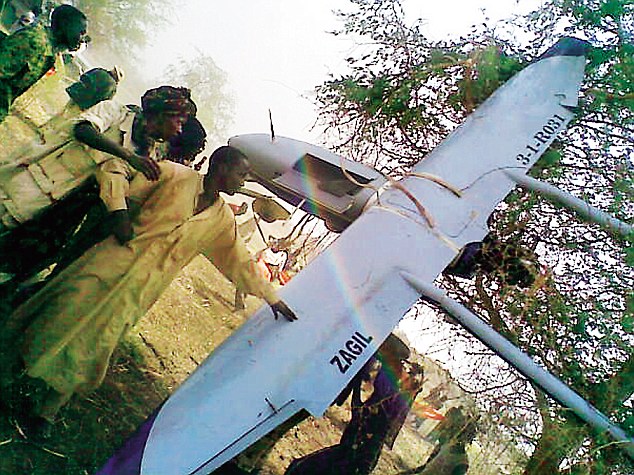 Under the glare of Sudan’s sun, a toddler points skywards at the metallic aircraft.
Shouts of ‘Antonov!’ go out and everybody runs for cover in the mountain caves. The plane banks left in front of the sun, so it’s hard to make out, but the drone of the engines grows louder.
Then come the thundering roar of explosions. I stagger out of my trench with the urge to run – to get anywhere safe. Terrified children look up at me; one has wet herself in fear.
These bombings are a daily event in the Nuba Mountains of Sudan. George Clooney visited the region last month, and on his return to the U.S. got himself arrested on the steps of the Sudanese Embassy in Washington in an attempt to gain world attention to the ethnic cleansing that is going on here.
He is also helping to fund a network of private satellites to watch over the military movements of the Khartoum government, which is behind the terror attacks on its own people. Read more >>>>>>>>>>>>>>>>>>>>>>
Under the glare of Sudan’s sun, a toddler points skywards at the metallic aircraft.
Shouts of ‘Antonov!’ go out and everybody runs for cover in the mountain caves. The plane banks left in front of the sun, so it’s hard to make out, but the drone of the engines grows louder.
Then come the thundering roar of explosions. I stagger out of my trench with the urge to run – to get anywhere safe. Terrified children look up at me; one has wet herself in fear.
These bombings are a daily event in the Nuba Mountains of Sudan. George Clooney visited the region last month, and on his return to the U.S. got himself arrested on the steps of the Sudanese Embassy in Washington in an attempt to gain world attention to the ethnic cleansing that is going on here.
He is also helping to fund a network of private satellites to watch over the military movements of the Khartoum government, which is behind the terror attacks on its own people. Read more >>>>>>>>>>>>>>>>>>>>>>
Medical Evidence of Widespread Torture in Darfur Released by PHR in PLoS Medicine
Today’s issue of PLoS Medicine features a peer-reviewed study led by Physicians for Human Rights (PHR) that provides rare forensic medical evidence of widespread, sustained torture and other human rights violations by the Government of Sudan (GoS) and allied Janjaweed forces against non-Arabic-speaking civilians in South Darfur.
In the study, PHR’s forensic medical experts reviewed the medical records of 325 patients seen in 2004-2006 at a clinic in Nyala, South Darfur for torture victims. The documentation from this review of medical records provides important validation of extensive testimonies gathered by many organizations and UN agencies over the years
“The killing, rape, torture, and other human rights violations documented in our study appear to have been committed as part of widespread, systematic and coordinated attacks directed against non-Arab speaking civilian populations in Darfur,” said Vincent Iacopino, Senior Medical Advisor at PHR and senior author of the study. “These apparent crimes against humanity demand investigation, accountability and justice. Inaction in the face of such inhumanity would be complicity by default.”
Key findings of the study include:
•90% of patients from 12 different non-Arabic-speaking tribes alleged that they had been attacked by GoS and/or Janjaweed forces in 23 rural areas across Darfur
•Of those attacked, 16% stated that GoS and Janjaweed forces attacked in concert, often with aerial bombardment coordinated with simultaneous ground assault by GoS and Janjaweed forces
•The most common abuses were beatings (50%), gunshot wounds (43%), destruction or theft of property (37.2%), and involuntary detainment (30%)
•Villages were repeatedly attacked, with 5 villages reportedly attacked a total of 41 times during the study period
•Virtually all (99%) of the reported attacks occurred in the absence of active armed conflict between Janjaweed/GoS forces and rebel groups
•Forensic review of these medical records by PHR’s medical experts corroborated the allegations of abuse in 100% of cases in which there was adequate information on which to base an expert opinion.
•Approximately one-half (49%) of all women disclosed that they had been sexually assaulted, and one-half of sexual assaults were described as having occurred in close proximity to a camp for internally displaced persons
“This study underscores the necessity of peace and reconciliation for the people of Darfur,” said Dr. Mohammed Ahmed Eisa, Sudan Fellow at PHR and co-author of the study. “Hundreds of thousands of civilians who have been attacked and tortured during the past decade are living in Internally Displaced Persons (IDP) camps and desperately need security and protection. Once they are safe, these survivors deserve compensation and restitution for what they have endured.” Read more >>>>>>>>>>>>>>>
Friday, March 23, 2012
Darfur Refugees Still Fear Returning Home
By Janet Anderson, Tajeldin Adam, Zakia Yousif
More than 100,000 people uprooted by conflict in the Darfur region of western Sudan have returned home since early 2011 as the conflict there begins to cool, according to United Nations officials. But the vast majority of displaced people remain in camps, and those interviewed by IWPR said they needed full security guarantees before they could return home safely
Millions of civilians have fled their villages in Darfur since 2003 when fighting between the government and rebel groups began in earnest, and have lived ever since in Sudanese camps for internally displaced persons, IDPS, or in refugee facilities in eastern Chad.
Following a peace accord signed in Doha between Sudanese rebel groups and government last July, and the establishment in February 2012 of a new governing body, the Darfur Regional Authority, DRA, the Sudanese authorities have encouraged IDPs and refugees to go home as the situation appears to be improving.
Around 84,000 refugees and IDPs returned to Darfur in the course of 2011, according to the UN refugee agency UNHCR, while the Geneva-based UN Office for the Coordination of Humanitarian Affairs, OCHA, says the number has since swelled to 109,000.
The UN says people are returning voluntarily, and it is optimistic that many more will follow. Read more >>>>>>>>>>>>>>>>>>>>>>
Monday, March 19, 2012
“Darfur and the Diplomacy of Abandonment,” Dissent Magazine (on-line)
By Eric Reeves
For more than a year and a half the Obama administration has been engaged in a callous and largely surreptitious disengagement from the ongoing human catastrophe in Darfur. This disengagement has taken many forms, and had various articulations. In August 2010 the phrase of choice was “de-emphasizing Darfur” in U.S. Sudan policy. In November 2010 a senior administration official spoke of “de-coupling Darfur” from considerations of whether Sudan should be on the State Department list of terrorism-sponsoring nations. Darfur, home to hundreds of thousands of in desperate need, now commands no significant policy attention in the Obama administration.
For example, this week Dane Smith, Obama’s senior adviser for Darfur, declared in Pittsburgh that the Obama administration believed that “regime change” in Khartoum would be counterproductive. This message has been conveyed by the United States to the various rebels groups in Darfur and two other northern states currently under genocidal siege by Khartoum’s military forces, Blue Nile and South Kordofan. These rebel groups, united uneasily under the banner of the Sudan Revolutionary Front, include the Sudan People’s Liberation Movement/Army-North as well as the most powerful Darfur rebels movements. They are politically and ideologically heterogeneous, but if militarily united have the power to bring down the tyranny in Khartoum that for twenty-three years has been responsible for massive ethnically targeted human destruction, wholesale denial of humanitarian assistance, and systematic displacement of nearly 10 million human beings.
Why should these rebel groups forgo an opportunity—should it exist—to compel a change of regimes in Khartoum? Why are members of this ruthless security cabal no more in need of removal than Libya’s Qaddafi, Syria’s al-Assad, or Afghanistan’s Taliban leadership—all examples of regime change that the United States has supported or is working for? Does it not matter that Darfuris are being asked to negotiate with a regime whose president and defense minister are under indictment by the International Criminal Court for crimes against humanity and genocide?
It has long been clear that only regime change offers the chance for true peace in Sudan: the National Islamic Front/National Congress Party regime is not a force for peace, but a potent catalyst for ongoing rebellion and military violence—and not just in Sudan. We need only look at the current widespread assaults on the civilian populations in Blue Nile and the Nuba Mountains of South Kordofan, conflict along the North/South border (including Khartoum’s bombing of a refugee campinside South Sudan with more than 20,000 civilians), the increasing likelihood of all-out war between Khartoum’s forces and those of the new Republic of South Sudan, long and bitter resentment of the regime in eastern Sudan and Nubia in the far north, and the continuing violence in Darfur.
Why does Dane Smith counsel “engagement” with a regime that has never abided by a single agreement it has made with any Sudanese party? Why should rebel groups sit down with a regime that conducts indiscriminate aerial attacks on civilians while denying international humanitarian aid to many hundreds of thousands of desperate people in South Kordofan and Blue Nile? Because, Smith says, rebel efforts to overthrow the regime would “polarize the Arabs against everyone else, so they can say, ‘Arabs are under attack. Islam is under attack.’”
And yet the entire population of Darfur is Muslim. How could Muslim Darfuri rebels create the impression that “Islam is under attack”? And more to the point, what in the broader insurgency—which includes a number of Arabs—could give the impression that “Arabs are under attack”? It is difficult to imagine an argument that could hold less force within the African ethnic groups that have been attacked on the basis of their ethnicity for the past twenty-three years—under the banner of an aggressively Islamist and Arabist ideology. The rebel groups, despite their many shortcomings and abuses in Darfur, arose precisely in response to the fact that “Africans were under attack” in the region, and had been since the NIF/NCP regime came to power by military coup in June 1989. Read more >>>>>>>>>>>>>>>>>>>>>>>
Tuesday, March 13, 2012
Sudan killing machine finds a new vicitim
The bombers swoop in from overhead, indiscriminately bombing villages and innocent civilians. Ethnic cleansing continues unabated. 417,000 people have been displaced — so far.
No, this is not Syria. This is Sudan, again.
You might remember Sudan from such other atrocities as the 20-year north-south civil war that killed 2 million people, and the genocide in Darfur that killed 300,000 and displaced 2.5 million. Now, welcome to South Kordofan, a southern Sudanese province. The targets are the Nuba people. The culprit is the usual one, Sudanese President Omar Hassan al-Bashir, the butcher of Sudan, genocidaire par excellence.
More than any uprising associated with the Arab Spring, Sudan is the true test to whatever claim we wish to make over our humanitarian ideals, and the oft-cited but less-oft practised Responsibility to Protect.
These most recent tensions exploded when a June 2011 election saw Ahmed Haroun elected as governor of South Kordofan, home to the Nuba people. Haroun is wanted for war crimes and crimes against humanity committed in Darfur and has proven himself one of Bashir’s most loyal practitioners of divide-and-rule and ethnic cleansing. Under the comprehensive peace agreement that ended the civil war, the Nuba were supposed to have a measure of say in their own future given their cultural and ethnic distinction. Such a say never came.
Caught on the wrong side of the border between Sudan and South Sudan, the Nuba’s ethnicity makes them closer to those in newly independent South Sudan. For this allegiance they have paid dearly since Haroun was elected and transposed his Darfur playbook into the Nuba mountains.
“They say our skin is like charcoal,” a Nuba told NBC’s Ann Curry, who sneaked into the region off-limits to journalists. Read more >>>>>>>>>>>>>>>>>>>>>>>>>>>>>>>>>>>>>>
Monday, March 12, 2012
Ex UN envoy accuses Sudan of genocide, Khartoum denies
By Ethan Bilby
LONDON, March 11 (Reuters) - A former senior U.N. official has accused Sudan's government of launching a genocidal campaign against non-Arab villagers in an oil-producing border region, by bombing civilians and using tactics reminiscent of the country's Darfur conflict.
Sudan's government dismissed the charges on Sunday saying there was no campaign to target civilians or people from specific ethnic groups during ongoing fighting with rebels in South Kordofan.
Mukesh Kapila, who was one of the first in the United Nations to raise the alarm about Darfur in 2004 and is now a rights activist, told Reuters he had evidence the government was committing crimes against humanity in South Kordofan's Nuba Mountains area.
Kapila, special representative for the Aegis Trust, said he had seen government planes targeting non-Arab villagers and burning crops to force them from their land during his visit to South Kordofan from Feb. 28 to Mar. 2. Read more >>>>>>>>>>>>>>>>>>>>>>>>>>>>>>>>>>>>>>>>>
Thursday, March 08, 2012
Darfur: Woman Raped in Front of Son On Eve of International Women's Day
Gereida — A woman was raped in front of her 11 year old son by four men at gunpoint on Tuesday.
She went out with her son to collect hay, a few kilometres away from the camp, when four gunmen grabbed the woman and raped her one by one, said a witness from Gereida camp in South Darfur.
'Her son was just standing there, watching her and crying,' continued the witness.
The men threatened to kill the boy if he didn't hand over his mobile phone, but he refused anyway.
On not managing to steal the phone, the men turned back to the woman and raped her again.
The crime has shocked and angered local residents, who demand the attackers are caught. Read more >>>>>>>>>>>>>>>>>>>>>
New fighting in Sudan's Darfur region
Sudan's armed forces and a rebel group clashed in the Western Darfur region, both sides said on Wednesday, the latest violence in the troubled region.
Mostly African insurgents in Darfur took up arms against the Arab-dominated government in 2003, accusing the government in Khartoum of neglecting the remote territory.
Khartoum mobilised troops and allied Arab tribes to quell the rebellion, unleashing a wave of violence that the United Nations and other observers estimate may have killed hundreds of thousands of people.
International efforts to broker an end to the conflict have failed to produce lasting peace, hampered by rebel divisions, continuing military operations and other difficulties.
Army spokesman Sawarmi Khalid Saad told Reuters that on Tuesday the army had attacked fighters of the rebel Justice and Equality Movement (JEM) in the area of Baashim in North Darfur. Read more >>>>>>>>>>>>>>>>>>>>>>>>>>>>>>>>>>>>>>
Wednesday, March 07, 2012
ICC frustrated with Darfur
UNITED NATIONS, March 6 (UPI) -- War crimes in Sudan's troubled region of Darfur have continued despite international arrest warrants for key perpetrators, the ICC lamented.
Luis Moreno-Ocampo said at U.N. headquarters that issuing arrest warrants wasn't enough to end the crisis so long as crimes in Darfur continue.
"I think we did something complicated -- we investigated the crime, we collected the evidence, we clarified the responsibilities," he said. "But our effort is not enough if the crime is not stopped."
The prosecutor didn't elaborate on security issues in Darfur.
The ICC last week issued a warrant for the arrest of Sudanese Defense Minister Abdelrahim Mohamed Hussein. He's wanted for crimes committed in Darfur from 2003-04. The court said it had "reasonable ground to believe" he committed crimes against the civilian population. Read more >>>>>>>>>>>>>>>>>>>>>>>>>>>>>>>>>>
Tuesday, March 06, 2012
Ocampo Analogizes Darfur to Auschwitz, As Bashir's Invited to Doha
Ocampo Analogizes Darfur to Auschwitz, As Bashir's Invited to Doha, Free Press Question on Kenya Witness
By Matthew Russell Lee
UNITED NATIONS, March 5 -- Outgoing International Criminal Court prosecutor Luis Moreno Ocampo bragged Monday that Kuwait, a non member of the ICC, is saying the Syria and Bashar al Assad should be referred to the ICC.
But elsewhere in the Gulf, as Ocampo should know but didn't say, ICC indictee Omar al Bashir of Sudan had been invited to Doha, Qatar for a conference of the UN International Telecommunications Union. So has international justice progressed in the Gulf? Or in the UN?
Inner City Press asked Ocampo about photographs with Bashir recently taken by the UN - Africa Union envoy to Darfur Ibrahim Gambari, and about a draft General Assembly resolution which would urge Secretary General Ban Ki-moon to discourage such contacts, which have included the UN flying ICC indictee Ahmed Haroun into Abyei, where later civilians were killed.
Ocampo replied that if you were a Darfur victim, you wouldn't like to see photos of Gambari with Bashir. But why go so soft on the UN, Gambari and Ban Ki-moon?
(From the draft GA resolution, Inner City Press first reported, the language urging that UN limit contacts with ICC indictees is set to be stripped. Its proponents say it was noticed just be being proposed. But when Inner City Press asked for Ban Ki-moon comment on it, there was nothing.)
Ocampo is a political animal: he knows which prosecutions are popular. Inner City Press asked him to comment on the new International Commission of Inquiry report on Libya, which details killings not only by Gaddafi forces, but also his opponents, and at least 60 by NATO.
Last time he spoke at the UN, Ocampo said "wait for the report of the International Commission of Inquiry." Now that it is out, and Inner City Press read to him from it, Ocampo says there is a Human Rights Council session on March 9, that his office will go to Libya in April and that he'll be back at the UN in May. And? Read more >>>>>>>>>>>>>>>
Monday, March 05, 2012
ICC Prosecutor Calls to Bring End to Darfur Conflict
The Hague — On Saturday, Prosecutor of the International Criminal Court Luis Moreno Ocampo called for world leaders to continue to make efforts to bring an end to conflict Darfur.
The Prosecutor stressed that the appearance of President Al Bashir before a criminal court is only a matter of time.
Speaking from Doha on the Darfur situation and continued suffering Ocampo said, 'shame on Sudan and President Bashir and shame on the world. '
He called for collective action to work together to put an end to the suffering of the people and the crisis in Darfur.
RAPE AS A CONTINUING WEAPON OF WAR IN DARFUR: Reports, bibliography of studies, a compendium of incidents
RAPE AS A CONTINUING WEAPON OF WAR IN DARFUR: Reports, bibliography of studies, a compendium of incidents
Sexual violence and rape in Darfur have ceased to command the attention it once had—not because this brutal epidemic has ended but because of the absence of human rights reporting, news reporting, and the intimidation of humanitarian organizations ensures that we hear very little about one of the most brutal features of the Darfur genocide. This brief provides [1] a select bibliography of reports and studies examining the realities of rape and sexual violence in Darfur (in progress); [2] an overview of what was already evident of these realities from mid-2005; [3] a lengthy compendium of reports of specific incidents of sexual violence and rape. This compendium is also a work in progress, extending back into report archives, and grimly forward as rape continues to be reported on a nearly daily basis by Radio Dabanga, despite various assertions that Darfur is settling into a more “peaceful” state.
There can be no possible claim to definitive figures; but the evidence assembled here makes clear than many tens of thousands of Darfuri girls and women have been raped.
Eric Reeves
March 4, 2012
Part I: ANNOTATED BIBLIOGRAPHY (in progress)
(i) Amnesty International, “Sudan, Darfur: Rape as a Weapon of War” [July 19, 2004] at http://www.amnesty.org/en/library/info/AFR54/076/2004 ] One of the very earliest human rights accounts of what had already reached epidemic proportions. This lengthy report by Amnesty is authoritative, based on very substantial field research, and compelling in its analysis and framing of issues in terms of international humanitarian and human rights law. It has never been the case that the international community was unaware of the scale of sexual violence and rape in Darfur; such awareness simply did not translate into meaningful responses.
(ii) Tara Gingerich, JD, MA and Jennifer Leaning, MD, SMH, “The Use of Rape as a Weapon of War in the conflict in Darfur, Sudan” (October 2004). Prepared for the US Agency for International Development/OTI under the auspices of the Harvard School of Public Health and the Francois-Xavier Bagnoud Center for Health and Human Rights. A powerful study of sexual violence in Darfur published in fall 2004, it deserves the closest attention.
(iii) Human Rights Watch, “Sexual violence and its consequences among displaced persons in Darfur and Chad,” (April 2005). Read more >>>>>>>>>>>>>>>>>>>>>>
Friday, March 02, 2012
Sudan's Darfur region dabbles with peace
By James Copnall
A graceful sweep of magnolia trees around a reservoir, accompanied by the low, productive, hum of a pump, hints at a very different image of Sudan's war-torn region of Darfur.
The area in western Sudan has been devastated by civil war since 2003, but Darfur is changing - for the better, some now believe.
A peace agreement, a reduction in fighting, and the limited but promising return of displaced people to their homes are held up as examples of Darfur's progress.
But the war is certainly not over, and life is still very tough for the millions of people who have been displaced by the conflict.
The Golo reservoir is being rehabilitated, with the aim of piping clean water to the town of Fasher.
Like many development projects, it is being paid for by foreign donors, in this case the UK.
Fasher, as with many other towns in Darfur, has come under unexpected pressure by the influx of frightened people uprooted by the war.
The UN estimates 1.7 million people are still displaced in Darfur. Read more >>>>>>>>>>>>>>>>>>>>>>>>>>

Thursday, March 01, 2012
The ICC issues a warrant of arrest for the Sudanese Minister Abdel Raheem Muhammad Hussein
On 1 March 2012, Pre-Trial Chamber I of the International Criminal Court (ICC) issued a warrant of arrest against Mr Abdel Raheem Muhammad Hussein (“Hussein”) for 41 counts of crimes against humanity and war crimes allegedly committed in the context of the situation in Darfur (Sudan). Mr Hussein is currently Minister of National Defence of the Sudanese Government and former Minister of the Interior and former Sudanese President’s Special Representative inDarfur.
The Chamber considers that there are reasonable grounds to believe that Mr Hussein is criminally responsible for 20 counts of crimes against humanity (persecution, murder, forcible transfer, rape, inhumane acts, imprisonment or severe deprivation of liberty and torture) and 21 counts of war crimes (murder, attacks against civilian population, destruction of property, rape, pillaging and outrage upon personal dignity). These crimes were allegedly committed against the primarily Fur populations of the towns of Kodoom, Bindisi, Mukjar, Arawala and surrounding areas by the Sudanese armed forces and the Militia/Janjaweed in the context of a counter-insurgency campaign against the Sudanese Liberation Movement/Army (SLM/A), the Justice and Equality Movement (JEM) and other groups opposing the Government. The plan of the counter-insurgency campaign was allegedly formulated at the highest levels of the Government of the Republic of the Sudan and had allegedly as a core component an unlawful attack on that part of the civilian population perceived by the Government as being close to the rebel groups.
The Chamber considers that in his role as Minister of the Interior and Special Representative of the President in Darfur and as an influential member of the Government of the Republic of the Sudan, Mr Hussein made essential contributions to the formulation and implementation of the common plan, inter alia, through his overall coordination of national, state and local security entities and through the recruitment, arming and funding of the police forces and the Militia/Janjaweed in Darfur. Furthermore the Chamber considers that his arrest appears to be necessary to ensure his appearance at trial and to ensure that he will not obstruct or endanger the investigations. Read more >>>>>>>>>>>>>>>>>
Subscribe to:
Posts (Atom)