Tuesday, October 31, 2006

Inaction Breeds Death in Darfur


Prepared by: Michael Moran

When Kurds took de facto control of northern Iraq after the 1991 Gulf War, among the discoveries made were the taped remarks of Ali Hassan al-Majid, aka “Chemical Ali,” just before he ordered the gassing of rebellious locals. “I will kill them all with chemical weapons!” al-Majid railed. “Who is going to say anything? The international community? F*** them.” As columnist Nick Cohen notes in The Observer, recent events in Sudan suggest such disdain for international law may be as valid as ever.

In spite of UN Security Council decisions to deploy peacekeepers to Sudan’s Darfur region, in spite of a U.S. government finding that “genocide” is taking place there, and President Bush’s call at the UN General Assembly in September for immediate action, not much has changed. As CFR’s chief Africa expert Princeton Lyman notes: “We always thought that if something was finally designated as genocide it would trigger the Genocide Convention and the international community would have to act,” he told CFR.org’s Bernard Gwertzman. “What we’re finding is that in itself doesn’t define what has to be done or what can be done.”Read more >>>

Darfur deserves election attention

Wanton acts of rape are capable of terrorizing a community. Now imagine that the rapists patrolling your neighborhood are actually part of the government.

No, you aren't watching the opening to V for Vendetta. You are witnessing the Darfur genocide, where more than 400,000 people have been murdered in the past three years.

The United Nations refuses to call it genocide, preferring the language of a "Darfur conflict." And all countries have conflicts, so why should we care about this one, especially in a part of the world so alien and remote to the average American? Read more >>>

Darfur deserves world's utmost attention — now

By Nicholas D. Kristof

Perhaps the most extraordinary aspect of Darfur isn't that gunmen on the Sudanese payroll heave babies into bonfires as they shout epithets against blacks. It's that the rest of us are responding only with averted eyes and polite tut-tutting.
This past week alone, Sudan expelled the U.N. envoy for Sudan and sent a proxy army to invade eastern Chad. Those moves underscored both the audacity of Sudan's leaders and the fecklessness of the rest of the world's.
In fact, there's plenty we can do:
● Kofi Annan should appoint a new U.N. envoy of utmost prominence. Possibilities include Bill Clinton, Jimmy Carter, Richard Holbrooke and Bernard Kouchner (a founder of Doctors Without Borders).
The focus has been on getting U.N. peacekeepers into Darfur, and they are needed, but in the long run only a peace accord can calm Darfur. Read more >>>

Darfur deserves world's utmost attention — now

By Nicholas D. Kristof

Perhaps the most extraordinary aspect of Darfur isn't that gunmen on the Sudanese payroll heave babies into bonfires as they shout epithets against blacks. It's that the rest of us are responding only with averted eyes and polite tut-tutting.
This past week alone, Sudan expelled the U.N. envoy for Sudan and sent a proxy army to invade eastern Chad. Those moves underscored both the audacity of Sudan's leaders and the fecklessness of the rest of the world's.
In fact, there's plenty we can do:
● Kofi Annan should appoint a new U.N. envoy of utmost prominence. Possibilities include Bill Clinton, Jimmy Carter, Richard Holbrooke and Bernard Kouchner (a founder of Doctors Without Borders).
The focus has been on getting U.N. peacekeepers into Darfur, and they are needed, but in the long run only a peace accord can calm Darfur. Read more >>>

Saturday, October 28, 2006

Crisis: Return to Darfur

With the UN held at bay, the conflict in western Sudan just gets bloodier. Does the world have another Rwanda on its hands? Steve Bloomfield reports.

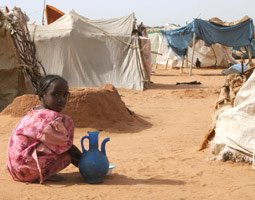
This is what the world looks like when all hope is gone. For over two million citizens of Darfur holed up in displacement camps across this barren desert land in western Sudan, no knight in shining armour is about to ride over the horizon. These are the lucky ones: those who survived the Sudanese government's scorched earth policy that saw their homes burnt to a crisp. And now, the lucky ones live in constant fear that each night will be their last.

The crisis in Darfur, a region the size of France, is deepening by the day. While Sudan's autocratic ruler, Omar al-Bashir, plays a game of political brinkmanship with the United Nations and, in particular, the US and the UK, millions of black Africans lie alone and exposed. There's been a build-up of Sudanese troops in the region over the past two months and attacks by the feared horsebacked militia, known as the Janjaweed, are on the increase. Read more >>>

Thursday, October 26, 2006

Raise your voice on Darfur genocide

BY PRI MITRA

It was revealed in 1945 that 6 million lives had been brutally taken by Nazi Germany in what came to be known as the Holocaust. The world was aghast, and vowed never to allow another crime this heinous, this horrific to happen ever again.

Fifty years later, and it's happening again. The word genocide literally means "to kill a race," and that is precisely what is going on in Darfur, Sudan: Sudanese Africans are being "ethnically cleansed" on the basis that they are not Arabs.

This action is being supported by Sudan's ruler, Omer Al Bashir, who actively arms the Janjaweed, a group of militants who ruthlessly murder the ethnic Africans. The Janjaweed arbitrarily raid villages, burning houses and ruining the food/water supply. Also, there are stories too gruesome to imagine of 15 men raping one woman, of men being cut into tiny pieces, of babies being shot out of their fleeing parents' arms.


Approximately 400,000 people have perished in this conflict and about 2 million have been displaced from their homes. Read more >>>

Wednesday, October 25, 2006

Pronk's expulsion no surprise - aid workers

Sudan's decision to kick out top United Nations envoy Jan Pronk came as no big surprise to many aid workers in Darfur who complain of regular harassment from the government.

They say Sudan's intimidation tactics towards Pronk echo some of the problems non-governmental organisations (NGOs) have faced.

Aid workers I've spoken to say persistent harassment has been hampering aid efforts throughout the region, compounding the suffering of millions of displaced Darfuris.

Pronk was forced to leave after Sudan accused him of trying to "wage psychological war against the armed forces" through remarks in his personal blog.

"Jan Pronk has always been a thorn in the Sudanese government's side because he tells people in the international community what is really going on in Darfur," the operations director of a major aid agency told me. Read more >>>

Pronk's expulsion no surprise - aid workers

Sudan's decision to kick out top United Nations envoy Jan Pronk came as no big surprise to many aid workers in Darfur who complain of regular harassment from the government.

They say Sudan's intimidation tactics towards Pronk echo some of the problems non-governmental organisations (NGOs) have faced.

Aid workers I've spoken to say persistent harassment has been hampering aid efforts throughout the region, compounding the suffering of millions of displaced Darfuris.

Pronk was forced to leave after Sudan accused him of trying to "wage psychological war against the armed forces" through remarks in his personal blog.

"Jan Pronk has always been a thorn in the Sudanese government's side because he tells people in the international community what is really going on in Darfur," the operations director of a major aid agency told me. Read more >>>

No Justice for Darfur Rape Victims

Womens’ activists call on ICC to bring alleged rapists in Darfur to trial, as reports speak of a massive upsurge in rape cases.

By Stephanie Nieuwoudt in Nairobi

Whenever I have taken a camera into one of the many camps for refugees in Darfur, the children have immediately arranged themselves into a group. They want to be in the picture. And they insist on seeing the digital image. They smile and laugh while they point themselves out.

At first glance, the burgeoning camps always seem happy places because of the uninhibited excitement of the children - that is if you ignore the tattered clothes and the reports from aid agencies, which paint a bleak picture. For the truth is that the settlements - known in international bureaucratic jargon as camps for Internally Displaced Persons - are places, once you move beyond the children's cheery welcomes, where human suffering can be smelled, seen and touched. And women and girls seem to bear the brunt of the suffering. Read more >>>

A new tack on Darfur

By MORTON ABRAMOWITZ

Instead of saving Darfur's people, their advocates may be prolonging their agony. They need to consider whether a different message is required to get urgent action from the Bush administration on ending the violence. Specifically: Is it not time to go beyond urging greater pressure on Sudan and using force in the region to seek a negotiated peace settlement between Sudan's leader and the rebel groups in Darfur? That is necesssary in any event.

For three years, nongovernmental organizations and the media have pursued a relentless campaign to persuade Western governments to stop the killing in Darfur, protect and feed its people and get millions of refugees out of camps and back home. The recent renewed military carnage in Darfur has prompted continuing ads in major newspapers and on television imploring President Bush to get a United Nations force into Darfur to "stop the genocide."

This advocacy has rested on two assumptions: first, that only outside pressure will persuade Sudan's government to reverse course -- the country's leader, Omar al-Bashir, will do nothing without a gun to his head; second, if his government resists, Western governments can ultimately be persuaded to do the right thing: to take aggressive measures to force Khartoum to capitulate. Read more >>>

Tuesday, October 24, 2006

New Offensives in Darfur and Chad Threaten Civilians

UN Security Council Must React Strongly to Expulsion of UN Envoy

infoZine - Rising violence in eastern Chad and Darfur highlights the immediate need for the United Nations Security Council to strengthen civilian protection by the UN mission in Sudan following Khartoum's expulsion of the UN secretary-general's special representative in Sudan, Jan Pronk, Human Rights Watch said today.

"The Security Council should not accept Khartoum's endless intransigence over any UN effort to protect Sudanese civilians," said Peter Takirambudde, Africa director at Human Rights Watch. "Violence in Darfur and eastern Chad is escalating, and the strong UN force that the Security Council mandated back in August is urgently needed to protect civilians on both sides of the border." Read more >>>

UN envoy says has no regrets over Sudan comments

By Alexandra Hudson

AMSTERDAM, Oct 24 (Reuters) - Top U.N. envoy Jan Pronk said on Tuesday he had no regrets about comments he made about the situation in Darfur which led to his expulsion by the Sudanese government, and said he hoped he could return to the country.

Pronk left Sudan on Monday after he published comments on his Web site saying the Sudanese army lost two major battles to rebels in North Darfur and morale was low, infuriating Sudan's powerful armed forces who called Pronk a threat to security.

In his first interview since leaving Sudan, Pronk told Dutch radio station BNR Nieuwsradio the information was widely available and it was not the Weblog itself that lay behind his expulsion.

"Over there it is not about where you say something, but what you say," he said.

"The main thing is that a peace accord was signed in Darfur but the military are trampling all over it and are still trying to gain a military victory. I have been trying constantly over the last months to expose this and this doesn't suit them." Read more >>>

Monday, October 23, 2006

Deadly Government Bombing In Darfur

21 October 2006
Press Release: United Nations

UN Receives Reports Of Deadly Government Bombing In Darfur, Arrest Of Aid Workers
New York, Oct 19 2006 6:00PM

Amid increasing insecurity in Sudan’s strife-torn Darfur region, the United Nations mission in the country has received reports that a Government aircraft bombed an area in North Darfur, killing an eight-year-old boy, and that two aid workers were arrested in the south of the region.

The reports to the UN Mission in Sudan (UNMIS) said the aircraft “dropped an unconfirmed number of bombs” near Birmaza yesterday, spokesman Stephane Dujarric told reporters in New York. Read more >>>

Darfur rebels say militias attack villages

By Opheera McDoom

Oct 22 (Reuters) - Armed militia have looted and attacked civilians and raped two girls in villages in the Nena area of North Darfur, rebels said on Sunday.

Despite a May peace deal violence has escalated in Sudan's remote west where experts say 200,000 people have been killed and 2.5 million forced from their homes.

"The Janjaweed attacked villages in Nena yesterday and raped two girls ... aged 16 and 18," said Jar el-Naby, a rebel commander in North Darfur.

"Government troops are also mobilising in this area, and we are prepared for an attack," Naby said. Read more >>>

Stop the killing of innocents in Darfur

Auschwitz, Rwanda, Bosnia, now Darfur.

Darfur is facing genocide. Already, 400,000 people have been killed, and more than 2 million are in refugee camps. Torture, rape and murder of civilians are occurring because of civil war. The United Nations must send peacekeeping troops, and the Sudanese government is sending mixed messages as to whether it will accept such troops. The peacekeeping force already in Darfur is in urgent need of funds. Our efforts thus far are not enough to prevent the murder of countless innocents.

I urge readers to do their own research and contact their congressmen. We cannot allow people in a faraway country to die en masse again.
Maura Loew
Source

Sunday, October 22, 2006

Senator Obama calls for more U.S. action on Darfur

WASHINGTON A Democratic senator said Sunday that the United States should do more to help stem violence in the war-ravaged Darfur region of Sudan.

Sen. Barack Obama, who is considering a run for president in 2008, called for "more leadership than we have taken in forming an international protective force in Darfur," where violence has risen dramatically in recent weeks. More than 200,000 people have been killed and 2.5 million displaced in three years of fighting.

"When you have situations involving genocide, it is important for us as a world community — and the United States is the world's sole super power — for us to take that seriously, and to make commitments of resources to deal with it," Obama told NBC's "Meet the Press." Read more >>>

EU official says UN presence in Darfur is vital to civilians there

BRUSSELS, Belgium The European Union on Sunday criticized Sudan's decision to order the chief U.N. envoy out of the country, arguing the role of the United Nations is key to resolving the crisis in Darfur.

"The presence of the United Nations is vital to hundreds of thousands of citizens of the Darfur region," said Amadeu Altafaj Tardio, a spokesman for the EU Commission.

The order for U.N. envoy Jan Pronk to leave within three days will likely further complicate efforts to end the crisis in the strife-torn region of western Sudan, he said.

"The situation is deteriorating rapidly," said Altafaj Tardio. "The U.N. has a key role to play which goes well beyond security and the current discussions on the U.N. deployment." Read more >>>

Saturday, October 21, 2006

Sudan masses its troops for a decisive strike on Darfur

By Gethin Chamberlain in El Fasher, North Darfur

The soldier pushed at the bomb with his foot, rolling it through the dust towards the white Russian-built Antonov aircraft standing on the runway of El Fasher airport.

The plane was being loaded for another bombing run, as Sudanese government forces gear up for a military onslaught when Ramadan ends today or tomorrow.
Crude but effective, the Antonovs are back in the air over the villages of Darfur, just as they were during the initial pogroms that killed hundreds of thousands and displaced more than two million. When they reach their targets, the soldiers lower the ramps and kick out the bombs – which look like munitions used in the Second World War – to explode on those below.

New arrivals at the El Salaam camp outside Fasher, the capital of North Darfur, describe how the Antonovs and helicopter gunships attacked their villages, forcing them to flee.

"I saw about 10 bombs falling," said Adam Ishag, who fled his village of Hila Babkeir after it came under attack. "They exploded beside the houses and two were destroyed. We took the children and we ran away."

The troubled western region of Sudan is entering a new and dangerous period. The Darfur Peace Agreement, signed in the Nigerian capital Abuja in May, largely at the urging of the international community, is widely perceived to have failed. Fighting has escalated and the rebel groups, which splintered acrimoniously after the signing, are once again looking to present a united front. Read more >>>

Doing business with Africa's Hitler

Public pension funds shouldn't support genocide

In the Sudan's government ceaseless genocide in Darfur - while the world watches in horror but does not act - 80 children under age 5 die each day, estimates the United Nations Children's Fund (Sudan Tribune Web site, Oct. 7). As more relief agencies pull out because of the growing violence, more children older than age 5 will die. Yet, just before leaving for midterm elections, the Senate stripped out a vital part of the Darfur Peace and Accountability Act. Read more >>>

Sudan: UN Receives Reports of Deadly Government Bombing in Darfur, Arrest of Aid Workers

Amid increasing insecurity in Sudan's strife-torn Darfur region, the United Nations mission in the country has received reports that a Government aircraft bombed an area in North Darfur, killing an eight-year-old boy, and that two aid workers were arrested in the south of the region.

The reports to the UN Mission in Sudan (UNMIS) said the aircraft "dropped an unconfirmed number of bombs" near Birmaza yesterday, spokesman Stephane Dujarric told reporters in New York. Read more >>>