NICK WADHAMS
UNITED NATIONS - A panel of experts has recommended that the Security Council impose sanctions on Sudanese President Omar al-Bashir and other top government officials, Qatar's U.N. ambassador said Friday.
The experts sent the list to the Security Council with an Aug. 31 report that found all sides in the Darfur conflict continue to commit "blatant violations" of a council arms embargo.
The names on the list have not been made public. But the Qatari Ambassador Nassir Al-Nassir said "top people in the government" were on it and charged that the experts were trying to spoil the peace process. Asked to elaborate, he made clear that al-Bashir was on the list. Read more >>>
Friday, September 29, 2006


EU's Barroso heads to Sudan to press U.N. mission
By Ingrid Melander
BRUSSELS, Sept 29 (Reuters) - European Commission President Jose Manuel Barroso and a top EU aid official will go to Sudan this weekend to try to convince Khartoum to allow U.N. peacekeepers into Darfur.
Fighting between militias, government forces and rebel groups in Darfur has killed an estimated 200,000 people and displaced 2.5 million others since early 2003. A 7,000-strong African Union force has been unable to stop the violence.
The Sudanese government has repeatedly rebuffed a United Nations offer to send 22,000 U.N. peacekeepers to replace the AU force, whose mission has been extended until Dec. 31, 2006. Read more >>>
BRUSSELS, Sept 29 (Reuters) - European Commission President Jose Manuel Barroso and a top EU aid official will go to Sudan this weekend to try to convince Khartoum to allow U.N. peacekeepers into Darfur.
Fighting between militias, government forces and rebel groups in Darfur has killed an estimated 200,000 people and displaced 2.5 million others since early 2003. A 7,000-strong African Union force has been unable to stop the violence.
The Sudanese government has repeatedly rebuffed a United Nations offer to send 22,000 U.N. peacekeepers to replace the AU force, whose mission has been extended until Dec. 31, 2006. Read more >>>
Actor Clooney, father see firsthand refugees in haunting Darfur region
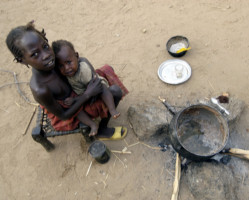
By Nick Clooney
CINCINNATI, Ohio (St. Anthony Messenger) – "IT’S RACISM and I can prove it.” The man’s face was dark, seamed and weathered; his desert clothing snowy white, his eyes steady.
We were sitting inside a half-tent in a refugee camp called Oure’ Cassoni, in the northeast corner of Chad. It is home to 29,000 people driven from their villages.
Chad borders Africa’s largest country, Sudan. Just a few miles from the camp is a region of Sudan bearing a name that is haunting the world’s conscience: Darfur.
The man to whom I spoke is one of two million Darfuris who have been driven from their villages, their homes burned, tens of thousands of them butchered, raped, tortured, beaten, their cattle killed or stolen, their wells poisoned – sometimes with the bodies of those who have been killed. Read more >>>
GELDOF: 'WE MUST DO SOMETHING ABOUT DARFUR'
SIR BOB GELDOF
SIR BOB GELDOF is desperately urging the world's superpowers to put their weight behind the crisis in Darfur in a bid to halt the violence. The rocker-turned-activist slammed China for continuing to provide arms to Sudan's "thuggish" Khartoum government, which is, in turn, refusing to allow United Nations peacekeepers to enter the troubled country.
He says, "(The world is) slow stepping into watching two million people die in front of us on the six o'clock news every night. "The reality is that in another age perhaps America and Britain could have intervened but they can't now, possibly because of the Middle East.
"The Arab League are absolutely pathetic and supine. They seem to think it's within their remit to allow two million of their fellow co-religionists to die in a massacre. "The Khartoum government are thugs and tyrants. They are supported by the Chinese who take six per cent of their oil out of Sudan, which is 60 per cent of Sudanese oil production - and therefore will not allow (measures to get through) the Security Council. "I think we really have a right to insist upon an intervention through the United Nations". Read more >>>
SIR BOB GELDOF is desperately urging the world's superpowers to put their weight behind the crisis in Darfur in a bid to halt the violence. The rocker-turned-activist slammed China for continuing to provide arms to Sudan's "thuggish" Khartoum government, which is, in turn, refusing to allow United Nations peacekeepers to enter the troubled country.
He says, "(The world is) slow stepping into watching two million people die in front of us on the six o'clock news every night. "The reality is that in another age perhaps America and Britain could have intervened but they can't now, possibly because of the Middle East.
"The Arab League are absolutely pathetic and supine. They seem to think it's within their remit to allow two million of their fellow co-religionists to die in a massacre. "The Khartoum government are thugs and tyrants. They are supported by the Chinese who take six per cent of their oil out of Sudan, which is 60 per cent of Sudanese oil production - and therefore will not allow (measures to get through) the Security Council. "I think we really have a right to insist upon an intervention through the United Nations". Read more >>>
Combat force with deadly power is needed in Darfur
By AUSTIN BAY
The demonstrators had extraordinary moral credibility.
Last week in Kigali, Rwanda, survivors of the 1994 Rwanda genocide called on the United Nations and world leaders to act to end the continuing genocide in Sudan's western Darfur region.
"We survivors stand with the victims in Darfur," Rwandan Freddy Umutanguha told The Irish Independent. "We know what it is like to lose our mothers, fathers, brothers, sisters, sons and daughters." Read more >>>
The demonstrators had extraordinary moral credibility.
Last week in Kigali, Rwanda, survivors of the 1994 Rwanda genocide called on the United Nations and world leaders to act to end the continuing genocide in Sudan's western Darfur region.
"We survivors stand with the victims in Darfur," Rwandan Freddy Umutanguha told The Irish Independent. "We know what it is like to lose our mothers, fathers, brothers, sisters, sons and daughters." Read more >>>
Tuesday, September 26, 2006
Words inadequate to stop killing in Darfur
By TRUDY RUBIN
As world leaders gather at the United Nations for the opening of the 61st General Assembly, the shadow of Darfur hangs over them all.
Last week, from the U.N. podium, President Bush again labeled the slaughter of hundreds of thousands of civilians in Darfur a genocide. Yet the killing, conducted by Sudanese government forces and militias, is intensifying.
Sudan is blocking a proposed U.N. peacekeeping force of 20,000, which would have strengthened an unarmed observer force from the African Union. Read more >>>
As world leaders gather at the United Nations for the opening of the 61st General Assembly, the shadow of Darfur hangs over them all.
Last week, from the U.N. podium, President Bush again labeled the slaughter of hundreds of thousands of civilians in Darfur a genocide. Yet the killing, conducted by Sudanese government forces and militias, is intensifying.
Sudan is blocking a proposed U.N. peacekeeping force of 20,000, which would have strengthened an unarmed observer force from the African Union. Read more >>>
UN scrambles for troops for future Darfur force
By Evelyn Leopold
UNITED NATIONS (Reuters) - The United Nations got its first pledges of troops for a proposed peacekeeping force in Sudan's Darfur region at a meeting on Monday of 49 potential contributing nations.
Participants at the closed-door session said Norway had offered 250 logistics experts and together with Sweden, a battalion of engineers. Tanzania, Nigeria and Bangladesh pledged infantry soldiers.
But the force, approved by the U.N. Security Council, is still on paper only, with its goal of 22,500 soldiers and police. There is also no sign that Sudan's government will allow the United Nations to take over the African Union operation in Darfur. Read more >>>
UNITED NATIONS (Reuters) - The United Nations got its first pledges of troops for a proposed peacekeeping force in Sudan's Darfur region at a meeting on Monday of 49 potential contributing nations.
Participants at the closed-door session said Norway had offered 250 logistics experts and together with Sweden, a battalion of engineers. Tanzania, Nigeria and Bangladesh pledged infantry soldiers.
But the force, approved by the U.N. Security Council, is still on paper only, with its goal of 22,500 soldiers and police. There is also no sign that Sudan's government will allow the United Nations to take over the African Union operation in Darfur. Read more >>>
Monday, September 25, 2006
UN Rights Monitors Accuse Sudan of Bombing Darfur Villages
VOA
United Nations monitors say the Sudanese military is indiscriminately bombing villages in the north Darfur region, killing and injuring scores of civilians.
A spokesman, Jose Diaz, for the U.N. High Commissioner on Human Rights says Friday government bombing raids have forced hundreds of civilians in north Darfur to flee their homes. He says a new report shows the government is waging a campaign against rebel groups who have not signed a peace agreement. Read more >>>
United Nations monitors say the Sudanese military is indiscriminately bombing villages in the north Darfur region, killing and injuring scores of civilians.
A spokesman, Jose Diaz, for the U.N. High Commissioner on Human Rights says Friday government bombing raids have forced hundreds of civilians in north Darfur to flee their homes. He says a new report shows the government is waging a campaign against rebel groups who have not signed a peace agreement. Read more >>>
How to Save Darfur
By PETER BEINART
Genocide comes at inconvenient times. In 1994, the Clinton Administration was reeling from Somalia--a country it had fled after the deaths of 18 U.S. troops. So America watched as Rwanda's genocidaires murdered nearly 1 million people in 100 days. And then everyone began feeling bad. Bill Clinton flew to Rwanda to apologize. After reading an article about the genocide, George W. Bush reportedly scribbled, "Not on my watch!"
In hindsight, stopping genocide is easy. But in Darfur, where it is happening now, stopping genocide is brutally hard. A contingent of 7,000 African Union peacekeepers currently patrol the Texas-size chunk of western Sudan where government-backed militias are busy exterminating the non-Arab population. The African soldiers are decent and brave, but they are engaged in a sham. The militias menace villagers in front of the peacekeepers' eyes; Sudan's government steals the fuel they need to fly their planes. In the words of U.N. envoy Jan Pronk, "The people on the ground are just laughing."
In spite of a Security Council resolution approving a larger, tougher U.N. peacekeeping force, the government of Sudan refuses to allow Blue Helmets on its soil. Read more >>>
Genocide comes at inconvenient times. In 1994, the Clinton Administration was reeling from Somalia--a country it had fled after the deaths of 18 U.S. troops. So America watched as Rwanda's genocidaires murdered nearly 1 million people in 100 days. And then everyone began feeling bad. Bill Clinton flew to Rwanda to apologize. After reading an article about the genocide, George W. Bush reportedly scribbled, "Not on my watch!"
In hindsight, stopping genocide is easy. But in Darfur, where it is happening now, stopping genocide is brutally hard. A contingent of 7,000 African Union peacekeepers currently patrol the Texas-size chunk of western Sudan where government-backed militias are busy exterminating the non-Arab population. The African soldiers are decent and brave, but they are engaged in a sham. The militias menace villagers in front of the peacekeepers' eyes; Sudan's government steals the fuel they need to fly their planes. In the words of U.N. envoy Jan Pronk, "The people on the ground are just laughing."
In spite of a Security Council resolution approving a larger, tougher U.N. peacekeeping force, the government of Sudan refuses to allow Blue Helmets on its soil. Read more >>>
Sunday, September 24, 2006
Despite pressure, Sudan resists UN force
United Nations -
Sudan faces escalating world pressure in coming weeks to reverse its dogged opposition to the dispatch of a large United Nations force in war-torn Darfur where UN officials are warning of a worsening humanitarian crisis.
Spearheading the pressure is Washington, with US Secretary of State Condoleezza Rice warning on Friday that "time is running out" to prevent an all-out Sudanese government onslaught against die-hard Darfur rebels.
"The violence in Darfur must end, and it must end now," she told a special ministerial meeting of two dozen nations plus the European Union and the United Nations in New York on the sidelines of the UN General Assembly. Read more >>>
Sudan faces escalating world pressure in coming weeks to reverse its dogged opposition to the dispatch of a large United Nations force in war-torn Darfur where UN officials are warning of a worsening humanitarian crisis.
Spearheading the pressure is Washington, with US Secretary of State Condoleezza Rice warning on Friday that "time is running out" to prevent an all-out Sudanese government onslaught against die-hard Darfur rebels.
"The violence in Darfur must end, and it must end now," she told a special ministerial meeting of two dozen nations plus the European Union and the United Nations in New York on the sidelines of the UN General Assembly. Read more >>>
Saturday, September 23, 2006
On Darfur, the world is all talk
By TRUDY RUBIN
Philadelphia Inquirer
As world leaders gather at the United Nations for the opening of the 61st General Assembly, the shadow of Darfur hangs over them all.
Tuesday, from the U.N. podium, President Bush again labeled the slaughter of hundreds of thousands of civilians in Darfur a genocide. Yet the killing, conducted by Sudanese government forces and militias, is intensifying.
Sudan is blocking a proposed U.N. peacekeeping force of 20,000, which would have strengthened an unarmed observer force from the African Union. The 7,000 Africans are now set to leave by year’s end, depriving 2 million Darfurian refugees of their last shred of protection.
Presidents and premiers can drone on about the world’s responsibility to stop such atrocities, but the Sudanese government is making them look like fools. Read more >>>
Philadelphia Inquirer
As world leaders gather at the United Nations for the opening of the 61st General Assembly, the shadow of Darfur hangs over them all.
Tuesday, from the U.N. podium, President Bush again labeled the slaughter of hundreds of thousands of civilians in Darfur a genocide. Yet the killing, conducted by Sudanese government forces and militias, is intensifying.
Sudan is blocking a proposed U.N. peacekeeping force of 20,000, which would have strengthened an unarmed observer force from the African Union. The 7,000 Africans are now set to leave by year’s end, depriving 2 million Darfurian refugees of their last shred of protection.
Presidents and premiers can drone on about the world’s responsibility to stop such atrocities, but the Sudanese government is making them look like fools. Read more >>>
U.S. calls emergency session as Darfur killing goes on
NEW YORK (AP) -
Violence is getting worse in Darfur despite international peace efforts, and Sudan's central government can no longer resist the world's will to send in peace forces, Secretary of State Condoleezza Rice said Friday.
"Time is running out," the top U.S. diplomat told participants in an emergency international meeting on the three-year-old conflict in the African nation.
Rice called the meeting of about two dozen nations and international organizations on the sidelines of the United Nations opening session to push for a stronger international peace force despite objections from Sudan's government.
The U.N. Security Council passed a resolution last month that would expand the mission from 7,000 to more than 20,000 troops and give it new authority to protect civilians. Read more >>>
Violence is getting worse in Darfur despite international peace efforts, and Sudan's central government can no longer resist the world's will to send in peace forces, Secretary of State Condoleezza Rice said Friday.
"Time is running out," the top U.S. diplomat told participants in an emergency international meeting on the three-year-old conflict in the African nation.
Rice called the meeting of about two dozen nations and international organizations on the sidelines of the United Nations opening session to push for a stronger international peace force despite objections from Sudan's government.
The U.N. Security Council passed a resolution last month that would expand the mission from 7,000 to more than 20,000 troops and give it new authority to protect civilians. Read more >>>
Friday, September 22, 2006
US Rice Says UN 'Must Take Action' To Save Lives In Darfur
NEW YORK (AP)--
Violence is getting worse in Darfur despite international peace efforts, and Sudan's central government can no longer resist the world's will to send in peace forces, Secretary of State Condoleezza Rice said Friday.
"Time is running out," the top U.S. diplomat told participants in an emergency international meeting on the three-year-old conflict in the African nation.
Rice called the meeting on the sidelines of the U.N. opening session to push for a stronger international peace force despite objections from Sudan's government.
The U.N. Security Council passed a resolution last month that would expand the mission from 7,000 to more than 20,000 troops and give it new authority to protect civilians. Read more >>>
Violence is getting worse in Darfur despite international peace efforts, and Sudan's central government can no longer resist the world's will to send in peace forces, Secretary of State Condoleezza Rice said Friday.
"Time is running out," the top U.S. diplomat told participants in an emergency international meeting on the three-year-old conflict in the African nation.
Rice called the meeting on the sidelines of the U.N. opening session to push for a stronger international peace force despite objections from Sudan's government.
The U.N. Security Council passed a resolution last month that would expand the mission from 7,000 to more than 20,000 troops and give it new authority to protect civilians. Read more >>>
Sudan: Government Aircraft Indiscriminately Bomb Darfur Villages
UN Monitors Report
The Sudanese Government's military campaign against rebels in the north Darfur region is causing hardship to civilians due mainly to indiscriminate aerial bombardments on villages, the United Nations Office of the High Commissioner for Human Rights (OHCHR) said today, citing UN rights volunteers and monitors in Sudan.
For example, an estimated 400 new internally displaced persons had arrived in the Rwanda camp in North Darfur, fleeing attacks which took place on 9 and 10 September around Tabarat, OHCHR spokesman José Luis Díaz told a news briefing in Geneva, noting that the Government was targeting rebels who did not join a peace agreement earlier this year. Read more >>>
The Sudanese Government's military campaign against rebels in the north Darfur region is causing hardship to civilians due mainly to indiscriminate aerial bombardments on villages, the United Nations Office of the High Commissioner for Human Rights (OHCHR) said today, citing UN rights volunteers and monitors in Sudan.
For example, an estimated 400 new internally displaced persons had arrived in the Rwanda camp in North Darfur, fleeing attacks which took place on 9 and 10 September around Tabarat, OHCHR spokesman José Luis Díaz told a news briefing in Geneva, noting that the Government was targeting rebels who did not join a peace agreement earlier this year. Read more >>>
Thursday, September 21, 2006
The 'responsibility to protect' Darfuris
By Lee Feinstein International Herald Tribune
Kofi Annan reminded world leaders on Tuesday of the pledge they made last year to "protect populations from genocide, war crimes, ethnic cleansing and crimes against humanity." The question now is whether this pledge was humanitarian hypocrisy, or did they have something serious in mind?
For most of its history, the UN General Assembly has been the place where states are represented as formal equals, and where criticism of a government's human-rights practices could be deflected with a wink and a reference to the Charter's Article 2, which bars interference "in matters which are essentially within the domestic jurisdiction of any state." Read more >>>
Kofi Annan reminded world leaders on Tuesday of the pledge they made last year to "protect populations from genocide, war crimes, ethnic cleansing and crimes against humanity." The question now is whether this pledge was humanitarian hypocrisy, or did they have something serious in mind?
For most of its history, the UN General Assembly has been the place where states are represented as formal equals, and where criticism of a government's human-rights practices could be deflected with a wink and a reference to the Charter's Article 2, which bars interference "in matters which are essentially within the domestic jurisdiction of any state." Read more >>>
Genocide on Bush's watch
Editorial:
Shortly after he assumed the presidency, George W. Bush reviewed a report on the Rwandan genocide of the 1990s. In the margin, he wrote, "Not on my watch."
Now, all indications are that a genocide of dramatically greater proportions could play out in the Sudan's Darfur region. As many as 3.5 million innocent civilians, the vast majority of them refugees, face extermination by forces aligned with the Sudanese government. The crime of the people of Darfur is their ethnicity, which is not that of the ruling elites in the Sudan.
Bush has taken some appropriate steps. Addressing the United Nations this week, he challenged world leaders to act quickly to get a functional peacekeeping force into the region. A weak force, dispatched by African governments, got some relief Wednesday in a deal that will give it some U.N. support if it stays on through the year. Bush is right that a stronger force eventually must be sent to the region.Read more >>>
Shortly after he assumed the presidency, George W. Bush reviewed a report on the Rwandan genocide of the 1990s. In the margin, he wrote, "Not on my watch."
Now, all indications are that a genocide of dramatically greater proportions could play out in the Sudan's Darfur region. As many as 3.5 million innocent civilians, the vast majority of them refugees, face extermination by forces aligned with the Sudanese government. The crime of the people of Darfur is their ethnicity, which is not that of the ruling elites in the Sudan.
Bush has taken some appropriate steps. Addressing the United Nations this week, he challenged world leaders to act quickly to get a functional peacekeeping force into the region. A weak force, dispatched by African governments, got some relief Wednesday in a deal that will give it some U.N. support if it stays on through the year. Bush is right that a stronger force eventually must be sent to the region.Read more >>>
Will they be rescued?
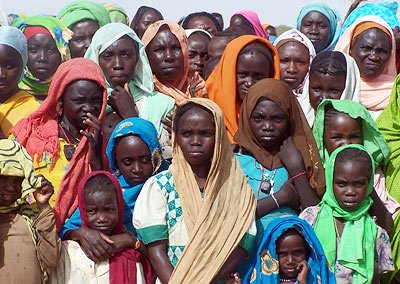
From The Economist print edition
Outsiders say that something must be done. Sudan says that it mustn't.
ON THE eve of the 61st United Nations General Assembly, 32 countries held events aimed at persuading their governments to recognise a responsibility to protect the civilians of Darfur, a threatened region in western Sudan. A rally in New York City's Central Park attracted upwards of 30,000 people who called for the speedy deployment of UN peacekeepers. The same day in Khartoum, Sudan's capital, a much smaller group of demonstrators, organised by the government, took the opposite tack. They marched to the UN's local headquarters to give warning that Security Council Resolution 1706, which had ordered 20,000-plus peacekeepers to Darfur, threatened the stability of their country.
At the UN itself, on September 19th, Sudan's president, Omar al-Bashir, agreed that the 7,000-strong contingent of African Union (AU) peacekeepers could stay, but insisted that he would not accept a UN force designed to place “Sudan under mandate, a sort of trusteeship”. The mandate of the AU force has been extended until the end of the year and the Security Council is now trying to find ways to make it less feeble. Read more >>>
Wednesday, September 20, 2006
Darfur: Where is the will?
Elvir Camdzic, John Weiss
The history of the world's response to the genocide in Darfur has been a sad tale of calculated naivete, self-deception, pious platitudes, constructive engagement with genocidaires, conscious adoption of ineffective policies and diversionary strategies such as "awareness-raising," divestment and fundraising for humanitarian aid.
The would-be rescuers of Darfur -- politicians, diplomats and activists alike -- kept espousing the rhetoric of ultimate causes while practicing the art of minimum risk. They all deplored genocide, but refused to take the risks necessary to stop it. None of them cared enough to put their nonviolent purity or their clean-solution sainthood on the line. Read more >>>
The history of the world's response to the genocide in Darfur has been a sad tale of calculated naivete, self-deception, pious platitudes, constructive engagement with genocidaires, conscious adoption of ineffective policies and diversionary strategies such as "awareness-raising," divestment and fundraising for humanitarian aid.
The would-be rescuers of Darfur -- politicians, diplomats and activists alike -- kept espousing the rhetoric of ultimate causes while practicing the art of minimum risk. They all deplored genocide, but refused to take the risks necessary to stop it. None of them cared enough to put their nonviolent purity or their clean-solution sainthood on the line. Read more >>>
Darfur can't wait
Last week, actor George Clooney described a recent trip to the crisis-torn region of Darfur in Sudan. A little girl pulled his finger, he said, and asked when he would be back. When he replied "soon," she giggled and told him: "That's what you always say."
Out of the mouth of babes, the saying goes, often comes the truth.
On Tuesday, speaking to the opening of the United Nations General Assembly in New York, President Bush announced he was appointing a high-level envoy, Andrew Natsios, to lead a new push to end more than three years of slaughter and mass displacements in Darfur. The little girl set the only meaningful test: Will it be yet another hollow gesture? Read more >>>
Out of the mouth of babes, the saying goes, often comes the truth.
On Tuesday, speaking to the opening of the United Nations General Assembly in New York, President Bush announced he was appointing a high-level envoy, Andrew Natsios, to lead a new push to end more than three years of slaughter and mass displacements in Darfur. The little girl set the only meaningful test: Will it be yet another hollow gesture? Read more >>>
'West ignoring Darfur conflict'
Johannesburg - African security experts blasted the West on Wednesday for ignoring conflicts on the continent, especially the dragging crisis in Sudan's Darfur region, to focus on the war on terror.
"Darfur has been on the table for a long time now and at least 200 000 people have been displaced," said Festus Aboagye, who heads the peace missions programme at the Pretoria-based institute for security studies.
"Do you need a million people to die before the international community moves in?" said Aboagye.
"Genocide should not be used as the justification for intervention". Read more >>>
"Darfur has been on the table for a long time now and at least 200 000 people have been displaced," said Festus Aboagye, who heads the peace missions programme at the Pretoria-based institute for security studies.
"Do you need a million people to die before the international community moves in?" said Aboagye.
"Genocide should not be used as the justification for intervention". Read more >>>
Subscribe to:
Posts (Atom)