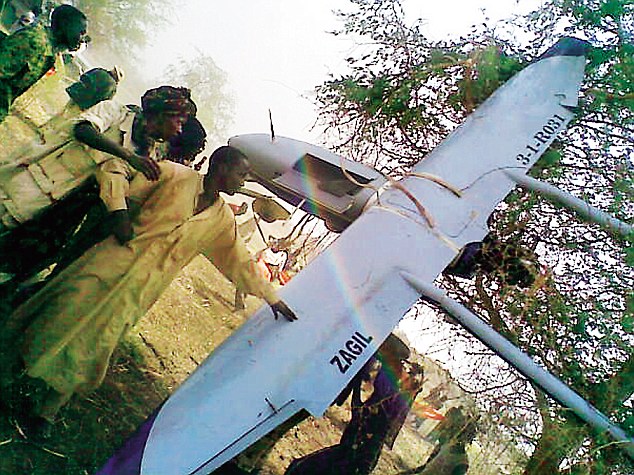
Sunday, August 19, 2012

Parts of Darfur See Stability, but Others Are Seething

NAIROBI, Kenya -- It was a scene that seemed to belong to a different time, say, early 2004, when war was raging across Sudan's vast desert region of Darfur. Hundreds of armed men -- on horseback, camels, donkeys and in four-by-four trucks -- some in street clothes, some in camouflage fatigues, swept into the Kassab displaced persons camp and began looting, burning, raping and shooting.
In the span of a few hours, several people were killed and tens of thousands were sent running for their lives.

But this was not 2004. It happened this month, this year, and United Nations officials and aid workers said it was among the more troubling violence Darfur has experienced in years.
"We haven't had a crisis like this in awhile," said Christopher Cycmanick, a spokesman for the United Nations-African Union peacekeeping mission in Darfur, known as Unamid.
Nearly a decade after war first arrived, Darfur is a land of mixed signals.
Some areas have become stable -- even peaceful, many residents say -- like parts of western Darfur, where thousands of families are finally returning home.

But at the same time, other areas are seething.
The overall trend for the past couple of years had been one of cautious improvement, United Nations officials say, with civilian deaths gradually declining. But this year is on track to be a setback, they warn, with more criminality, rebel attacks, rapes, displacements and assorted mayhem than in the recent past.
Activists contend that official pronouncements of progress have long been misleadingly rosy, and they are increasingly fed up with the huge, $1.5-billion-a-year peacekeeping mission in Darfur, saying that it is failing at its core mission: protecting civilians.

"This is probably the least cost-effective peacekeeping mission in U.N. history, but it's simply not possible to say that out loud, given A.U. sensitivities," said Eric Reeves, a Smith College professor and a prolific blogger on Sudan. "There are factitious claims about 'improved' security, and woe to the man who disputes the U.N./Unamid line."
In the case of Kassab, many of the victims begged for help when the marauders stormed into the camp, but because of the intensity of the violence and some flooding along the roads, United Nations peacekeepers did not arrive until three days later. When they did get there, they pulled back because government forces were still battling the militia fighters. It took several more days before government troops were able to restore a semblance of control.

Government forces in Darfur are stretched thin these days, but beyond that, they seem to be living up to their history as some of the worst perpetrators. Just this Friday, there were reports of renegade soldiers ransacking the market in Tabit, breaking into shops and shooting civilians.

In the past few months, there have been heavy bombings in eastern Jebel Marra; deadly protests in Nyala; vicious clashes near Tabun; and further attacks on displaced people in several other camps across Darfur. Read more >>>>>>>>>>>>>>>>>>>>


Tuesday, August 07, 2012

Flawed Peace Process Fails in Darfur, Again: Enough Project Report .

WASHINGTON--(ENEWSPF)--August 6, 2012. The African Union and U.N. Security Council renewed Darfur’s hybrid peacekeeping mission, UNAMID, this week without acknowledging the glaring failures of the Doha peace process. The Doha Document for Peace in Darfur, or DDPD, signed in July 2011, is yet another attempt by the Khartoum regime to continue its ongoing divide-and-conquer strategy of dealing with each of the country’s conflicts in isolation, argues a new Enough Project report.


The DDP was inherently flawed from the beginning because it does not address the root security or political issues of the Darfur conflict. Moreover, the only signatures to the DDPD are the government of Sudan and the Liberation and Justice Movement, excluding the three most prominent rebel groups in the region—the Justice and Equality Movement, and both factions of the Sudan Liberation Movement.

“Despite the head of UNAMID Ibrahim Gambari briefing the U.N. Security Council earlier this week on the progress in Darfur implemented as part of the Doha process, it has been an operational failure due to a lack of compliance among other things” said Omer Ismail, Enough Project senior policy advisor and co-author of the report. “One of the Khartoum regime’s hallmark moves is to appease international pressure and agree to an accord but not follow through on obligations in the agreement, which is exactly what is happening with the Doha Document for Peace in Darfur.”

The Enough Project report outlines Khartoum’s three significant violations of the DDPD: a failure to transfer funds to the Darfur Regional Authority, reluctance to cooperate with UNAMID, and refusal to allow unfettered humanitarian access in Darfur. The report points out that all three of these violations are reflected in Khartoum’s behavior dealing with the other conflicts taking place in Sudan.

“The U.S. government and other key donors and multilateral organizations must rethink their Sudan policy portfolios so the Darfur crisis is not dealt with in isolation,” said Enough Project Executive Director John Bradshaw. “Each conflict in Sudan, including Darfur, stems from the Khartoum regime’s systematic marginalization and neglect of the periphery and requires a comprehensive approach to achieve lasting peace.” Read more >>>>>>>>>>>

Friday, August 03, 2012

Sudan: Security forces must stop using live roundsagainst demonstrators

Sudanese security forces must stop shooting protesterswith live ammunition, Amnesty International said after confirming thatat least eight demonstrators killed on Tuesday had bullet wounds in theirchests, some inflicted at close range.
At least 10 people, many of them high school students,were killed on July 31 when Security services and paramilitary police openedfire in Nyala, South Darfur, during a demonstration against fuel pricesand the cost of living. Dozens more were injured.
Medical staff at Nyala Public Hospital told Amnesty Internationalthat the wounds inflicted on the eight bodies admitted to their morguewere consistent with those caused by 5.56mm and 7.62mm automatic rifles.
“Any individual members of the security forces involvedin the events that caused this bloodbath must be suspended immediately,”said Paule Rigaud, Amnesty International’s Africa program director.
“The Sudanese government must investigate why protesterswere directly targeted by the security force personnel who opened fireon them with live bullets.”
The Sudanese authorities have routinely used excessiveforce against mostly peaceful demonstrations which have occurred regularlyin Sudan’s major cities since mid-June.
According to the United Nation’s Basic Principles of theUse of Force, live ammunition should not be used, either directly againstdemonstrators or as warning shots, unless it is absolutely necessary andonly after less extreme means have proved ineffective.
The security forces also fired Dushka-type heavy machine-gunsin the air, which injured residents in their homes as bullets fell downfrom the sky.
“The Sudanese security forces must not be allowed to policedemonstrations in such a reckless manner and with flagrant disregard forhuman life,” said Rigaud.
“Sudanese citizens must be allowed to express their opinionpeacefully without experiencing systematic repression. Attacks againstpeaceful protesters are an unacceptable violation of their right to freedomof expression, assembly and association.”
Amnesty International is also concerned that injured protestersmay have been denied medical care following eye witness reports some werearrested and that plain clothes National Security Service personnel weredeployed within Nyala General Hospital.
Amnesty International has documented a pattern in recentweeks of injured protesters being denied medical treatment in Khartoum.
Police forces have used batons, tear gas and rubber bulletsat close range against demonstrators.
And, in response to the protest movement, the NationalSecurity Services (NSS) arrested hundreds of known political and civilsociety activists, regardless of their involvement in demonstrations. Manytold Amnesty International they had been tortured with sticks, water hosesand fists, and made to stand under the scorching sun all day.
In some cases individuals who had been injured in demonstrationsor as a result of torture and ill-treatment by security forces told AmnestyInternational that they preferred not to seek treatment in hospitals becausethey feared arrest and intimidation.
Dozens of activists remain in administrative detention.
Notes to Editors
• Security forces involved in the Nyala shootingsinclude the Central Reserve Police – a combat-trained paramilitary police- and plainclothes agents of the National Security Services (NSS).
AI Index: PRE01/378/2012

"Vast humanitari​an crisis in Sudan—yet again"

"Vast humanitarian crisis in Sudan—yet again"

From The Christian Science Monitor, August 3, 2012
http://www.csmonitor.com/Commentary/Opinion/2012/0803/Vast-humanitarian-crisis-in-Sudan-again
 
By Eric Reeves

Yet again the grim title of "world's greatest humanitarian crisis" goes to Sudan—this time for developments in the border regions between Sudan and the newly independent country of South Sudan. The crisis is exploding as the rainy season descends fully upon this area, and humanitarian resources are overwhelmed.

Khartoum's denial of all humanitarian access to rebel-controlled areas within its borders, along with a relentless campaign of aerial bombardment, is generating a continuous flow of tens of thousands of refugees—4,000 per day according to Doctors Without Borders/Médecins Sans Frontières (MSF). But even that June figure is being quickly overtaken according to reports. And no wonder. The regime faces no significant international condemnation or consequences for its role in creating this crisis. That must change.

At various points over the last quarter century, greater Sudan has been the site of vast humanitarian crises, notably in Darfur, in western Sudan. These were foreseeable episodes of human suffering and destruction rooted in deliberate military and political decisions by the ruling National Islamic Front/National Congress Party and Sudan's president, Omar al-Bashir. If the regime's tactics have differed, its strategic goal has not. This is "counter-insurgency on the cheap," and it's painfully familiar.

At present, hundreds of thousands of civilians have been forced from their homes in South Kordofan and Blue Nile states—areas that are part of what is now (northern) Sudan, but which are substantially populated by people who sided with the South during the 1983-2005 civil war. Those fleeing are driven by desperate hunger, a lack of water, and air attacks. There is no accurate census for the numbers who have reached refugee camps in the South (in the Unity and Upper Nile states), but data suggest that the figure is approaching 300,000. Read more >>>>>>>>>>>>>>>>>>>>

UN CALLS FOR INDEPENDEN​T PROBE INTO VIOLENCE THAT KILLED EIGHT PEOPLE IN DARFUR

UN CALLS FOR INDEPENDENT PROBE INTO VIOLENCE THAT KILLED EIGHT PEOPLE IN DARFUR
New York, Aug  3 2012 10:05AM
The United Nations today urged Sudan to launch an independent investigation into the reported use of excessive force by Government security forces during a protest in Darfur on Tuesday, which resulted in eight deaths and injured more than 50 people.
According to eyewitnesses, security forces opened fire at demonstrators in Nyala, the capital of South Darfur, and used tear gas, killing eight people, five of whom were young students aged 17 and below.
“We urge the Government to promptly launch an independent and credible investigation into the violence and the apparent excessive use of force by security forces,” the spokesperson for the Office of the High Commissioner for Human Rights (OHCHR), Ravina Shamdasani, <"http://ohchr.org/EN/NewsEvents/Pages/DisplayNews.aspx?NewsID=12404&LangID=E">told reporters in Geneva.
Media reports state that the population was protesting against rising prices in Sudan’s western Darfur region after the Government announced a cut in fuel subsidies and other austerity measures last month.
“There are key international guidelines that must be respected in handling protests so that the legitimate right of people to freedom of expression and assembly are fully respected,” Ms. Shamdasani said. “We call on the Government to unequivocally condemn excessive use of force to suppress protests, and to hold accountable those who were responsible for the fatalities and injuries.”
High Commissioner for Human Rights Navi Pillay had earlier called on Sudanese authorities to ensure that demonstrations are allowed to proceed peacefully and for restraint from all sides.
“We also call again on the Government to immediately and unconditionally release those who have been detained for merely exercising their rights to freedom of assembly and expression,” Ms. Shamdasani said, adding that human rights staff of the UN-African Union peacekeeping mission in Darfur (UNAMID) will continue to monitor the situation.

Deployed at the beginning of 2008, UNAMID is tasked with protecting civilians, promoting an inclusive peace process and helping ensure the safe delivery of humanitarian assistance across Darfur, an arid region on Sudan’s western flank.

For more details go to UN News Centre at http://www.un.org/news

Janjaweed militias raided IDPs camp (Kasab) and killed three displaced people in front of the North Darfur governor Osman Yousif Kibir

Kuttum August 1st, 2012. In a striking development of events in the city of Kutum, Northern Darfur, following the killing of Mayor of Oasis Abdul Rahman Mohammed Isa on Wednesday, groups of the Janjaweed militia raided IDPs camp (Kasab) near the city Kuttum.


They surrounded the camp. The governor of the state of North Darfur, Osman Yusuf Kibir visited the area to see the developments. Upon his arrival in the camp (Kasab,) some individuals wanted to talk to him. But some Janjaweed immediately shot the camp dwellers dead in front of the governor and the commander of the army. One of the people killed was Adam Khamis. People are trying to investigate the identity of the others.

In another development of the events, another group of Janjaweed from El Fasher arrived to Kassab IDP camp on Thursday morning. They started looting, killing and abusing camp dwellers. They still continue to do so.


According to reports from Kuttum, the town has become a ghost city. Only herds of the janjaweed militias can be see roaming different parts of the city, terrorizing the town inhabitants and committing crimes.

The regular Sudanese army and police have so far kept silent. UNAMID force, mandated to protect the civilians in Darfur, is nowhere to be seen.

This arises suspicion and doubt in the effectiveness of these forces in executing their mandate and the collusion between them and the Sudanese government.

The source in Kuttum said "The Janjaweed militias in Kuttum are mostly foreign elements under the command of Ali Osman Mohamed Taha, First Vice President".

Wednesday, August 01, 2012

Sudan transport price protests kill six in Darfur

Six people have been killed in violent protests against high transport prices in the Darfur region of western Sudan, local officials say.


Police in Nyala, the capital of South Darfur state, fired tear gas at protesters throwing stones and burning tyres in the streets, witnesses said.

Several protesters chanted slogans calling for the government's downfall.

Since June, Sudan has seen sporadic protests against government austerity measures, including fuel subsidy cuts.

The country's authorities have been trying to cut spending since Sudan lost three-quarters of its oil revenue when South Sudan seceded last year.

Demonstrators in Nyala chanted "No to high prices" and "People want to change the regime", according to witnesses.


Bothina Mohmed Ahmed, a spokeswoman for the state of South Darfur, said it was not known how the six deaths had happened, and that an investigation had been launched. Read more >>>>>>>>>>>>>>>


Monday, June 18, 2012

Darfuris Union organizes cultural festival at The Hague under the theme: Let us join hands together for Darfur

Darfuris Union organizes cultural festival at The Hague under the theme: Let us join hands together for Darfur


In the context of contact with different communities in The Netherlands and to pinpoint cultural and social reality of Darfur, Darfur Union organizes an Open Day. The program contains:

1.Exhibition

2.History and heritage of Darfur

3.Songs

4.Special program for kids

5.Miscellaneous

Time: July 7th, 2012 at 13.00 hours

Place: The Hague

Direction: Take trams 16 from Hollandspoor train station going to Wateringen. Step out at the station Alberding Thijmstraat. From there, it is 1 minutes walk to Ferrandweg 4T

For queries, please contact bellow numbers:

Al-Sadig Khamis 0684283940

Kamal Yacoub 0643771256

You are all welcome. Entrée is free.

Wednesday, June 13, 2012

World’s most murderous dictator thrives

By: Nat Hentoff, The Dickinson Press


Except primarily for the ironhanded rulers in Russia and China, the most despised global dictator is President Bashar al-Assad of Syria, who is inflicting monstrous genocide on his own people. As usual, the United Nations is useless. But meanwhile, another monster is thriving, someone who has killed and starved to death hundreds of thousands more of his people than al-Assad.


President Omar al-Bashir of Sudan has had arrest warrants issued against him by the International Criminal Court (ICC) on counts of war crimes, crimes against humanity and, yes, genocide. Swashbuckingly unintimidated, al-Bashir is making initial martial moves against recently independent South Sudan that could bring back the years of horrors he unleashed in the country as a whole, including Darfur in the west.


In the past, the U.N. issued paper resolutions of concern and helped negotiate the now continually vulnerable independence of South Sudan. However, as al-Bashir’s Army continues to rape and murder, creating omens of a renewed civil war, the U.N. is silent, as are nations that have demonstrated concern about human rights, including Barack Obama’s United States.


And just about everywhere, the rushing media is otherwise occupied. But, as I expected, the most courageous American investigative reporter, The New York Times’ Nicholas Kristof, has been writing from the remote, almost inaccessible Nuba Mountains of Sudan. Read more >>>>>>>>>>>>>>>>>>>>>


Wednesday, June 06, 2012

Mukesh Kapila: Act Now or It will Be Too Late

The former head of the United Nations in Sudan said humanitarian situation in the Nuba mountains is very disturbing. Mukesh Kapila recently visited villages in southern Kordofan and said he has witnessed illegal weapons such as landmine and cluster bombs being used against civilians in the Nuba Mountains.


He also said many children in the region showed signs of malnourishment. Kapila warned of what he termed the ‘’second genocide of the century’’ unless the international community takes action. Fighting between Sudan Armed Forces and rebels of Sudan People’s Liberation Army – North (SPLA North) erupted in June of last year, forcing thousands of civilians to take refuge in South Sudan.


Fighting in Nuba Mountains


He accused Sudan of using heavy weapons against civilian targets. ‘’ What is going on in Nuba mountains is even worse because ten years after Darfur we have much more sophisticated weaponry being used by Sudan Armed Forces’’ Kapila said.


The former United Nations diplomat said Sudan's government is using proxy popular

defense militia to terrorize the people of Nuba mountains. He said Darfur was the first

genocide of the 21st Century, adding that what he has witnessed on his most recent trip to the area suggests a second genocide is occurring in Sudan. Read more >>>>>>>>>>>>>>>>>>>>>>>>>>>>


ICC asks UN to help arrest Sudan's president

UNITED NATIONS (AP) — Sudan's refusal to arrest President Omar al-Bashir and three others accused of war crimes in Darfur is "a direct challenge" to the U.N. Security Council, and it should now consider asking all countries and regional organizations to carry out the arrests, the International Criminal Court's chief prosecutor said Tuesday.


Luis Moreno-Ocampo conceded that council discussions of other possibilities to arrest the four Sudanese, including seeking help from member states and regional bodies, "will be problematic."


"But the victims will receive a clear message: They are not ignored," he said. "And the perpetrators will receive a clear message: There will be no impunity."


The court, set up in 2002 to prosecute the most senior perpetrators of genocide, crimes against humanity and war crimes from nations that cannot or will not put them on trial, has no police force of its own to arrest suspects. More than 100 countries that are parties to the Rome statute are required to arrest those sought by the tribunal — but al-Bashir has traveled to friendly nations without being detained. Read more >>>>>>>>>>>>>>


Darfur War Crimes Prosecutor Urges Tougher Action Against Sudan President

The outgoing prosecutor at the International Criminal Court, frustrated over his inability to enforce arrest warrants for the Sudanese president and three others accused of war crimes in the Darfur conflict, recommended to the Security Council on Tuesday that it take more severe action against the defendants, including possibly seizing them inside Sudan for trial in The Hague.


The prosecutor, Luis Moreno-Ocampo, whose term expires at the end of June, told council members in his 15th and final report on the Darfur prosecution effort that the council also should consider requesting that all 193 members of the United Nations — not just those that recognize the court’s authority — take action to enforce the arrest warrants on President Omar Hassan al-Bashir of Sudan and the others, who include two powerful subordinates and the leader of a feared militia accused of large-scale killings, pillage and rapes.


Mr. Bashir, the only sitting head of state to be indicted on charges of genocide, war crimes and crimes against humanity, has repeatedly scoffed at the arrest warrants and has even traveled abroad despite the risk of arrest, although he could face that threat again next month if he attends an African Union summit meeting in Malawi. Read more >>>>>>>>>>>>>>>>>>>>>>>


Monday, June 04, 2012

Ocampo last briefed the Council on the work of the ICC in Sudan on 15 December 2011

http://www.securitycouncilreport.org/site/c.glKWLeMTIsG/b.8102701/k.516C/June_2012brSudanDarfur.htmExpected Council Action


In early June, the Council is scheduled to receive the biannual briefing from Prosecutor Luis Moreno-Ocampo on the work of the International Criminal Court (ICC) in Sudan. Ocampo is expected to deliver his report in a public meeting of the Council, followed by a private meeting. (This will be his final briefing to the Council as ICC Prosecutor, as he is expected to leave his post mid-month. He will be succeeded by Fatou Bensouda of Gambia.)

Key Recent Developments

Ocampo last briefed the Council on the work of the ICC in Sudan on 15 December 2011. He outlined the evidence that the ICC had mustered against the various Sudanese officials and rebels that it had indicted. He also noted that only days prior to the briefing his office had requested an arrest warrant for Sudan’s Minister of Defence, Abdelrahim Mohamed Hussein, for crimes against humanity and war crimes he allegedly committed while serving as Interior Minister and Special Representative of the President in Darfur. In particular, Ocampo said that Hussein “played a central role in coordinating the crimes, including in recruiting, mobilizing, funding, arming, training and deploying the militia/Janjaweed as part of the Government of Sudan forces, with the knowledge that these forces would commit crimes.”


Ocampo also emphasised the importance of implementing ICC arrest warrants and respecting Security Council resolutions. He called for the AU and the Arab League to play a key part in helping to find a solution that respects the authority of the Council and the decisions of ICC judges.


Regarding the situation in Darfur more generally, Ocampo said that, despite numerous requests from the Council, aerial bombardments continued and the Janjaweed (a pro-Khartoum militia) had not been disarmed.


Ambassador Daffa-Alla Elhag Ali-Osman (Sudan) also addressed the Council in December. He said that Ocampo’s remarks contained “baseless accusations” and ignored improved security conditions in Darfur. Ali-Osman also noted that Ocampo had not mentioned the Doha Document for Peace in Darfur, which he said reflected the Sudanese government’s desire for peace.


On 1 March, the ICC issued an arrest warrant for Hussein for crimes against humanity and war crimes allegedly committed in Darfur between August 2003 and March 2004. (Ocampo had requested the pre-trial chamber to issue the warrant for Hussein’s arrest, on 2 December 2011.)


On 20 April, a formed police unit that had been patrolling a camp for internally displaced persons in Western Darfur was fired upon while returning to base. Four Togolese peacekeepers were wounded in the assault, and one later died. The Council adopted a press statement (SC/10623) on 24 April condemning the attack and calling on the Sudanese government to bring those responsible to justice. Read more >>>>>>>>>>>>>>>>>>>


Monday, May 28, 2012

Somebody Help: The Forgotten Population in North Darfur

In the remote Jebel Si area of North Darfur, Doctors Without Borders/Médecins Sans Frontières (MSF) runs a hospital, five health posts, and a mobile clinic. These are the only health facilities in the area, and they serve a permanent population of 100,000, as well as about 10,000 seasonal nomads. The majority of MSF’s patients in Jebel Si are women and children.

As the only medical organization with a permanent presence in Jebel Si, the population is entirely dependent on MSF for health care and emergency assistance. MSF’s relationship with the local community is one of mutual trust and cooperation.

But now a series of obstacles threaten to seriously hamper MSF’s ability to deliver medical assistance. Vital medical and logistical supplies have been prevented from reaching the area, work permits have not been granted, and physical access to the region has become increasingly difficult.

As a result of these obstacles, MSF has been forced to scale down its activities dramatically. Unless urgent steps are taken to rectify the situation, the people of Jebel Si will be faced with the reality of a future without essential health care. Read more >>>>>>>>>>>>>>>>>>>>>>>>>>>

GOC Charges Soldiers On Sexual Conduct In Darfur

Another troop of 800 officers and men of the Nigerian Army have been prepared for deployment on peacekeeping mission to Darfur Region of Sudan, with a stern warning to stay away from sexual misconduct. The 26-battalion troop was also warned to avoid circumstances that may lead to being disarmed by the Darfur rebels and guard against any act that would tarnish Nigeria’s image.
General Officer Commanding (GOC) 1 Mechanised Division Nigerian Army, Major General Garba A. Wahab, gave the warning at the graduation ceremony of the 26 Battalion Pre-Deployment Training at the Nigerian Army Peace Keeping Centre (NAPKC), Jaji, near Kaduna, yesterday. According to the GOC, “as you are aware, Nigeria is the largest troop contributor to the United Nations Mission in Darfur (UNAMID) operations. In this regard, you should strive to live above board and avoid anything that would ridicule the good image our dear country has built over the years in the area of international peace and security.
“As your General Officer Commanding, I have confidence in your ability to execute your task in accordance with UNAMID’s mandate. But, I must remind you that the Nigerian Army will not accept any situation where its soldiers are disarmed hence the need for effective leadership at all levels,” he said. Noting that the situation in the crisis areas of Sudan were unpredictable, Wahab told the peace keepers to avoid engaging in any form of sexual misconduct, saying, “don’t go to Darfur and start sleeping with women. It is highly unprofessional. Aside that, AIDS is real,” he warned. He stressed that having expended huge resources on their training, the Nigerian government placed high premium on their capability as a peace-keeping force. Read more >>>>>>>>>>>>>>>>>>>>>>

Wednesday, May 23, 2012

Sudan restrictions hamper aid work in Darfur - MSF

KHARTOUM (Reuters) - Government restrictions on Medecins Sans Frontieres (MSF) have forced the group to suspend key medical activities in part of Sudan's Darfur region, leaving tens of thousands of people without health care, the aid agency said on Tuesday.


The western Darfur area has been racked by violence since 2003, when rebels took up arms against a central government they accused of neglecting the remote region.


While fighting is down from its peak and the United Nations runs a large peacekeeping operation in Darfur, banditry and tribal fighting in addition to clashes between rebels and government forces have continued to plague the region.


MSF said hurdles to procedures like getting permits and shipping in medical supplies forced it to suspend most of its medical activities in the Jebel Si area, a conflict area in North Darfur state, where it is the only healthcare provider.


"With the reduction of our activities in Jebel Si, more than 100,000 people in the region are left entirely without healthcare," Alberto Cristina, MSF's operational manager for Sudan, said in the statement. Read more >>>>>>>>>>>>>>>


Tuesday, May 22, 2012

Sudanese civil society organizations urge Dutch government and entrepreneurs Not to invest in the Sudan

For Immediate Release                                                                                       May 21st, 2012

Sudanese civil society organizations urge Dutch government and entrepreneurs Not to invest in the Sudan

The Sudanese Dutch Private Investment Forum will be organized by The Chamber of Commerce Haaglanden on May 21st, 2012 at The Hague.

Almost all members of the Sudanese delegation are government officials. The International Criminal Court (ICC) issued warrants for the arrest of Sudan's president for war crimes, crimes against humanity and genocide and other senior government officials who are still in power. Violations of human rights are on daily basis, civil liberties are denied and security is non-existent across the country.

The Sudanese government relies on foreign investments to fund its military and the brutal militias to commit war crimes and crimes against humanity against the people of the Sudan. The revenue from the investment will be used to purchase arms to commit more crimes on innocent people in South Kordofan, Eastern Sudan, Blue Nile, Darfur and the rest of the Sudan.

The Sudanese civil society organizations sent letters to The Dutch government, entrepreneurs, people of The Netherlands and the participants in The Sudanese Dutch Private Investment Forum, urging them to divest instead of investing in the Sudan, to pressure the government of Sudan to improve human rights records, to fully cooperate with the International Criminal Court and to allow the humanitarian aid organizations to access the people in a dire need.

Darfur Union
darfurunion@yahoo.com

Nuba Mountains Solidarity Abroad
sabiraglain@hotmail.com

Sudan Youth for Change Movement
nasir518@hotmail.com

Sudan Democratic forum

Sunday, May 20, 2012

A Comment on African Union's Road Map and United Nations Security Council's Resolution 2046

By: Gamal Adam


The African Union’s recent road map which the United Nations Security Council has endorsed with the Resolution 2046 includes a clause that puts pressure on the Sudan People's Liberation Movement-North (SPLM-N) to negotiate with Khartoum in order to settle the Sudanese problem in Southern Kordofan and Blue Nile -- a clause which the Sudan Revolutionary Front (SRF) has refuted through its commander in chief, Abdl-Aziz Adam Al-Hilu, who said that selective negotiations are not acceptable because they will never lead to sustainable peace since they do not address the root cause of the conflict in Sudan (see www.sudantribune.com 10/5/2012). Mr. Al-Hilu also added that the international community has short memories with regard to Sudanese conflict and he tried to remind the AU and the UNSC that “Bashir has dishonored more than 43 peace agreements including key provisions of the Comprehensive Peace Agreement….” I say yes, Al-Hilu and Sudan Revolutionary Front have got it right, whereas the international community represented by the African Union and the United Nations Security Council got it seriously wrong. The road map which has been endorsed by the Resolution 2046 might be suitable for the settlement of the crisis between Khartoum and Juba, but including to it South Kordofan and Blue Nile is a serious mistake. It is something in a gold dish, as Sudanese saying goes, which unexpectedly came across Khartoum’s way because it never thought that the AU and UNSC would be in such a level of naivety or even dangerous carelessness. There are many questions which those who included South Kordofan and Blue Nile to the road map for the settlement of conflict between Juba and Khartoum should have first asked themselves before doing what they have done. They should have asked themselves: “Where are the agreements which Khartoum signed with several fronts in 2005 and 2006, including Abuja Agreement, Asmara Agreement, and Cairo Agreement? Why did the majority of southern Sudanese opt for independence rather than unity? Was the unity really attractive and southern Sudanese did not want it simply because they wanted to have their own country for no genuine reason? Why did Pagan Amum cry that the SLPM/A and the NCP started the division of portfolios nicely as if it was a spoon for the NCP and a spoon for the SPLM/A, but as soon as they reached the portfolios of finance, energy and mining, security, interior, and so forth, the NCP threw its spoon away and used both hands? Why is Tijani Seisei crying that his Doha agreement is dying (even though I had told him many months before he signed it that his Doha was going to be born dead because he did not take right steps toward its conception)? How can Doha be an agreement without ceasefire and why have most of the crimes of which Al-Bashir and leading members of his party have been accused continued, including killing, rape, and various types of humiliation (e.g. farmers farm their own farm lands and harvest crops on condition that regime’s militiamen take what they want of the crops and leave the rest to farmers or farmers rent their own lands from militiamen or else they should not farm, militiamen also rape women almost every day and those of them who try to defend themselves or their relatives are killed, stabbed or seriously beaten up, and so forth)? And have Minni, Abul-Gasim Imam, Al-Hilu, Agar, and Arman gone back to arms simply because they are naturally inclined to fight, risking their own lives for no genuine reasons?” The people who formed the Sudan Revolutionary Front did not form it only to be dismantled by selective negotiations which lead to no settlement. In fact, the selective negotiations regardless of their number (43, more or less) did function like a type of medicine that doubled the resistance of virus once it was taken. One of these examples is the Comprehensive Peace Agreement which the NCP and the SPLM/A signed in 2005. Had that agreement been signed between the National Democratic Alliance (NDA), including the SPLM/A and the other constituents of the NDA, Sudan would still have probably been one country ruled by a democratically elected leader, the fruitless agreements that took place in Cairo, Asmara, Abuja, Doha, and Addis Ababa would have been avoided, and efforts and money wasted in them been invested somewhere else. Also, Dinka, Misseirya, and other Sudanese would have been interacting peacefully in Abyay and Hijleej, Al-Bashir’s racist speeches and Al-Intibaha’s abhorrent writings stopped, and the games of hatred in the name of Islam outlawed. However, according to some authentic sources, Dr. John Garang had at the beginning insisted that the problem of the whole Sudan be solved at once in Naivasha, but he let the idea of including the NDA to the talks go because of the mounting pressure that some IGAD members and friends exercised on him. There is no doubt that Khartoum had in some ways influenced the mediators to exclude the other members of NDA, as any move toward the segmentation of Sudan’s problem constitutes a dream that comes true for the NCP regime whose existence in power is based on dividing the Sudanese society at all levels starting from the smallest unit such as family to the entire country. For example, the regime divided members of the same families between supporters and enemies, causing conflicts among them, made population of the same villages kill each other, and tore the social web of Sudanese society by categorizing the people as either Arabs and non-Arabs (‘Abeed—slaves or non-full-citizens) and treat them accordingly. I would like to correct Mr. Al-Hilu that the problem of Sudan is not only limited to Blue Nile, Darfur, and South Kordofan—it has now reached almost every corner in the country and most Sudanese, except NPC members, and Al-Mahdis and Al-Marghanis and their entourages, are convinced that the NCP regime has to go by all means. The document which 12 Sudanese political parties and movements signed in Washington DC on May 10, 2012 and in which they decided to work together for the regime change is evidence that most Sudanese want this regime to go (see www.sudanile.com 10/5/2012). Moreover, the Sudan Revolutionary Front does not only include SPLM/A-N and the Darfur movements, as the Beja Congress and Kush which represent the far north and east are also its members in addition to some important political figures from the DUP and Umma party who had been fed up with the incompetent leadership of Al-Mahdis and Al-Marghanis and decided to join the SRF (see Sarri at www.sudanile.com 17/05/2012). I also met many individuals from the eastern, northern, and western parts of Kordofan who were members of the movements that were fighting the regime in Darfur and which are now part of the SRF. All of these efforts leading toward keeping the remaining Sudan united and even bringing South Sudan back in the future, if we are able to completely exclude religion, ethnicity, and race from politics, and make everything be based on citizenship. The frustration of these efforts, exerted by Sudanese of all backgrounds toward finding an inclusive settlement to their country’s problem, will definitely lead to further complication of already complicated situation, as there has never been peace in Darfur and Asmara Agreement did not bring any genuine stability in Eastern Sudan. Moreover, western Kordofan, far north, and many parts of Al-Jazeera (central Sudan) are all potential conflict areas. As Al-Hilu has mentioned, the way toward reaching sustainable peace for Sudan is the inclusive negotiations that will lead to the birth of a constitution that genuinely guarantees equal rights for all Sudanese citizens regardless of their backgrounds, bestows on them the right to never accept again any more coups d’état and resist dictatorships by all possible means, establishes a real national army, as there is no longer Sudanese army, and allows the people of each region to run the affairs of their own region, including the management of resources. I have to point out that the leaders of Sudan Revolutionary Front are partly responsible for the mistakes that the international community is about to make on Sudan, as they are not able to quickly get rid of the factional labels (e.g. SPLM/A North, SPLM/A Adelwahid or Minni, JEM, and so forth) that make them look divided. They have to raise themselves to the hopes of most Sudanese, pave the way for a Sudan that is for all Sudanese, and put an end to Al-Bashir’s Sudan of masters and slaves (or humans and insects). I hope that Sudanese all over the world will demonstrate against the AU and UNSC’s clause on South Kordofan and Blue Nile that will not only further divide Sudan, but will also prolong the suffering of Sudanese people under a regime which many Sudanese describe as the worst ever in the history of Sudan since 1821.


The writer can be reached at gamaladam@yahoo.ca

The forgotten Darfur conflict

By Kevin J. Kelley Nearly forgotten amid the attention being given to the Sudan-South Sudan conflict, the nine-year-long war in Darfur is said by differing sources to be either winding down or intensifying. A generally upbeat assessment was offered in February by New York Times East Africa correspondent Jeffrey Gettleman, who visited a set of villages in western Darfur near the border with Chad. About 100,000 local residents displaced by Arab militias’ attacks have returned to their land, the NYT journalist reported, suggesting that this development serves as “a sign that one of the world’s most infamous conflicts may have decisively cooled.” Gettleman, who won a top US journalism award last month, cautioned in his report that “all is not well in Darfur.” He noted that more than two million inhabitants of this region of Sudan remain in camps for refugees or internally displaced people, while some rebel groups continue to battle Sudanese government forces and allied Arab militias known collectively as the Janjaweed. Read more >>>>>>>>>>>>>>>>>>>>>>>

Saturday, May 12, 2012

Khartoum and the Language of War: Who’s Really Listening?

Eric Reeves May 11, 2012 Every day it becomes clearer that unless Juba buckles before Khartoum’s extortionate demands, on a range of issues, then the regime will settle matters militarily—as it did in Abyei precisely one year ago. Yet in a remarkable display of obtuseness, the international community, putatively concerned with peace between Sudan and South Sudan, refuses to hear what the regime is actually saying. This obtuseness is apparent in the toothless UN Security Council resolution of May 2nd, which contains a cease-fire demand that has already been repeatedly violated by Khartoum; in the African Union roadmap, which (though backed by the Security Council) Khartoum accepts only “provisionally,” claiming the roadmap is “full of shortcomings and outright bias in favor of the SPLM”; and in the vehement and geographically ill-informed condemnations of the Southern “invasion” of Heglig along the contested North/South border, a profoundly misguided effort to accommodate Khartoum’s tendentious territorial claims (April 10 – 20). The failure of comprehension is also apparent in the now increasingly perfunctory condemnations of Khartoum’s relentless bombing of civilian targets inside sovereign Southern territory, even as these bombings are meant by Khartoum to bring both political and military pressure on Juba. And perhaps the most telling sign of policy myopia is the refusal by the Security Council to do more than “urge” Khartoum to allow humanitarian access to those starving in Blue Nile and the Nuba Mountains, where civilian bombings have been relentless for over eleven months. Without securing humanitarian access from the regime in the very near term, the international community is likely consigning tens of thousands of people to death by starvation as Khartoum continues its genocidal counter-insurgency tactics. A distorted narrative. Read more >>>>>>>>>>>>>>>>>>>>>>>>>>>>>>>>>>>>

Tuesday, May 08, 2012

Four children killed in Darfur blast: AU-UN

A UNAMID spokesman said the incident occurred when a UXO (unexploded ordnance) detonated in Jealjeala, 60 kilometres (37 miles) from the West Darfur state capital El Geneina. He could not immediately give other details, including exactly when the blast happened. The UN estimates that at least 300,000 people have died as a result of the Darfur conflict, which began in 2003 when rebels from non-Arab tribes in Sudan's far west rose up against the Arab-dominated Khartoum regime. The Sudanese government puts the death toll at 10,000. Read more >>>>>>>>>>>>>>>>>>>>>>>>

The Security Council Who Cried Wolf

By Brigitte Hamadey "Kony 2012" is one organization's attempt to demand the arrest and surrender of Joseph Kony, leader of the Lord's Resistance Army, to the International Criminal Court. While Invisible Children has succeeded in putting Kony back on a radar screen, the question is not whether their goal will be accomplished, but why their efforts might have been necessary in the first place. The YouTube sensation highlights the fact that there are outstanding arrest warrants issued by the International Criminal Court that demand the international community's attention. One of the ICC's major realities is that it relies entirely on states to arrest and surrender accused to the Court. In this respect, state cooperation gives teeth to the ICC's bark. This is especially true for the Court's attempt to provide justice in Darfur and Libya, the situations referred by the UN Security Council, because neither Sudan nor Libya themselves requested ICC involvement. The Court has issued seven arrest warrants in these situations. To date, none of the suspects have been surrendered to The Hague. Despite its leadership in referring the Darfur situation to the ICC, the Security Council has failed to pressure the Sudanese government to comply with its international obligations vis-à-vis the Court. For instance, since April 2007, when the Court first issued arrest warrants for suspects who have allegedly committed crimes in Darfur, the ICC Prosecutor has briefed the Security Council nine times on the situation in Darfur, including on Sudan's repeated refusals to cooperate. In May 2010, the ICC Pre-Trial Chamber informed the Security Council of its decision that Sudan has failed to comply with its legal obligations. In spite of these findings, the Council has turned a blind eye. Read more >>>>>>>>>>>>>>>>>>>>>>>>>>>>

Wednesday, April 25, 2012

Sudan: No end to violence in Darfur: Arms supplies continue despite ongoing human rights violations

Sudan: No end to violence in Darfur: Arms supplies continue despite ongoing human rights violations The supply of various types of weapons, munitions and related equipment to Sudan in recent years, by the governments of Belarus, the People's Republic of China ...Read the full story >>>>>>>>>>>>>>>>>>>>>>>>>>>>>>

Tuesday, April 24, 2012

Three workers for Catholic aid agency arrested in Darfur

JUBA, South Sudan (CNS) -- Three staff members of a Catholic aid agency working in southern Darfur were arrested by security forces in Nyala as they were making preparations to return to South Sudan. The Sudan Catholic Radio Network reported security forces also closed the Nyala office of Sudan Aid, an affiliate of Caritas Internationalis, the Catholic church's aid and development organization. Gabriel Yei, director of Caritas South Sudan, said that Dominic Pathic, James Celestino and William Atorjony when security forces confronted them and took them into custody. No word on their whereabouts was available. Read more >>>>>>>>>>>>>>>>>>

Thursday, April 19, 2012

Sudan Army in Fresh Clashes With SPLA and Rebels in Darfur and South Kordofan

Khartoum — The Sudan Armed Forces (SAF) has repelled an attack by South Sudan's army today in al-Meram locality in South Kordofan state, a local official said. The al-Meram mayor Colonel Fathi Abdullah Arabi told the government-sponsored Sudanese Media Center (SMC) website that the assault targeted an SAF brigade in Bahr al-Arab region which lies 62 kilometers south of al-Meram town. Arabi said that the SPLA wants to disperse SAF efforts in trying to liberate the Heglig region occupied by the south last week. He claimed that they inflicted heavy losses on the assailants that are still being counted. The mayor called it a violation of borders and promises made by South Sudan in the agreements signed and vowed a "double response" to rebellion in his area. In South Darfur, the deputy governor Abdel-Kareem Moussa said that the Darfur Justice and Equality Movement (JEM) attacked Sispan area in Katila locality on borders with South Sudan. The mayor of Katila said that JEM destroyed a communication tower and seized fuel supplies and disclosed that Goghana area was also attacked and killed one cattle herder while injuring another. He added that livestock also perished in the aftermath. Read more >>>>>>>>>>>>>>>>

Monday, April 16, 2012

Obduracy at the New York Times: Refusal to Acknowledge Errors or Problems in the Representation of Realities in West Darfur

Eric Reeves On April 4, 2012 I published an extensive challenge to the claims of the New York Times dispatch from Nyuru, West Darfur (February 26, 2012) by Jeffrey Gettleman, this in the form of an open letter to the Public Editor, nominally charged with “representing the readers of the NYT.” My subsequent communications with the New York Times have not produced any acknowledgement of errors or problems in the reporting from Nyuru: there has been no recognition of how deeply problematic it is to use self-interested UNAMID sources, and even the in-country personnel of UN humanitarian agencies (I attach at the end of this brief links to a series of analyses of demonstrable mendacity on the part of senior UNAMID and UN humanitarian officials). Nor has there been a meaningful response to the substantial issues raised by a lengthy series of reports by Radio Dabanga in the wake of the NYT dispatch, as well as in its general reporting from the region. Most significantly there has been no acknowledgement by the NYT that the dispatch as it was published clearly implies that there have been massive returns of refugees from eastern Chad. This is simply not the case, as Radio Dabanga has conclusively demonstrated on the basis of interviews with the leaders of all twelve Darfuri refugee camps in eastern Chad and with the Chad representative of the UN High Commission for Refugees. Moreover, the NYT seems unaware that the total Darfuri refugee population living in eastern Chad outside the camps is unlikely to exceed 20,000. UNHCR reports a total registration in the twelve camps as a highly stable 282,000.Read more >>>>>>>>>>>>>>

Wednesday, April 11, 2012

Echoes of Darfur

Will Omar al-Bashir and Ahmad Harun get away with genocide once more? Almost five years ago, on April 27th 2007, the International Criminal Court issued an arrest warrant for Ahmad Harun (aka Ahmed Mohammed Haroun), citing 20 counts of crimes against humanity and 22 counts of war crimes in Darfur. Harun is one of three Sudanese wanted by the ICC, including the country's president Omar al-Bashir. Not only does North Sudan refuse to surrender Harun to the ICC, but in September 2007 cynically made him the head of an investigation into human rights violations in Darfur. Harun also served as Sudan's Minister of State for Humanitarian Affairs until 2009 and was appointed by the Sudanese government to the committee overseeing the UNSC -approved United Nations African Union Mission in Darfur (UNAMID). Ahmad Harun later became Governor of South Kordofan – following an election widely believed to have been rigged – and in that capacity suspended the 'popular consultations' which were supposed to have taken place under the terms of the 2005 peace agreement in order for the people of South Kordofan to decide their future. Read more >>>>>>>>>>>>>>>>>

Sudan: Salih Mahmoud - Violence Against Students is 'Racist Phenomenon'

El Geneina — Salih Mahmoud, a Sudanese human rights lawyer, calls the recent arrests and killings of students a 'new and racist phenomenon in Darfur'. Security forces have reportedly arrested 11 Darfurian students from the University of Zalingei, branch of El Geneina on Sunday. The students, including two female students, have not been released till today. The students were arrested during a protest against the poor living conditions and lack of services provided by the university. Security forces used violence and tear gas to disperse the protest. Incidents instill fear Among the 11 arrested students are Babiker Mohamed Adam, Hassan Musa Adam, Muhammad Hassan Abdo, Solomon Markaz Ahmad and Abdul Muttalib Adam Mohammed. Sources told Radio Dabanga they are now tortured by the security forces in El Geneina. Salih Mahmoud, who won the Sakharov Prize for freedom of thought, told Radio Dabanga today that the arrests of students in Darfur in universities becomes a trend. He said students are now also targeted by security forces outside the universities. Mahmoud explained that the recurrence of the incidents instill fear among Sudanese people and Darfurians in particular. He places the killing of student Abdul Hakim Abdullah Musa, the student killed by security authorities last week in the new trend. According to the human rights lawyer, Musa's dead is inseparable linked to a series of assassinations that specifically target students of different universities in Darfur. 'Break the silence' He said it is unacceptable no officials made statements yet on the arrests and killings. Neither were efforts made by the authorities to make the prosecutions of the students transparent for the public: 'it is the responsibility of political leaders, human rights defenders and civil society organizations to break the silence and indifference on the recent incidents.'Read more >>>>>>>>>>>>>>>>>>>

Sunday, April 08, 2012

Why should we worry (like George Clooney) about war crimes in Sudan? Because the weapons used were made closer to home than you might think

By AIDAN HARTLEY
Under the glare of Sudan’s sun, a toddler points skywards at the metallic aircraft. Shouts of ‘Antonov!’ go out and everybody runs for cover in the mountain caves. The plane banks left in front of the sun, so it’s hard to make out, but the drone of the engines grows louder. Then come the thundering roar of explosions. I stagger out of my trench with the urge to run – to get anywhere safe. Terrified children look up at me; one has wet herself in fear. These bombings are a daily event in the Nuba Mountains of Sudan. George Clooney visited the region last month, and on his return to the U.S. got himself arrested on the steps of the Sudanese Embassy in Washington in an attempt to gain world attention to the ethnic cleansing that is going on here. He is also helping to fund a network of private satellites to watch over the military movements of the Khartoum government, which is behind the terror attacks on its own people. Read more >>>>>>>>>>>>>>>>>>>>>>

Medical Evidence of Widespread Torture in Darfur Released by PHR in PLoS Medicine

Today’s issue of PLoS Medicine features a peer-reviewed study led by Physicians for Human Rights (PHR) that provides rare forensic medical evidence of widespread, sustained torture and other human rights violations by the Government of Sudan (GoS) and allied Janjaweed forces against non-Arabic-speaking civilians in South Darfur. In the study, PHR’s forensic medical experts reviewed the medical records of 325 patients seen in 2004-2006 at a clinic in Nyala, South Darfur for torture victims. The documentation from this review of medical records provides important validation of extensive testimonies gathered by many organizations and UN agencies over the years “The killing, rape, torture, and other human rights violations documented in our study appear to have been committed as part of widespread, systematic and coordinated attacks directed against non-Arab speaking civilian populations in Darfur,” said Vincent Iacopino, Senior Medical Advisor at PHR and senior author of the study. “These apparent crimes against humanity demand investigation, accountability and justice. Inaction in the face of such inhumanity would be complicity by default.” Key findings of the study include: •90% of patients from 12 different non-Arabic-speaking tribes alleged that they had been attacked by GoS and/or Janjaweed forces in 23 rural areas across Darfur •Of those attacked, 16% stated that GoS and Janjaweed forces attacked in concert, often with aerial bombardment coordinated with simultaneous ground assault by GoS and Janjaweed forces •The most common abuses were beatings (50%), gunshot wounds (43%), destruction or theft of property (37.2%), and involuntary detainment (30%) •Villages were repeatedly attacked, with 5 villages reportedly attacked a total of 41 times during the study period •Virtually all (99%) of the reported attacks occurred in the absence of active armed conflict between Janjaweed/GoS forces and rebel groups •Forensic review of these medical records by PHR’s medical experts corroborated the allegations of abuse in 100% of cases in which there was adequate information on which to base an expert opinion. •Approximately one-half (49%) of all women disclosed that they had been sexually assaulted, and one-half of sexual assaults were described as having occurred in close proximity to a camp for internally displaced persons “This study underscores the necessity of peace and reconciliation for the people of Darfur,” said Dr. Mohammed Ahmed Eisa, Sudan Fellow at PHR and co-author of the study. “Hundreds of thousands of civilians who have been attacked and tortured during the past decade are living in Internally Displaced Persons (IDP) camps and desperately need security and protection. Once they are safe, these survivors deserve compensation and restitution for what they have endured.” Read more >>>>>>>>>>>>>>>

Friday, March 23, 2012

Darfur Refugees Still Fear Returning Home

By Janet Anderson, Tajeldin Adam, Zakia Yousif More than 100,000 people uprooted by conflict in the Darfur region of western Sudan have returned home since early 2011 as the conflict there begins to cool, according to United Nations officials. But the vast majority of displaced people remain in camps, and those interviewed by IWPR said they needed full security guarantees before they could return home safely Millions of civilians have fled their villages in Darfur since 2003 when fighting between the government and rebel groups began in earnest, and have lived ever since in Sudanese camps for internally displaced persons, IDPS, or in refugee facilities in eastern Chad. Following a peace accord signed in Doha between Sudanese rebel groups and government last July, and the establishment in February 2012 of a new governing body, the Darfur Regional Authority, DRA, the Sudanese authorities have encouraged IDPs and refugees to go home as the situation appears to be improving. Around 84,000 refugees and IDPs returned to Darfur in the course of 2011, according to the UN refugee agency UNHCR, while the Geneva-based UN Office for the Coordination of Humanitarian Affairs, OCHA, says the number has since swelled to 109,000. The UN says people are returning voluntarily, and it is optimistic that many more will follow. Read more >>>>>>>>>>>>>>>>>>>>>>

Monday, March 19, 2012

“Darfur and the Diplomacy of Abandonment,” Dissent Magazine (on-line)

By Eric Reeves For more than a year and a half the Obama administration has been engaged in a callous and largely surreptitious disengagement from the ongoing human catastrophe in Darfur. This disengagement has taken many forms, and had various articulations. In August 2010 the phrase of choice was “de-emphasizing Darfur” in U.S. Sudan policy. In November 2010 a senior administration official spoke of “de-coupling Darfur” from considerations of whether Sudan should be on the State Department list of terrorism-sponsoring nations. Darfur, home to hundreds of thousands of in desperate need, now commands no significant policy attention in the Obama administration. For example, this week Dane Smith, Obama’s senior adviser for Darfur, declared in Pittsburgh that the Obama administration believed that “regime change” in Khartoum would be counterproductive. This message has been conveyed by the United States to the various rebels groups in Darfur and two other northern states currently under genocidal siege by Khartoum’s military forces, Blue Nile and South Kordofan. These rebel groups, united uneasily under the banner of the Sudan Revolutionary Front, include the Sudan People’s Liberation Movement/Army-North as well as the most powerful Darfur rebels movements. They are politically and ideologically heterogeneous, but if militarily united have the power to bring down the tyranny in Khartoum that for twenty-three years has been responsible for massive ethnically targeted human destruction, wholesale denial of humanitarian assistance, and systematic displacement of nearly 10 million human beings. Why should these rebel groups forgo an opportunity—should it exist—to compel a change of regimes in Khartoum? Why are members of this ruthless security cabal no more in need of removal than Libya’s Qaddafi, Syria’s al-Assad, or Afghanistan’s Taliban leadership—all examples of regime change that the United States has supported or is working for? Does it not matter that Darfuris are being asked to negotiate with a regime whose president and defense minister are under indictment by the International Criminal Court for crimes against humanity and genocide? It has long been clear that only regime change offers the chance for true peace in Sudan: the National Islamic Front/National Congress Party regime is not a force for peace, but a potent catalyst for ongoing rebellion and military violence—and not just in Sudan. We need only look at the current widespread assaults on the civilian populations in Blue Nile and the Nuba Mountains of South Kordofan, conflict along the North/South border (including Khartoum’s bombing of a refugee campinside South Sudan with more than 20,000 civilians), the increasing likelihood of all-out war between Khartoum’s forces and those of the new Republic of South Sudan, long and bitter resentment of the regime in eastern Sudan and Nubia in the far north, and the continuing violence in Darfur. Why does Dane Smith counsel “engagement” with a regime that has never abided by a single agreement it has made with any Sudanese party? Why should rebel groups sit down with a regime that conducts indiscriminate aerial attacks on civilians while denying international humanitarian aid to many hundreds of thousands of desperate people in South Kordofan and Blue Nile? Because, Smith says, rebel efforts to overthrow the regime would “polarize the Arabs against everyone else, so they can say, ‘Arabs are under attack. Islam is under attack.’” And yet the entire population of Darfur is Muslim. How could Muslim Darfuri rebels create the impression that “Islam is under attack”? And more to the point, what in the broader insurgency—which includes a number of Arabs—could give the impression that “Arabs are under attack”? It is difficult to imagine an argument that could hold less force within the African ethnic groups that have been attacked on the basis of their ethnicity for the past twenty-three years—under the banner of an aggressively Islamist and Arabist ideology. The rebel groups, despite their many shortcomings and abuses in Darfur, arose precisely in response to the fact that “Africans were under attack” in the region, and had been since the NIF/NCP regime came to power by military coup in June 1989. Read more >>>>>>>>>>>>>>>>>>>>>>>

Tuesday, March 13, 2012

Sudan killing machine finds a new vicitim

The bombers swoop in from overhead, indiscriminately bombing villages and innocent civilians. Ethnic cleansing continues unabated. 417,000 people have been displaced — so far. No, this is not Syria. This is Sudan, again. You might remember Sudan from such other atrocities as the 20-year north-south civil war that killed 2 million people, and the genocide in Darfur that killed 300,000 and displaced 2.5 million. Now, welcome to South Kordofan, a southern Sudanese province. The targets are the Nuba people. The culprit is the usual one, Sudanese President Omar Hassan al-Bashir, the butcher of Sudan, genocidaire par excellence. More than any uprising associated with the Arab Spring, Sudan is the true test to whatever claim we wish to make over our humanitarian ideals, and the oft-cited but less-oft practised Responsibility to Protect. These most recent tensions exploded when a June 2011 election saw Ahmed Haroun elected as governor of South Kordofan, home to the Nuba people. Haroun is wanted for war crimes and crimes against humanity committed in Darfur and has proven himself one of Bashir’s most loyal practitioners of divide-and-rule and ethnic cleansing. Under the comprehensive peace agreement that ended the civil war, the Nuba were supposed to have a measure of say in their own future given their cultural and ethnic distinction. Such a say never came. Caught on the wrong side of the border between Sudan and South Sudan, the Nuba’s ethnicity makes them closer to those in newly independent South Sudan. For this allegiance they have paid dearly since Haroun was elected and transposed his Darfur playbook into the Nuba mountains. “They say our skin is like charcoal,” a Nuba told NBC’s Ann Curry, who sneaked into the region off-limits to journalists. Read more >>>>>>>>>>>>>>>>>>>>>>>>>>>>>>>>>>>>>>

Monday, March 12, 2012

Ex UN envoy accuses Sudan of genocide, Khartoum denies

By Ethan Bilby LONDON, March 11 (Reuters) - A former senior U.N. official has accused Sudan's government of launching a genocidal campaign against non-Arab villagers in an oil-producing border region, by bombing civilians and using tactics reminiscent of the country's Darfur conflict. Sudan's government dismissed the charges on Sunday saying there was no campaign to target civilians or people from specific ethnic groups during ongoing fighting with rebels in South Kordofan. Mukesh Kapila, who was one of the first in the United Nations to raise the alarm about Darfur in 2004 and is now a rights activist, told Reuters he had evidence the government was committing crimes against humanity in South Kordofan's Nuba Mountains area. Kapila, special representative for the Aegis Trust, said he had seen government planes targeting non-Arab villagers and burning crops to force them from their land during his visit to South Kordofan from Feb. 28 to Mar. 2. Read more >>>>>>>>>>>>>>>>>>>>>>>>>>>>>>>>>>>>>>>>>

Thursday, March 08, 2012

Darfur: Woman Raped in Front of Son On Eve of International Women's Day

Gereida — A woman was raped in front of her 11 year old son by four men at gunpoint on Tuesday. She went out with her son to collect hay, a few kilometres away from the camp, when four gunmen grabbed the woman and raped her one by one, said a witness from Gereida camp in South Darfur. 'Her son was just standing there, watching her and crying,' continued the witness. The men threatened to kill the boy if he didn't hand over his mobile phone, but he refused anyway. On not managing to steal the phone, the men turned back to the woman and raped her again. The crime has shocked and angered local residents, who demand the attackers are caught. Read more >>>>>>>>>>>>>>>>>>>>>

New fighting in Sudan's Darfur region

Sudan's armed forces and a rebel group clashed in the Western Darfur region, both sides said on Wednesday, the latest violence in the troubled region. Mostly African insurgents in Darfur took up arms against the Arab-dominated government in 2003, accusing the government in Khartoum of neglecting the remote territory. Khartoum mobilised troops and allied Arab tribes to quell the rebellion, unleashing a wave of violence that the United Nations and other observers estimate may have killed hundreds of thousands of people. International efforts to broker an end to the conflict have failed to produce lasting peace, hampered by rebel divisions, continuing military operations and other difficulties. Army spokesman Sawarmi Khalid Saad told Reuters that on Tuesday the army had attacked fighters of the rebel Justice and Equality Movement (JEM) in the area of Baashim in North Darfur. Read more >>>>>>>>>>>>>>>>>>>>>>>>>>>>>>>>>>>>>>

Wednesday, March 07, 2012

ICC frustrated with Darfur

UNITED NATIONS, March 6 (UPI) -- War crimes in Sudan's troubled region of Darfur have continued despite international arrest warrants for key perpetrators, the ICC lamented. Luis Moreno-Ocampo said at U.N. headquarters that issuing arrest warrants wasn't enough to end the crisis so long as crimes in Darfur continue. "I think we did something complicated -- we investigated the crime, we collected the evidence, we clarified the responsibilities," he said. "But our effort is not enough if the crime is not stopped." The prosecutor didn't elaborate on security issues in Darfur. The ICC last week issued a warrant for the arrest of Sudanese Defense Minister Abdelrahim Mohamed Hussein. He's wanted for crimes committed in Darfur from 2003-04. The court said it had "reasonable ground to believe" he committed crimes against the civilian population. Read more >>>>>>>>>>>>>>>>>>>>>>>>>>>>>>>>>>

Tuesday, March 06, 2012

Ocampo Analogizes Darfur to Auschwitz, As Bashir's Invited to Doha

Ocampo Analogizes Darfur to Auschwitz, As Bashir's Invited to Doha, Free Press Question on Kenya Witness By Matthew Russell Lee UNITED NATIONS, March 5 -- Outgoing International Criminal Court prosecutor Luis Moreno Ocampo bragged Monday that Kuwait, a non member of the ICC, is saying the Syria and Bashar al Assad should be referred to the ICC. But elsewhere in the Gulf, as Ocampo should know but didn't say, ICC indictee Omar al Bashir of Sudan had been invited to Doha, Qatar for a conference of the UN International Telecommunications Union. So has international justice progressed in the Gulf? Or in the UN? Inner City Press asked Ocampo about photographs with Bashir recently taken by the UN - Africa Union envoy to Darfur Ibrahim Gambari, and about a draft General Assembly resolution which would urge Secretary General Ban Ki-moon to discourage such contacts, which have included the UN flying ICC indictee Ahmed Haroun into Abyei, where later civilians were killed. Ocampo replied that if you were a Darfur victim, you wouldn't like to see photos of Gambari with Bashir. But why go so soft on the UN, Gambari and Ban Ki-moon? (From the draft GA resolution, Inner City Press first reported, the language urging that UN limit contacts with ICC indictees is set to be stripped. Its proponents say it was noticed just be being proposed. But when Inner City Press asked for Ban Ki-moon comment on it, there was nothing.) Ocampo is a political animal: he knows which prosecutions are popular. Inner City Press asked him to comment on the new International Commission of Inquiry report on Libya, which details killings not only by Gaddafi forces, but also his opponents, and at least 60 by NATO. Last time he spoke at the UN, Ocampo said "wait for the report of the International Commission of Inquiry." Now that it is out, and Inner City Press read to him from it, Ocampo says there is a Human Rights Council session on March 9, that his office will go to Libya in April and that he'll be back at the UN in May. And? Read more >>>>>>>>>>>>>>>

Monday, March 05, 2012

ICC Prosecutor Calls to Bring End to Darfur Conflict

The Hague — On Saturday, Prosecutor of the International Criminal Court Luis Moreno Ocampo called for world leaders to continue to make efforts to bring an end to conflict Darfur. The Prosecutor stressed that the appearance of President Al Bashir before a criminal court is only a matter of time. Speaking from Doha on the Darfur situation and continued suffering Ocampo said, 'shame on Sudan and President Bashir and shame on the world. ' He called for collective action to work together to put an end to the suffering of the people and the crisis in Darfur.

RAPE AS A CONTINUING WEAPON OF WAR IN DARFUR: Reports, bibliography of studies, a compendium of incidents

RAPE AS A CONTINUING WEAPON OF WAR IN DARFUR: Reports, bibliography of studies, a compendium of incidents Sexual violence and rape in Darfur have ceased to command the attention it once had—not because this brutal epidemic has ended but because of the absence of human rights reporting, news reporting, and the intimidation of humanitarian organizations ensures that we hear very little about one of the most brutal features of the Darfur genocide. This brief provides [1] a select bibliography of reports and studies examining the realities of rape and sexual violence in Darfur (in progress); [2] an overview of what was already evident of these realities from mid-2005; [3] a lengthy compendium of reports of specific incidents of sexual violence and rape. This compendium is also a work in progress, extending back into report archives, and grimly forward as rape continues to be reported on a nearly daily basis by Radio Dabanga, despite various assertions that Darfur is settling into a more “peaceful” state. There can be no possible claim to definitive figures; but the evidence assembled here makes clear than many tens of thousands of Darfuri girls and women have been raped. Eric Reeves March 4, 2012 Part I: ANNOTATED BIBLIOGRAPHY (in progress) (i) Amnesty International, “Sudan, Darfur: Rape as a Weapon of War” [July 19, 2004] at http://www.amnesty.org/en/library/info/AFR54/076/2004 ] One of the very earliest human rights accounts of what had already reached epidemic proportions. This lengthy report by Amnesty is authoritative, based on very substantial field research, and compelling in its analysis and framing of issues in terms of international humanitarian and human rights law. It has never been the case that the international community was unaware of the scale of sexual violence and rape in Darfur; such awareness simply did not translate into meaningful responses. (ii) Tara Gingerich, JD, MA and Jennifer Leaning, MD, SMH, “The Use of Rape as a Weapon of War in the conflict in Darfur, Sudan” (October 2004). Prepared for the US Agency for International Development/OTI under the auspices of the Harvard School of Public Health and the Francois-Xavier Bagnoud Center for Health and Human Rights. A powerful study of sexual violence in Darfur published in fall 2004, it deserves the closest attention. (iii) Human Rights Watch, “Sexual violence and its consequences among displaced persons in Darfur and Chad,” (April 2005). Read more >>>>>>>>>>>>>>>>>>>>>>

Friday, March 02, 2012

Sudan's Darfur region dabbles with peace

By James Copnall A graceful sweep of magnolia trees around a reservoir, accompanied by the low, productive, hum of a pump, hints at a very different image of Sudan's war-torn region of Darfur. The area in western Sudan has been devastated by civil war since 2003, but Darfur is changing - for the better, some now believe. A peace agreement, a reduction in fighting, and the limited but promising return of displaced people to their homes are held up as examples of Darfur's progress. But the war is certainly not over, and life is still very tough for the millions of people who have been displaced by the conflict. The Golo reservoir is being rehabilitated, with the aim of piping clean water to the town of Fasher. Like many development projects, it is being paid for by foreign donors, in this case the UK. Fasher, as with many other towns in Darfur, has come under unexpected pressure by the influx of frightened people uprooted by the war. The UN estimates 1.7 million people are still displaced in Darfur. Read more >>>>>>>>>>>>>>>>>>>>>>>>>>

Thursday, March 01, 2012

The ICC issues a warrant of arrest for the Sudanese Minister Abdel Raheem Muhammad Hussein

On 1 March 2012, Pre-Trial Chamber I of the International Criminal Court (ICC) issued a warrant of arrest against Mr Abdel Raheem Muhammad Hussein (“Hussein”) for 41 counts of crimes against humanity and war crimes allegedly committed in the context of the situation in Darfur (Sudan). Mr Hussein is currently Minister of National Defence of the Sudanese Government and former Minister of the Interior and former Sudanese President’s Special Representative inDarfur. The Chamber considers that there are reasonable grounds to believe that Mr Hussein is criminally responsible for 20 counts of crimes against humanity (persecution, murder, forcible transfer, rape, inhumane acts, imprisonment or severe deprivation of liberty and torture) and 21 counts of war crimes (murder, attacks against civilian population, destruction of property, rape, pillaging and outrage upon personal dignity). These crimes were allegedly committed against the primarily Fur populations of the towns of Kodoom, Bindisi, Mukjar, Arawala and surrounding areas by the Sudanese armed forces and the Militia/Janjaweed in the context of a counter-insurgency campaign against the Sudanese Liberation Movement/Army (SLM/A), the Justice and Equality Movement (JEM) and other groups opposing the Government. The plan of the counter-insurgency campaign was allegedly formulated at the highest levels of the Government of the Republic of the Sudan and had allegedly as a core component an unlawful attack on that part of the civilian population perceived by the Government as being close to the rebel groups. The Chamber considers that in his role as Minister of the Interior and Special Representative of the President in Darfur and as an influential member of the Government of the Republic of the Sudan, Mr Hussein made essential contributions to the formulation and implementation of the common plan, inter alia, through his overall coordination of national, state and local security entities and through the recruitment, arming and funding of the police forces and the Militia/Janjaweed in Darfur. Furthermore the Chamber considers that his arrest appears to be necessary to ensure his appearance at trial and to ensure that he will not obstruct or endanger the investigations. Read more >>>>>>>>>>>>>>>>>

Wednesday, February 29, 2012

Remember Darfur

f
orgotten twenty-first century genocide. This is how Daowd Salih, founder of the Damanga Coalition for Freedom and Democracy in Sudan, referred to the current situation in Darfur. Since February 2003, Darfur, a western Sudanese region, has suffered intense conflicts affecting an estimated five million citizens. Although the United Nations initially paid substantial attention to this region, in recent years there has been an undeniable abatement of active intervention, foreign mediation and media attention in Darfur. The conflict commenced in early 2003, when rebel groups in Darfur revolted against the central government, decrying its negligence in the region. The groups claimed that the policies of the repressive government in Khartoum had done little to solve the chronic food shortage in the west. Many in Darfur believed this abandonment was the result of a deep-rooted ethnic divide. High poverty rates plagued the region, which has scarce access to water and other resources. Therefore, when nomadic ‘Arab’ tribes moved into the area to graze their herds, the settled ethnic ‘African’ farmers were angered. Salih says that the central Arab government in Khartoum did little to intervene in the conflicts that ensued between these groups because they consider the ‘African’ citizens an inferior race to their ‘Arab’ counterparts. Read more >>>>>>>>>>>>>>>>>>>>>>>>

Saturday, February 25, 2012

Horror and hope in Darfur

The hunger, sorrow, pain, fear, deprivation, hopelessness, despair and terror the people of Darfur in western Sudan endure every day have been brought to the stage in Uganda. The dance performance, is a fusion of dance, music, and video titled The Power of Hope, was staged at the National Theatre in Kampala on February 15. It was dedicated to the people of Darfur and to all those who are oppressed and refuse to be beaten. In the production, the Darfurians are trapped in a net from which they are struggling to escape. Women and girls are seen taking long journeys in the dry seasons to fetch water, afraid of what will befall them. They later celebrate the coming of the rains. Armed men attack villages and the cries of women and children are heard. The Power of Hope, is about the resilient spirit of Darfurians, one that will not be broken. Read more >>>>>>>>>>>>>>>>>>>>>>>>>>>>>>>>>>>>>>>>>>>>>>>>>>>>>>>

Sunday, February 19, 2012

Darfur: Severe Food Shortages in North Darfur

Malha — The Minister of agriculture for North Darfur, Howa Suleiman announced severe food shortages in the north-eastern parts of the state. Suleiman named the localities of Malha, Kuma, Melit, Dar el Salaam and Kilimondo as especially affected. In an interview with Radio Dabanga the Minister said there is a deficit of 120,000 tonnes of grain, primarily millet, for humans and animals alike, with many fleeing the area to search for food. She attributed the crop deficit to a lack of rain during the planting season. The state governor Mohammed Yousuf Kibir and the World Food Programme have both reported North Darfur as one of the most affected states by food shortages. Separately, the Minister denied there is any corruption involved in the state's Abu Hamra agricultural project, despite the fact that citizens of the area have seen no benefits in 30 years. Read more >>>>>>>>>>>>>>

Thursday, February 09, 2012

Darfur Women Take on Hard Labour

Across the Darfur region of western Sudan, female workers weighed down by heavy buckets are a common sight on building sites. The work is arduous and the pay pitiful, but many women in Darfur have no other way of earning a living. “This work is very hard,” said Aisha (not her real name), who works on a construction site in Nyala. “Most days, we stay on the site from six in the morning to six at night without eating anything. We drink water perhaps once or twice a day. Anything we do eat is taken out of what we are paid.” Khadeja, another construction worker in Nyala, said, “We earn two Sudanese pounds [about half a US dollar] each day and sometimes we don’t even get that. There are men working with us, but they earn five Sudanese pounds or more. We asked if we could be paid the same as men, but our employers refused.” The strenuous work often has serious health repercussions. Read more >>>>>>>>>>>>>>>>>

Amnesty: imported arms fueling Darfur conflict

Amnesty: imported arms fueling Darfur conflict (AP) – 7 hours ago NEW YORK (AP) — Weapons from China, Russia and Belarus are fueling the nine-year-old conflict in Sudan's Darfur region, Amnesty International said in a report late Wednesday. The human rights group said arms manufactured and supplied from the three countries — "or evidence of their use" — have been found in Darfur and other conflict areas including South Kordofan near the border with newly independent South Sudan. The report documents how China, Russia and Belarus continue to supply weapons and munitions to Sudan despite what Amnesty said is "compelling evidence that the arms will be used against civilians in Darfur." It said exports include significant quantities of ammunition, helicopter gunships, attack aircrafts, air-to-ground rockets and armored vehicles. Amnesty said the report highlights the urgent need for effective controls by the United Nations over the flow of arms. The 29-page report was released a week before the U.N. Security Council considers existing sanctions against Sudan. U.N. member states are also to resume talks next week on an arms trade treaty. Read more >>>>>>>>>>>>>>>>>>>>

Friday, February 03, 2012

A diplomat, a dictator, a wedding, a hug: Ibrahim Gambari's faux-pas that wasn't

Advice to aspiring diplomats: Don’t hug war criminals, and especially don’t be photographed hugging them. That’s what happened to Ibrahim Gambari, the UN’s man in Darfur, when he ran into Sudan’s President Bashir at a glitzy wedding in Khartoum. But here’s the thing: hugs and socialising are part of diplomacy, and might be what’s needed to keep the faltering peace process going. By SIMON ALLISON. It was a sweltering night in Khartoum, as they all are, but that didn’t stop the very select group of guests from donning their finest for the occasion. Amani Musa Hilal, the bride, looked radiant in her white, western-style dress, and the exclusive Rotana Hotel was decked out (and in security lock-down) for her nuptials. Conspicuous by his absence was her husband-to-be, a certain Idriss Deby, the 60-year-old President of Chad. But he does have a country to run and the beautiful Amani is merely another addition to his stable of wives. But to make sure the wedding lost none of its glamour, another president was in attendance. Sudan’s Omar Al Bashir, the only sitting head of state ever to have been charged with war crimes by the International Criminal Court, didn’t look too concerned about the accusations hanging over his head as he danced and partied. Nor did he seem worried about the breakdown in relations with South Sudan, his government’s severe financial difficulties, the impending famine in certain border states or the smouldering rebellions in various parts of his country. In fact, he was positively beaming when he was photographed with one of the special guests, Ibrahim Gambari. Gambari is head of Unamid, the United Nations-African Union Mission in Darfur. His job is to mediate a solution between the various actors in that nasty little conflict, and do what he can to keep the very tenuous peace. His job is most certainly not to fraternise with its main antagonists. Involved in this particular party were three of them. Bashir, his foreign minister, Abduraheem Hussein and the bride’s father, the infamous Musa Hilal, known as the leader of the Janjaweed militias, which were directly responsible for much of the killing in Darfur. Read more >>>>>>>>>>>>>>>>>>>>>>>>>>>>>>>

Famine in Darfur

By admin On January 28, 2012 · Leave a Comment · In World Famines ....Authors: Joanna Mieczkowska and Dominika Iszczek World Information Transfer UN Intern, fall 2011 Overview In Duran about 2 million people have been displaced by war that began in 2003. This conflict caused problems with trade and markets, severely affecting people’s livelihoods. An increase in conflict in the Abyei area and in the state of South Kordofan displaced hundreds of thousands of people from their homes. Strained livelihoods are major concerns and many households are food insecure. In 2004, Darfur, Sudan was described as the “world’s greatest humanitarian crisis” due to conflict. Twenty years previously, Darfur was also the site of a disastrous famine. Darfur is affected by sporadic tribal conflict and poor rainfall, resulting in sudden market fluctuations, livelihood changes and displacement. Seasonal food shortages (hunger gaps) combined with drought are highly dangerous. In West Darfur, 69% out of the 1.3 million population of the state are depending on monthly rations of the general food distribution. The May 2010, West Darfur Food Security Monitoring Survey reported that the cost of a minimum healthy food basket has increased 14% between February and May 20101 The November 2009 West Darfur Food Security Monitoring results indicated a significant deterioration in the food security situation as majority of IDPs (80%) and mixed communities (65%) was moderately food insecure.1 Food Security and Livelihood Assessment2 Started in 2004 Assess the food security and livelihood situation of displaced populations and rural communities and their access to food security assistance and other services. Ran by the Humanitarian Aid Commission (HAC), the Federal Ministry of Agriculture and Forestry (MOAF), the World Food Programme (WFP) and the Food and Agriculture Organization of the United Nations (FAO). FINDINGS: In recent years, the percent of food insecure households has decreased but it was still a staggering 45% in 2008 (1.7 million people). Involvement Improvements: Access to clean water in 2007 stood at 76% (Darfur Food Security and Nutrition Assessment 2007), while 3 million conflict-affected people had access to basic health services (UNICEF reports). Under-five mortality rates have fallen over the last four years from 1.03 in 2004 to 0.67 in 2007 (Darfur Food Security and Nutrition Assessments 2004-2007). Read more >>>>>>>>>>>>>>>>>>

Thursday, February 02, 2012

U.N. Chief for Darfur Attends Celebration Hosted by Top Janjaweed Leader” (Enough Project, February 1, 2012)

by Eric Reeves In March 2004 the U.N.’s IRIN news service reported on the events of the previous month near Tawila in North Darfur. It was a brutal episode, but there would be many hundreds more such: “In an attack on 27 February 2004 in the Tawilah area of northern Darfur, 30 villages were burned to the ground, over 200 people killed and over 200 girls and women raped—some by up to 14 assailants and in front of their fathers who were later killed. A further 150 women and 200 children were abducted.” Eight years later, events of a rather different sort were transpiring. The man who had been presiding over the slaughter of civilians in the Tawila area, Janjaweed leader Musa Hilal, was now presiding over the wedding of his daughter to the Chadian President Idriss Déby (January 20, 2012). There were a number of ironies in this wedding, including the fact that Déby is a member of the non-Arab Zaghawa tribe, the same ethnic group that has been slaughtered in horrific fashion in places such as Tawila and elsewhere in Darfur. But more than ironic, indeed deeply perverse, was the presence at this wedding party of the U.N./African Union Special Representative to the peacekeeping force in Darfur known as UNAMID: Nigeria’s Ibrahim Gambari. Newswire photographs have appeared that show Gambari in attendance, indeed chatting it up with the leader of the Khartoum regime, President Omar al-Bashir. Al-Bashir’s presence was both predictable and in its grim way appropriate: It was his regime that had released Hilal from prison (he was serving time for serious felony convictions) and put him to work[LH1] creating militias from his Um Jalal and other Arab tribal groups in North Darfur. The Khartoum regime provided him with weapons, logistics, intelligence, and most important, protection. His instructions were clear: destroy the non-Arab people of Darfur. The Janjaweed, now often recycled into other paramilitary or “police” forces, have continued their brutal predations, if now on a lesser scale; they also continue to enjoy complete impunity, total protection from international justice efforts. So we know why Bashir was at the wedding. But why was Gambari there, photographed in animated conversation with Bashir? Why would he attend the wedding festivities for the daughter of a man linked in all credible human rights reporting on North Darfur with the very worst atrocity crimes—in fact, responsible for directing these crimes? Read more >>>>>>>>>>>>>>>>>>>>>>>>>>>>>>>>>>>>>>>>>>