(Reuters) - Darfur rebels who signed a peace deal with the government killed and raped civilians to try to force them to support the unpopular accord, human rights group Amnesty International said on Tuesday.
The African Union-brokered deal was signed in May by only one of three rebel factions -- the Minni Arcua Minnawi group. Tens of thousands of Darfuris have protested against the deal, saying it does not meet their demands.
"Some 72 people were killed, 103 injured and 39 women raped in targeted attacks against civilians in the Korma region," said Amnesty in a statement. More >>>>>>>>
Wednesday, August 02, 2006


Annan outlines Darfur peace plans
UN chief Kofi Annan has urged the Security Council to reinforce Darfur's African Union (AU) peacekeepers, while pressuring Sudan to accept a UN force.
Mr Annan gave three options for the UN, with Sudan's approval, to bring peace.
One scheme would involve 18,600 African and Asian troops, making it the world's largest UN peace force. Read more >>>
Mr Annan gave three options for the UN, with Sudan's approval, to bring peace.
One scheme would involve 18,600 African and Asian troops, making it the world's largest UN peace force. Read more >>>
The ongoing war in Darfur
The situation in Darfur, Sudan, is a grave one. Since 2003, it is approximated that 3.5 million people are hungry, 2.5 million are displaced due to violence, and approximately 400,000 people are deceased. However, not many people know the real problems spurring the genocide.
There are several aspects contributing to the situation in Darfur. One aspect is a war between government-aligned forces and rebels. The second aspect entails indiscriminate attacks of the government-sponsored "Janjaweed" militia on civilians. The third aspect of the genocide is a struggle within the Darfur communities themselves. Read more >>>
There are several aspects contributing to the situation in Darfur. One aspect is a war between government-aligned forces and rebels. The second aspect entails indiscriminate attacks of the government-sponsored "Janjaweed" militia on civilians. The third aspect of the genocide is a struggle within the Darfur communities themselves. Read more >>>
Tuesday, August 01, 2006
Darfur rebels kill, rape to enforce deal: Amnesty

KHARTOUM (Reuters) - Darfur rebels who signed a peace deal with the government killed and raped civilians to try to force them to support the unpopular accord, human rights group Amnesty International said on Tuesday.
The African Union-brokered deal was signed in May by only one of three rebel factions -- the Minni Arcua Minnawi group. Tens of thousands of Darfuris have protested against the deal, saying it does not meet their demands.
"Some 72 people were killed, 103 injured and 39 women raped in targeted attacks against civilians in the Korma region," said Amnesty in a statement.
The attacks were at the beginning of July in Korma, about 70 km (45 miles) north west of el-Fasher, Darfur's main town. Around 8,000 people fled their homes, emptying Korma.
"The attackers were members of the Minni Minnawi faction of the armed political group the Sudan Liberation Army (SLA), reportedly supported by the Sudan armed forces and the Janjaweed," London-based Amnesty said. Read more >>>
SUDAN: Escalating violence displaces 25,000 in North Darfur
NAIROBI, 1 August (IRIN) - Violent clashes between Sudanese government forces, allied militias and rebel groups have displaced 25,000 civilians in North Darfur State, United Nations officials said on Tuesday.
"Over the past three weeks, we estimate that more than 25,000 people have been displaced in North Darfur, 18,000 of whom have newly arrived in various IDP [internally displaced persons] camps," Turid Laegreid, head of the sub-office of the UN Office for the Coordination of Humanitarian Affairs (OCHA) for North Darfur, told IRIN. Read more >>>
"Over the past three weeks, we estimate that more than 25,000 people have been displaced in North Darfur, 18,000 of whom have newly arrived in various IDP [internally displaced persons] camps," Turid Laegreid, head of the sub-office of the UN Office for the Coordination of Humanitarian Affairs (OCHA) for North Darfur, told IRIN. Read more >>>
Sudan: Attacks On Rebels in North Darfur Must Stop, UN And African Envoys Say
Senior United Nations and African Union (AU) envoys to Sudan today jointly condemned a recent militia-backed attack by Government forces against a rebel group in the northern part of the country's strife-torn Darfur region and called for an immediate end to the hostilities.
The Special Representative of the Chairperson of the AU Commission in Sudan, Baba Gana Kingibe, and UN Secretary-General Kofi Annan's Special Representative, Jan Pronk, expressed "utmost concern" about the 29 July attack against the group, which is one that has not signed the Darfur Peace Agreement. Read more >>>
The Special Representative of the Chairperson of the AU Commission in Sudan, Baba Gana Kingibe, and UN Secretary-General Kofi Annan's Special Representative, Jan Pronk, expressed "utmost concern" about the 29 July attack against the group, which is one that has not signed the Darfur Peace Agreement. Read more >>>
Monday, July 31, 2006
Peace & Peacekeeping in Darfur
DARFUR,
The flawed Abuja peace deal of May 5th, 2006 between the government of the Sudan and the faction of Minni Minawi was conspicuously an asset to the perpetuation of crimes against civilian population in Darfur. On May 15th, Khartoum regime and its militia wing the janjawids relentlessly attacked 2 villages in the north Darfur, raping dozens of women in Meawashie, wounding 6 and killing many, leaving a message behind, as said by a villager, that “ you are slaves, we will finish you..” In Shearia the toll was enormous.
The regime that struck a deal in Abuja to abstain from assaulting civilians could not endure long before the resumption of the business as usual. It was not novel, at least, for one of the refugees in Gaga camp in Chad who learned the pattern of al-Bashir evil will “We know Omar al-Bashir. We have seen him make agreements and then break them 10 minutes later.” Read more >>>
The flawed Abuja peace deal of May 5th, 2006 between the government of the Sudan and the faction of Minni Minawi was conspicuously an asset to the perpetuation of crimes against civilian population in Darfur. On May 15th, Khartoum regime and its militia wing the janjawids relentlessly attacked 2 villages in the north Darfur, raping dozens of women in Meawashie, wounding 6 and killing many, leaving a message behind, as said by a villager, that “ you are slaves, we will finish you..” In Shearia the toll was enormous.
The regime that struck a deal in Abuja to abstain from assaulting civilians could not endure long before the resumption of the business as usual. It was not novel, at least, for one of the refugees in Gaga camp in Chad who learned the pattern of al-Bashir evil will “We know Omar al-Bashir. We have seen him make agreements and then break them 10 minutes later.” Read more >>>
GENOCIDE IN DARFUR: Intro -- It's Hardly a World Away
"The conflict between the Government of Sudan and two rebel groups that began in 2003 has precipitated the worst humanitarian and human rights crisis in the world today. The primary clevage is ethnic: Arabs (GOS and militia forces) vs. non-Arab villagers belonging primarily to the Zaghawa, Massalit, and Fur ethnic groups. Both groups are predominantly Muslim." Read more >>>
Sunday, July 30, 2006
Sudan govt forces attack Darfur rebel bases-sources
By Opheera McDoom
(Reuters) - Sudanese government forces and allied militias attacked bases of a new rebel alliance in Darfur despite a ceasefire in the violent west, officials and rebels said on Saturday.
An unpopular African Union-mediated peace deal was signed in May by only one of three rebel negotiating factions. Many leaders who did not sign formed a new group called the National Redemption Front (NRF), which began military operations earlier this month in the Kordofan area neighbouring Darfur.
"Yesterday (Friday) all day and until the evening the government of Sudan with the Janjaweed attacked Jabel Moun and Kulkul, north of el-Fasher," Abu Bakr Hamid al-Nur, a rebel NRF commander, told Reuters from Darfur on Saturday. Read more >>>
(Reuters) - Sudanese government forces and allied militias attacked bases of a new rebel alliance in Darfur despite a ceasefire in the violent west, officials and rebels said on Saturday.
An unpopular African Union-mediated peace deal was signed in May by only one of three rebel negotiating factions. Many leaders who did not sign formed a new group called the National Redemption Front (NRF), which began military operations earlier this month in the Kordofan area neighbouring Darfur.
"Yesterday (Friday) all day and until the evening the government of Sudan with the Janjaweed attacked Jabel Moun and Kulkul, north of el-Fasher," Abu Bakr Hamid al-Nur, a rebel NRF commander, told Reuters from Darfur on Saturday. Read more >>>
Thursday, July 27, 2006
Darfur Rebel Faction Fighting Spreads
Darfur Rebel Faction Fighting Spreads, Fuels Ethnic Violence
July 27 (Bloomberg) -- Spreading clashes between rebel factions in Sudan's western region of Darfur are threatening to unleash an ethnic conflict, United Nations officials, African Union officers and refugees said.
Forces loyal to rebel leader Minni Minnawi in the past month have overrun North Darfur villages inhabited by the Fur people, Darfur's largest ethnic group, which mainly supports a rival rebel faction headed by Abdel Wahid Mohamed el-Nur.
Minnawi, from the minority Zaghawa tribe, in a telephone interview yesterday, said he told President George W. Bush at a July 25 meeting in Washington that his troops weren't attacking civilians. Minnawi and the Sudanese government in May signed a peace agreement that was rejected by Nur's faction in the Sudan Liberation Army. Read more >>>
July 27 (Bloomberg) -- Spreading clashes between rebel factions in Sudan's western region of Darfur are threatening to unleash an ethnic conflict, United Nations officials, African Union officers and refugees said.
Forces loyal to rebel leader Minni Minnawi in the past month have overrun North Darfur villages inhabited by the Fur people, Darfur's largest ethnic group, which mainly supports a rival rebel faction headed by Abdel Wahid Mohamed el-Nur.
Minnawi, from the minority Zaghawa tribe, in a telephone interview yesterday, said he told President George W. Bush at a July 25 meeting in Washington that his troops weren't attacking civilians. Minnawi and the Sudanese government in May signed a peace agreement that was rejected by Nur's faction in the Sudan Liberation Army. Read more >>>
Wednesday, July 26, 2006
Sudan: Confronting the Atrocities in Darfur
By: Nick Grono
Darfur's ongoing misery is the world's continuing shame. The international community has conspicuously failed in its responsibility to protect the people of Darfur from large scale crimes against humanity: the result is over 200,000 dead and more than two million forced from their homes.
But one notable exception to this international abdication of responsibility has been on the legal front, with the UN Security Council's referral of Darfur to the International Criminal Court (ICC) in March 2005. In the face of clear evidence of ethnic cleansing and other atrocity crimes, the ICC investigation has taken on enormous importance. It is also a critical test of the fledgling organisation.
The Prosecutor of the International Criminal Court, Luis Moreno-Ocampo, faces three big challenges. The first is that Darfur is in the middle of a continuing conflict, making it extraordinarily difficult to conduct a successful investigation and prosecutions. The government and its proxy Janjaweed militias continue to launch attacks on the rebels and their civilian sympathisers in western Sudan and in neighbouring Chad, and the rebels are not only fighting them, but also each other. The Prosecutor does not even have a security force to protect his staff and witnesses on the ground let alone help him collect evidence. Read more >>>
Darfur's ongoing misery is the world's continuing shame. The international community has conspicuously failed in its responsibility to protect the people of Darfur from large scale crimes against humanity: the result is over 200,000 dead and more than two million forced from their homes.
But one notable exception to this international abdication of responsibility has been on the legal front, with the UN Security Council's referral of Darfur to the International Criminal Court (ICC) in March 2005. In the face of clear evidence of ethnic cleansing and other atrocity crimes, the ICC investigation has taken on enormous importance. It is also a critical test of the fledgling organisation.
The Prosecutor of the International Criminal Court, Luis Moreno-Ocampo, faces three big challenges. The first is that Darfur is in the middle of a continuing conflict, making it extraordinarily difficult to conduct a successful investigation and prosecutions. The government and its proxy Janjaweed militias continue to launch attacks on the rebels and their civilian sympathisers in western Sudan and in neighbouring Chad, and the rebels are not only fighting them, but also each other. The Prosecutor does not even have a security force to protect his staff and witnesses on the ground let alone help him collect evidence. Read more >>>
Darfur: Patients double at health clinic
The health clinic in Garsila is finding it hard to cope with an influx of patients. There are not enough staff and not enough drugs to treat the sick.
By Charlotte Brudenell, ACT/Caritas
Garsila, West Darfur, July 25, 2006-Deba primary health care clinic, run by ACT/Caritas, is now the only place in Garsila where people can access free health care.
At eight in the morning, quiet queues trace along the clinic's two buildings and more people gather under the awning that spans between them. Women in colourful tobs with babies in their arms and children by their sides, and men and boys dressed in white all sit patiently waiting for the clinic to open. The clinic offers medical consultations, immunisations, mother and child healthcare, first aid and a short stay ward. Read more >>>
By Charlotte Brudenell, ACT/Caritas
Garsila, West Darfur, July 25, 2006-Deba primary health care clinic, run by ACT/Caritas, is now the only place in Garsila where people can access free health care.
At eight in the morning, quiet queues trace along the clinic's two buildings and more people gather under the awning that spans between them. Women in colourful tobs with babies in their arms and children by their sides, and men and boys dressed in white all sit patiently waiting for the clinic to open. The clinic offers medical consultations, immunisations, mother and child healthcare, first aid and a short stay ward. Read more >>>
Tuesday, July 25, 2006
Sudan: Nowhere is safe
By Charlotte Brudenell, ACT-Caritas
Nyala, Darfur, July 25, 2006 - People living in camps in South Darfur continue to live in fear. "We came here to be protected but we are not safe," is the resounding echo from a group of sheikhs. "There are bandits and armed groups both inside and outside the camps."
Men dare not leave the camps for fear of being killed, and women are afraid that if they leave the camps to collect firewood they run the risk of being attacked by armed militias. Read more >>>
Nyala, Darfur, July 25, 2006 - People living in camps in South Darfur continue to live in fear. "We came here to be protected but we are not safe," is the resounding echo from a group of sheikhs. "There are bandits and armed groups both inside and outside the camps."
Men dare not leave the camps for fear of being killed, and women are afraid that if they leave the camps to collect firewood they run the risk of being attacked by armed militias. Read more >>>
World must not turn away from Darfur's desperation

By Mia Farrow
Fatima was just minutes old and already the flies had found her. She and her young mother lay on a cot in a small bare room without a window or door. The floor was unpaved but swept clean. It is one of two rooms in this tiny clinic where there is no operating room, few instruments and no medicine. "They would be stolen," explained the doctor.
Fatima entered this world on June 12 in Zam Zam refugee camp in Sudan's North Darfur region, where there is one doctor for 40,000 people. Read more >>>
Monday, July 24, 2006
U.S. must keep pushing for peace in Darfur
As rebel leaders sit at the Green Village Hotel in Khartoum, the prospect of peace in the Darfur region of Sudan suddenly becomes tangible. Looking slightly uncomfortable in suits and ties, they are discussing development plans for Darfur and a scheduled meeting between their leader, Minni Minnawi, and President Bush.
But reports from Darfur give a different impression. In the large camps housing many of the 2.2 million people displaced by the civil war, violence has increased since the May 5 signing of the Darfur peace agreement. The number of people the World Food Program can't reach because of lack of security jumped to 350,000 in June from an average of 150,000 in April and May. Looting, fighting among tribes and attacks against relief workers and African Union peacekeepers all have increased. Read more >>>
But reports from Darfur give a different impression. In the large camps housing many of the 2.2 million people displaced by the civil war, violence has increased since the May 5 signing of the Darfur peace agreement. The number of people the World Food Program can't reach because of lack of security jumped to 350,000 in June from an average of 150,000 in April and May. Looting, fighting among tribes and attacks against relief workers and African Union peacekeepers all have increased. Read more >>>
Janjaweed 'must be disarmed'
Zam Zam - Almost three months after a partial peace deal was signed, hundreds of thousands of displaced civilians in Darfur remained unwilling to go home until the Sudanese government's Janjaweed proxy militia had been disarmed.
A committee of elders representing the 43 000 people crammed into Zam Zam camp in North Darfur state headed to a routine meeting with an official from the African Union Mission in Sudan (AMIS). Read more >>>
A committee of elders representing the 43 000 people crammed into Zam Zam camp in North Darfur state headed to a routine meeting with an official from the African Union Mission in Sudan (AMIS). Read more >>>
Sunday, July 23, 2006
Genocide in DarfurIt's getting worse
A peace pact agreed to in May by the Sudanese government and a main rebel group offered hope for ending the three-year-old genocide in Sudan's western region of Darfur.
How quickly hope dies.
The pact is being buried under rising violence in the African nations of Sudan and Chad, where hundreds of thousands of Darfur refugees languish.
Since 2003, attacks by fighters known as the Janjaweed have killed an estimated 200,000 civilians and displaced three million within Sudan and in neighboring Chad. In the last year, rebels have begun fighting among themselves, and Sudan and Chad have skirmished with each other.
The situation is more than a mess. It's the 21st century's first genocide, spinning further out of control. Read the full editorial >>>
How quickly hope dies.
The pact is being buried under rising violence in the African nations of Sudan and Chad, where hundreds of thousands of Darfur refugees languish.
Since 2003, attacks by fighters known as the Janjaweed have killed an estimated 200,000 civilians and displaced three million within Sudan and in neighboring Chad. In the last year, rebels have begun fighting among themselves, and Sudan and Chad have skirmished with each other.
The situation is more than a mess. It's the 21st century's first genocide, spinning further out of control. Read the full editorial >>>
Darfur Needs UN Troops
President Bush on Friday called on the government of the Sudan to approve an urgently needed United Nations peacekeeping force for Darfur. Continued international pressure of this sort is clearly needed. If the Sudan continues to balk at the proposed U.N. mission, it will be impossible to end the humanitarian tragedy in Darfur. In that case, the blame must fall equally on a genocidal Sudanese leadership and the cynical decision of China to prevent the international community from holding that leadership responsible through United Nations sanctions. Read more >>>
Wednesday, July 19, 2006
Despite the Darfur Peace Agreement, Death and Displacement in Darfur
Refugees International
"What was written in the Darfur Peace Agreement is just paperwork," says a local leader of the Masalit tribe in Gereida in South Darfur. "After the signing, attacks have increased." Officials in Gereida, one of Darfur's largest concentrations of displaced people, report almost nightly attacks in the area by mounted forces known as the Janjaweed, a government-supported Arab militia. Read more >>>
"What was written in the Darfur Peace Agreement is just paperwork," says a local leader of the Masalit tribe in Gereida in South Darfur. "After the signing, attacks have increased." Officials in Gereida, one of Darfur's largest concentrations of displaced people, report almost nightly attacks in the area by mounted forces known as the Janjaweed, a government-supported Arab militia. Read more >>>
Tuesday, July 18, 2006
World powers press Sudan on Darfur U.N. force
By Ingrid Melander
BRUSSELS (Reuters) - Sudan resisted world powers' pressure on Tuesday to accept a U.N. peacekeeping mission in Darfur to replace an African Union force that has been unable to stem violence that Washington calls genocide.
But after a donors' conference in Brussels involving the United Nations, the United States and Sudan, the EU's foreign policy chief expressed hope that Khartoum might be closer to accepting a U.N. peace force. Read more >>>
BRUSSELS (Reuters) - Sudan resisted world powers' pressure on Tuesday to accept a U.N. peacekeeping mission in Darfur to replace an African Union force that has been unable to stem violence that Washington calls genocide.
But after a donors' conference in Brussels involving the United Nations, the United States and Sudan, the EU's foreign policy chief expressed hope that Khartoum might be closer to accepting a U.N. peace force. Read more >>>
Darfur peace signatories accused of rape, murder
Fighters of the largest Darfur rebel faction, which signed a May peace deal for the western Sudanese region, stand accused of raping and murdering civilians in an offensive against rebel holdouts, the UN reported last week.
Some 4,000 civilians have fled the fighting between the rival factions of the Sudan Liberation Movement in the Tawila area of North Darfur state, the United Nations Mission in Sudan (UNMIS) said in a situation report.
Some 650 displaced people, most of them women and children, arrived in the Zam Zam camp alone, the report said, citing the African Union peacekeeping mission in the region.
The displaced were all members of the Fur ethnic group -- the region’s largest -- which provides much of the support for the holdout SLM faction of Abdelwahid al-Nour. Read more >>>
Some 4,000 civilians have fled the fighting between the rival factions of the Sudan Liberation Movement in the Tawila area of North Darfur state, the United Nations Mission in Sudan (UNMIS) said in a situation report.
Some 650 displaced people, most of them women and children, arrived in the Zam Zam camp alone, the report said, citing the African Union peacekeeping mission in the region.
The displaced were all members of the Fur ethnic group -- the region’s largest -- which provides much of the support for the holdout SLM faction of Abdelwahid al-Nour. Read more >>>
Sunday, July 16, 2006
Peace & Peacekeeping in Darfur
DARFUR, -- The flawed Abuja peace deal of May 5th, 2006 between the government of the Sudan and the faction of Minni Minawi was conspicuously an asset to the perpetuation of crimes against civilian population in Darfur. On May 15th, Khartoum regime and its militia wing the janjawids relentlessly attacked 2 villages in the north Darfur, raping dozens of women in Meawashie, wounding 6 and killing many, leaving a message behind, as said by a villager, that “ you are slaves, we will finish you..” In Shearia the toll was enormous.
The regime that struck a deal in Abuja to abstain from assaulting civilians could not endure long before the resumption of the business as usual. It was not novel, at least, for one of the refugees in Gaga camp in Chad who learned the pattern of al-Bashir evil will “We know Omar al-Bashir. We have seen him make agreements and then break them 10 minutes later.” The awareness of the insecurity for civilians is increasingly reinforced by the inability/unwillingness of AU to protect them, regime’s policy of sustaining the attacks unquestioned and international community of flirting with those who commit war crimes and crimes against with total impunity. Read more >>>
The regime that struck a deal in Abuja to abstain from assaulting civilians could not endure long before the resumption of the business as usual. It was not novel, at least, for one of the refugees in Gaga camp in Chad who learned the pattern of al-Bashir evil will “We know Omar al-Bashir. We have seen him make agreements and then break them 10 minutes later.” The awareness of the insecurity for civilians is increasingly reinforced by the inability/unwillingness of AU to protect them, regime’s policy of sustaining the attacks unquestioned and international community of flirting with those who commit war crimes and crimes against with total impunity. Read more >>>
Killing civilians
By Milton J. Valencia TELEGRAM & GAZETTE STAFF
The change follows growing pressure over genocide plaguing the Darfur region of the African country, discrediting the government in what has become a humanitarian crisis of Arabs killing Africans, nomad against farmer, Mr. Doucot said. The government says it is killing terrorists, or rebels.
But “all evidence shows they’re killing civilians,” said Mr. Doucot, who has visited the country twice, but cannot return after fleeing government arrest in his last trip. The U.S. State Department issued a travel advisory in February warning U.S. residents against all travel to Sudan. Read more >>>
The change follows growing pressure over genocide plaguing the Darfur region of the African country, discrediting the government in what has become a humanitarian crisis of Arabs killing Africans, nomad against farmer, Mr. Doucot said. The government says it is killing terrorists, or rebels.
But “all evidence shows they’re killing civilians,” said Mr. Doucot, who has visited the country twice, but cannot return after fleeing government arrest in his last trip. The U.S. State Department issued a travel advisory in February warning U.S. residents against all travel to Sudan. Read more >>>
Saturday, July 15, 2006
Darfur Security in Freefall: Humanitarian Collapse May Occur Any Moment
Minni Minawi faction of SLA now actively coordinating with Khartoum’s military forces in North Darfur
Eric Reeves
The multiples failures of the African Union mission in Darfur have for the past week been spectacularly on display, even as the security challenges in protecting civilians and humanitarian operations grow daily greater. The AU has virtually collapsed as an effective force in much of Darfur, almost on the eve of a donors’ conference in Brussels that is supposed to determine how to sustain AU operations---financially and politically.
Despite the tactful commendations of AU efforts that have in the past come from various quarters, the widely understood truth is that this desperately under-manned and under-equipped force is failing in ever more significant ways. It is demoralized, fearful, and attempting less and less in the way of civilian protection. At the same time, the AU leadership is shamefully refusing to speak publicly about the widening violence in North Darfur, which increasingly involves military cooperation between the Sudan Liberation Army (SLA) faction of Minni Minawi and Khartoum’s regular forces. Read the entire article >>>
Eric Reeves
The multiples failures of the African Union mission in Darfur have for the past week been spectacularly on display, even as the security challenges in protecting civilians and humanitarian operations grow daily greater. The AU has virtually collapsed as an effective force in much of Darfur, almost on the eve of a donors’ conference in Brussels that is supposed to determine how to sustain AU operations---financially and politically.
Despite the tactful commendations of AU efforts that have in the past come from various quarters, the widely understood truth is that this desperately under-manned and under-equipped force is failing in ever more significant ways. It is demoralized, fearful, and attempting less and less in the way of civilian protection. At the same time, the AU leadership is shamefully refusing to speak publicly about the widening violence in North Darfur, which increasingly involves military cooperation between the Sudan Liberation Army (SLA) faction of Minni Minawi and Khartoum’s regular forces. Read the entire article >>>
Friday, July 14, 2006
In Darfur, peace deal has had little effect
By Shashank Bengali
KASSAB, Sudan -- Don't ask Ibrahim Rahma about the peace agreement for Darfur. Where he sits, in this camp where thousands displaced by the war in western Sudan now live in tumbledown wooden shacks, there is no peace.
Sign up for: Globe Headlines e-mail | Breaking News Alerts Here, the 38-year-old sheik said, stick-legged children still subsist on rationed food, and the water wells often run dry. Armed men still terrorize people. Two nights earlier, gunshots rang out in the nearby hills. Read more >>>
KASSAB, Sudan -- Don't ask Ibrahim Rahma about the peace agreement for Darfur. Where he sits, in this camp where thousands displaced by the war in western Sudan now live in tumbledown wooden shacks, there is no peace.
Sign up for: Globe Headlines e-mail | Breaking News Alerts Here, the 38-year-old sheik said, stick-legged children still subsist on rationed food, and the water wells often run dry. Armed men still terrorize people. Two nights earlier, gunshots rang out in the nearby hills. Read more >>>
Where is the African Union in Darfur?
By Julie Flint, the Daily Star
July 12, 2006 — An attack on the North Darfur village of Bir Maza last weekend bore all the hallmarks of the war the Sudanese government and the Janjaweed militias have waged for the past three years against the Darfur rebel movements and the civilians accused of supporting them: a ground offensive by regular and militia forces, aerial support from helicopter gunships, murder, and rape. But the government’s partner in crime in Bir Maza was not the Janjaweed. It was Khartoum’s new partner in peace - the faction of the rebel Sudan Liberation Army (SLA) led by Minni Minawi. Read more >>>
July 12, 2006 — An attack on the North Darfur village of Bir Maza last weekend bore all the hallmarks of the war the Sudanese government and the Janjaweed militias have waged for the past three years against the Darfur rebel movements and the civilians accused of supporting them: a ground offensive by regular and militia forces, aerial support from helicopter gunships, murder, and rape. But the government’s partner in crime in Bir Maza was not the Janjaweed. It was Khartoum’s new partner in peace - the faction of the rebel Sudan Liberation Army (SLA) led by Minni Minawi. Read more >>>
Darfur rebels accused of rape and murder
Khartoum - Fighters of the largest Darfur rebel faction, which signed a May peace deal for the western Sudanese region, stand accused of raping and murdering civilians in an offensive against rebel holdouts, the United Nations reported on Sunday.
Four thousand civilians have fled the fighting between the rival factions of the Sudan Liberation Movement in the Tawila area of North Darfur state, the United Nations Mission in Sudan (UNMIS) said in a situation report.
More than 650 displaced people, most of them women and children, arrived in the Zam Zam camp alone, the report said, citing the African Union peacekeeping mission in the region. Read more >>>
Four thousand civilians have fled the fighting between the rival factions of the Sudan Liberation Movement in the Tawila area of North Darfur state, the United Nations Mission in Sudan (UNMIS) said in a situation report.
More than 650 displaced people, most of them women and children, arrived in the Zam Zam camp alone, the report said, citing the African Union peacekeeping mission in the region. Read more >>>
UN accuses Minnawi faction of rape, murder in Darfur
Khartoum, Sudan, 07/11 - The United Nations Sunday accused fighters of the former main rebel group in the western Darfur region of raping and murdering civilians in fighting against rebel factions that rejected a recent peace deal.
"Some 4,000 civilians have fled the fighting between the rival factions of the Sudan Liberation Movement in the Tawila area of North Darfur state," the UN Mission in Sudan (UNMIS) said in a situation report released here after the fighting erupted again in Darfur recently.
Khartoum and the rebel Sudan Liberation Movement (SLM) of Minani Minnawi signed the peace agreement 5 May 2006 in Abuja, the Nigerian capital, under the auspices of the African Union (AU). Read more >>>
"Some 4,000 civilians have fled the fighting between the rival factions of the Sudan Liberation Movement in the Tawila area of North Darfur state," the UN Mission in Sudan (UNMIS) said in a situation report released here after the fighting erupted again in Darfur recently.
Khartoum and the rebel Sudan Liberation Movement (SLM) of Minani Minnawi signed the peace agreement 5 May 2006 in Abuja, the Nigerian capital, under the auspices of the African Union (AU). Read more >>>
Sunday, July 09, 2006
Pact for peace already on life support
BY SHASHANK BENGALI
KASSAB, Sudan - Don't ask Ibrahim Rahma about the peace agreement for Darfur. Where he sits, in this camp where thousands displaced by the war in western Sudan now live in tumbledown wooden shacks, there is no peace.
Here, the 38-year-old sheik said, stick-legged children still subsist on rationed food, and the water wells often run dry. Armed men still terrorize people. Two nights earlier, gunshots rang out in the nearby hills.
''You cannot just say there is peace. You have to see it,'' said Rahma, seated under a billowing gum tree surrounded by two dozen other weary-faced sheiks. Read more >>>
KASSAB, Sudan - Don't ask Ibrahim Rahma about the peace agreement for Darfur. Where he sits, in this camp where thousands displaced by the war in western Sudan now live in tumbledown wooden shacks, there is no peace.
Here, the 38-year-old sheik said, stick-legged children still subsist on rationed food, and the water wells often run dry. Armed men still terrorize people. Two nights earlier, gunshots rang out in the nearby hills.
''You cannot just say there is peace. You have to see it,'' said Rahma, seated under a billowing gum tree surrounded by two dozen other weary-faced sheiks. Read more >>>
Saturday, July 08, 2006
Call for UN intervention - with or without Sudan's consent
AU to pull out of Darfur 30 Sept: Aegis calls for UN intervention - with or without Sudan's consent
7 July 06 - Because World leaders cannot make a decision on Darfur, the little protection there is for civilians in this western region of Sudan will be gone in three months.
Ambassador Baba Gana Kingibe, Head of the African Union Mission in Darfur, confirmed yesterday that contrary to widespread media reports, the AU will pull its troops out of Darfur on 30 September unless Sudan gives its consent for a transition to a UN force.
"The African Union Peace and Security Council did take a decision that the mandate of the African Union forces would be ended on the 30th of September,” he stated in a speech at the Royal United Services Institute, London. “There is no change to that date.” Read more >>>
7 July 06 - Because World leaders cannot make a decision on Darfur, the little protection there is for civilians in this western region of Sudan will be gone in three months.
Ambassador Baba Gana Kingibe, Head of the African Union Mission in Darfur, confirmed yesterday that contrary to widespread media reports, the AU will pull its troops out of Darfur on 30 September unless Sudan gives its consent for a transition to a UN force.
"The African Union Peace and Security Council did take a decision that the mandate of the African Union forces would be ended on the 30th of September,” he stated in a speech at the Royal United Services Institute, London. “There is no change to that date.” Read more >>>
ICC inquiries jeopardized
Chief prosecutor warns that lack of protection discourages people from taking part in ICC investigations.
By Katy Glassborow in The Hague
The International Criminal Court (ICC) faces a big challenge protecting individual victims and witnesses of war crimes who are working with the court.
Issues surrounding the security of victims and witnesses recently dealt a serious blow to investigations into two of the three situations being dealt with by the court - Darfur and the Democratic Republic of Congo, DRC.
On 14 June 2006 the ICC chief prosecutor, Luis Moreno-Ocampo, told the United Nations Security Council that the absence of a “functioning and sustainable system” for victim and witness protection prohibits an “effective investigation inside Darfur.”
He added that the lack of protection is a “strong disincentive” to those who would otherwise come forward to participate in investigations for the ICC, and that “in addition to a moral duty, my office is under a legal obligation to protect victims and witnesses.” Read more >>>
By Katy Glassborow in The Hague
The International Criminal Court (ICC) faces a big challenge protecting individual victims and witnesses of war crimes who are working with the court.
Issues surrounding the security of victims and witnesses recently dealt a serious blow to investigations into two of the three situations being dealt with by the court - Darfur and the Democratic Republic of Congo, DRC.
On 14 June 2006 the ICC chief prosecutor, Luis Moreno-Ocampo, told the United Nations Security Council that the absence of a “functioning and sustainable system” for victim and witness protection prohibits an “effective investigation inside Darfur.”
He added that the lack of protection is a “strong disincentive” to those who would otherwise come forward to participate in investigations for the ICC, and that “in addition to a moral duty, my office is under a legal obligation to protect victims and witnesses.” Read more >>>
Thursday, July 06, 2006
In Darfur, little has changed since peace deal
By Shashank Bengali
KASSAB, Sudan - Don't ask Ibrahim Rahma about the peace agreement for Darfur. Where he sits, in this camp where thousands displaced by the war in western Sudan now live in tumbledown wooden shacks, there is no peace.
Here, the 38-year-old sheik said, stick-legged children still subsist on rationed food, and the water wells often run dry. Armed men still terrorize people. Two nights earlier, gunshots rang out in the nearby hills.
"You cannot just say there is peace. You have to see it," said Rahma, seated under a billowing gum tree surrounded by two dozen other weary-faced sheiks. Read more >>>
KASSAB, Sudan - Don't ask Ibrahim Rahma about the peace agreement for Darfur. Where he sits, in this camp where thousands displaced by the war in western Sudan now live in tumbledown wooden shacks, there is no peace.
Here, the 38-year-old sheik said, stick-legged children still subsist on rationed food, and the water wells often run dry. Armed men still terrorize people. Two nights earlier, gunshots rang out in the nearby hills.
"You cannot just say there is peace. You have to see it," said Rahma, seated under a billowing gum tree surrounded by two dozen other weary-faced sheiks. Read more >>>
Act on Darfur
Louisville Courier-Journal
The African Union wants "African solutions to African problems." Trouble is, the 53-member body hasn't been able to come up with an answer to Darfur.
Two million people have fled their homes and at least 180,000 have been killed since the Sudanese government unleashed the janjaweed militia on rebel forces and ethnic groups in the region.
The conflict showed signs of abating in May, when the government and rebels signed a U.S.-brokered peace agreement. But in months since, Sudanese President Omar Hassan al-Bashir has blocked the peace process at every turn. Meanwhile, the African Union's meager Darfur peacekeeping unit of 7,000 has struggled to enforce the cease-fire. Read the full editorial >>>
The African Union wants "African solutions to African problems." Trouble is, the 53-member body hasn't been able to come up with an answer to Darfur.
Two million people have fled their homes and at least 180,000 have been killed since the Sudanese government unleashed the janjaweed militia on rebel forces and ethnic groups in the region.
The conflict showed signs of abating in May, when the government and rebels signed a U.S.-brokered peace agreement. But in months since, Sudanese President Omar Hassan al-Bashir has blocked the peace process at every turn. Meanwhile, the African Union's meager Darfur peacekeeping unit of 7,000 has struggled to enforce the cease-fire. Read the full editorial >>>
Darfur violence worse since peace deal - UN envoy
KHARTOUM (Reuters) - The top U.N. envoy in Sudan on Thursday said violence in Darfur had escalated after a May peace deal and violations of the accord had been ignored.
U.N. special envoy Jan Pronk also renewed his call for additions to the May 5 agreement, such as international security guarantees and greater compensation for war victims, despite recent objections from the Sudanese Foreign Ministry.
"You can compare this situation ... I would say to March, February, before we had the peace agreement," Pronk told a news conference, referring to violence in Darfur in Sudan's west. "It's not dying out, it's increasing at the moment," he added. Read more >>>
U.N. special envoy Jan Pronk also renewed his call for additions to the May 5 agreement, such as international security guarantees and greater compensation for war victims, despite recent objections from the Sudanese Foreign Ministry.
"You can compare this situation ... I would say to March, February, before we had the peace agreement," Pronk told a news conference, referring to violence in Darfur in Sudan's west. "It's not dying out, it's increasing at the moment," he added. Read more >>>
Wednesday, July 05, 2006
Remember Darfur, anyone?

We must not allow the slaughter in Sudan to fall off the radar.
It has been suggested on this blog that we have had too much about Iraq, too much about Israel and too much attacking Bush and Blair. Well here is a blog post that is not about any of them, yet is a major international issue.
It is a country with substantial oil reserves that has a genocide problem, a genocide problem that isn't going away and is not being addressed. The crisis has overrun its borders, causing instability in neighbouring countries and hundreds of thousands of people have died whilst the government has either taken part or turned a blind eye.
The international community is fully informed, in particular the permanent five of the UN security council. It was the American secretary of state, Colin Powell, that used the word "genocide", and they often refuse to use that word in case it requires action. (Rwanda is the prime example of semantics at the state department leading to inaction at the UN.) Read the full article >>>
Deploy now in Darfur
Two months have passed since a peace agreement was signed by the Sudanese government and one of the three rebel groups it is fighting in Darfur. Yet the genocide grinds on, and there is no agreement on the deployment of United Nations peacekeepers needed to save Darfur's two million refugees from slaughter, starvation and disease.
On Sunday, U.N. Secretary-General Kofi Annan met with Sudanese President Omar al-Bashir and unsuccessfully urged him to accept U.N. peacekeepers in Darfur. Al-Bashir categorically rejected Annan's plea, arguing that allowing U.N. forces into Sudan would be the same as allowing foreign forces to occupy his country.
Given Africa's troubled colonial history, Bashir's resistance might be understandable if he weren't the leader of a murderous regime responsible for the deaths of up to 300,000 non-Arab Darfuris since 2003. Another 2 million have been driven from their homes, tortured, harassed and raped by the government-supported Arab militias known as janjaweed. Read the entire editorial >>>
On Sunday, U.N. Secretary-General Kofi Annan met with Sudanese President Omar al-Bashir and unsuccessfully urged him to accept U.N. peacekeepers in Darfur. Al-Bashir categorically rejected Annan's plea, arguing that allowing U.N. forces into Sudan would be the same as allowing foreign forces to occupy his country.
Given Africa's troubled colonial history, Bashir's resistance might be understandable if he weren't the leader of a murderous regime responsible for the deaths of up to 300,000 non-Arab Darfuris since 2003. Another 2 million have been driven from their homes, tortured, harassed and raped by the government-supported Arab militias known as janjaweed. Read the entire editorial >>>
Tuesday, July 04, 2006
SUDAN: Violence worsens in Darfur IDP camp
NAIROBI, 4 July (IRIN) - Violent attacks have increased in the largest camp for internally displaced persons (IDPs) in the troubled western Sudanese Darfur region, according to observers.
In Nyala, the capital of South Darfur, an analyst said the security situation in nearby Kalma camp had worsened since the signing of the Darfur peace deal on 5 May, adding that the worst attacks were taking place at night. Read more >>>
In Nyala, the capital of South Darfur, an analyst said the security situation in nearby Kalma camp had worsened since the signing of the Darfur peace deal on 5 May, adding that the worst attacks were taking place at night. Read more >>>
Monday, July 03, 2006
Sudan peace deal 'could collapse'
By Jonah Fisher
BBC News, Khartoum
The Sudanese government has rejected calls for changes to be made to the Darfur peace agreement.
Foreign Minister Lam Akol said there was no question of additions or alterations to the deal signed in Nigeria two months ago.
So far the agreement has failed to win the support of people in Darfur and fighting has continued. Read more >>>
BBC News, Khartoum
The Sudanese government has rejected calls for changes to be made to the Darfur peace agreement.
Foreign Minister Lam Akol said there was no question of additions or alterations to the deal signed in Nigeria two months ago.
So far the agreement has failed to win the support of people in Darfur and fighting has continued. Read more >>>
Sunday, July 02, 2006
UN envoy attacks Darfur agreement
Most of the Darfur camps do not support the peace deal
The head of the United Nations mission in Sudan, Jan Pronk, has said the Darfur peace agreement is in danger of collapse and needs re-writing.
Writing his weblog, Mr Pronk called for security guarantees, more disarmament, and more compensation for victims.
He said the pact does not resonate with the people of Darfur, describing it as "severely paralysed".
Only one of Darfur's rebel groups has signed the deal, and many displaced people in the region reject it. Read more >>>
The head of the United Nations mission in Sudan, Jan Pronk, has said the Darfur peace agreement is in danger of collapse and needs re-writing.
Writing his weblog, Mr Pronk called for security guarantees, more disarmament, and more compensation for victims.
He said the pact does not resonate with the people of Darfur, describing it as "severely paralysed".
Only one of Darfur's rebel groups has signed the deal, and many displaced people in the region reject it. Read more >>>
Backtracking in Darfur
Sudan's dictator gets nastier.
THIS YEAR, Sudan's government declared that it would allow United Nations peacekeepers into the western region of Darfur once a peace deal had been concluded. Then a peace deal was signed in May, and the government reversed itself. President Omar Hassan al-Bashir recently swore that "there will not be any international military intervention in Darfur as long as I am in power." The full editorial >>>
THIS YEAR, Sudan's government declared that it would allow United Nations peacekeepers into the western region of Darfur once a peace deal had been concluded. Then a peace deal was signed in May, and the government reversed itself. President Omar Hassan al-Bashir recently swore that "there will not be any international military intervention in Darfur as long as I am in power." The full editorial >>>
Friday, June 30, 2006
Mia Farrow on the Conflict in Darfur
Mia Farrow spoke with ABC News from the Dafur region of Sudan. She traveled there to put a spotlight on the genocide and human suffering.
— - Q. Where in in the Darfur region of Sudan were you?
A. We went to south and north Darfur and visited refugee camps in both places. Unlike my last visit in 2004 I could not go to west Darfur which is now considered too volatile to visit. Even now the itinerary keeps changing because of the security situation. We went to Gereida and Finna camps which were outside of the town of Nyala. This is the biggest refugee camp with 126,000 people. Also visited a camp called Zam Zam in Nyala which has 30,000 people. Read the full interview >>>
— - Q. Where in in the Darfur region of Sudan were you?
A. We went to south and north Darfur and visited refugee camps in both places. Unlike my last visit in 2004 I could not go to west Darfur which is now considered too volatile to visit. Even now the itinerary keeps changing because of the security situation. We went to Gereida and Finna camps which were outside of the town of Nyala. This is the biggest refugee camp with 126,000 people. Also visited a camp called Zam Zam in Nyala which has 30,000 people. Read the full interview >>>
Thursday, June 29, 2006
UN decries lack of will for Darfur
From correspondents in London
UN Secretary General Kofi Annan has decried a lack of "political will" among world leaders to end the Darfur crisis, in an interview with BBC television to be aired later Thursday.
Speaking ahead of an African Union summit in Banjul to discuss Sudan's refusal to accept a UN force in Darfur, Mr Annan said it was "in the interest of Sudan to cooperate with the UN and the international community in Darfur". Read more >>>>>
UN Secretary General Kofi Annan has decried a lack of "political will" among world leaders to end the Darfur crisis, in an interview with BBC television to be aired later Thursday.
Speaking ahead of an African Union summit in Banjul to discuss Sudan's refusal to accept a UN force in Darfur, Mr Annan said it was "in the interest of Sudan to cooperate with the UN and the international community in Darfur". Read more >>>>>
The Meaning of Khartoum’s Suspension of Humanitarian Access to Darfur
The regime has a long and deadly history of such suspensions, both in southern Sudan and currently in eastern Sudan
Eric Reeves
Khartoum’s decision to suspend for two days most UN humanitarian operations in Darfur---including the World Health Organization, the UN High Commission for Refugees, the UN Mission in Sudan, and others---had little to do with the reason offered by the regime, viz., UN transporting of Suliman Jamous, the recently rescued Sudan Liberation Movement humanitarian official. Jamous had been imprisoned by the increasingly brutal and tyrannical Minni Minawi, and on securing his release the UN was understandably eager to afford him shelter from re-capture. To be sure, Khartoum’s vicious Military Intelligence was angry that the UN moved Jamous without permission. But the real purpose of suspending UN humanitarian aid had little to do directly with the rescue of a man who has been indispensable to humanitarian operations throughout Darfur. Rather, Khartoum’s action was, in effect, a pointed threat: Read more >>>>>>>>>
Eric Reeves
Khartoum’s decision to suspend for two days most UN humanitarian operations in Darfur---including the World Health Organization, the UN High Commission for Refugees, the UN Mission in Sudan, and others---had little to do with the reason offered by the regime, viz., UN transporting of Suliman Jamous, the recently rescued Sudan Liberation Movement humanitarian official. Jamous had been imprisoned by the increasingly brutal and tyrannical Minni Minawi, and on securing his release the UN was understandably eager to afford him shelter from re-capture. To be sure, Khartoum’s vicious Military Intelligence was angry that the UN moved Jamous without permission. But the real purpose of suspending UN humanitarian aid had little to do directly with the rescue of a man who has been indispensable to humanitarian operations throughout Darfur. Rather, Khartoum’s action was, in effect, a pointed threat: Read more >>>>>>>>>
Wednesday, June 28, 2006
Sudan: Adding anti-Semitism to genocide
By Nat Hentoff
While the killings and gang rapes in Darfur, and among refugee camps in neighboring Chad, are increasing after the so-called "peace agreement" on May 5, the genocidal president of Sudan, Gen. Omar Hassan al-Bashir, absolutely refuses to allow entry to U.N. peacekeepers to supplement the inadequate, though brave, African Union mission in Darfur.
Declaring that these would be "colonial forces," the ruthless al-Bashir accuses Jewish groups of organizing for U.N. intervention. "If we return to the last demonstrations in the United States, and the groups that organized the demonstrations," said al-Bashir on June 21 (Associated Press), "we find they are all Jewish organizations." (Actually, a rainbow of many religious groups organized the demonstration.)Read more >>>
While the killings and gang rapes in Darfur, and among refugee camps in neighboring Chad, are increasing after the so-called "peace agreement" on May 5, the genocidal president of Sudan, Gen. Omar Hassan al-Bashir, absolutely refuses to allow entry to U.N. peacekeepers to supplement the inadequate, though brave, African Union mission in Darfur.
Declaring that these would be "colonial forces," the ruthless al-Bashir accuses Jewish groups of organizing for U.N. intervention. "If we return to the last demonstrations in the United States, and the groups that organized the demonstrations," said al-Bashir on June 21 (Associated Press), "we find they are all Jewish organizations." (Actually, a rainbow of many religious groups organized the demonstration.)Read more >>>
UN Fails to Take Decisive Action On Darfur
Press Release: Genocide Intervention Network
UN Fails to Take Decisive Action On Darfur
Khartoum Continues to Deter Deployment of UN Peacekeepers
International Force Urgently Needed to Address Deteriorating Situation on Ground
WASHINGTON — The Genocide Intervention Network today expresses serious concern over the UN’s failure to take meaningful action to end genocide in Darfur. Following the Sudanese government’s outright rejection of an international force in Darfur, the UN continues to compromise the lives of civilians by allowing Khartoum to stall indefinitely on the question of peacekeeping. Read more >>>
UN Fails to Take Decisive Action On Darfur
Khartoum Continues to Deter Deployment of UN Peacekeepers
International Force Urgently Needed to Address Deteriorating Situation on Ground
WASHINGTON — The Genocide Intervention Network today expresses serious concern over the UN’s failure to take meaningful action to end genocide in Darfur. Following the Sudanese government’s outright rejection of an international force in Darfur, the UN continues to compromise the lives of civilians by allowing Khartoum to stall indefinitely on the question of peacekeeping. Read more >>>
Tuesday, June 27, 2006
Darfur: between peace and delivery
Simon Roughneen
The failure of the Darfur Peace Agreement to improve conditions on the ground will jeopardise the lives of already displaced and hungry people, writes Simon Roughneen from Fata Borno camp in northern Darfur.
Harian, a 28-year-old mother of five, smiles and chats amicably as nutrition staff from the Dublin-based charity Goal wrap a measuring tape around 14-month old Insaf's arm. Harian takes the indicator cards entitling her family to supplementary feeding at the nearby clinic at the Fata Borno camp for conflict-displaced people in north Darfur. Insaf is underweight, and the whole family is technically malnourished. This camp has been their home for two and a half years.
On 5 May 2006, the Darfur Peace Agreement (DPA) was signed between the Sudanese government and one faction of the Sudan Liberation Movement/Army (SLA), led by Minni Minawi. Minawi's faction is militarily more potent than the rest of the SLA, but is itself splintering in the wake of the DPA. The more popular faction of the SLA, led by Abdul Wahid Mohamed Nur, remains outside the agreement; so too does the Justice & Equality Movement (JEM), militarily powerless and lacking grassroots support in Darfur, but with a pan-Sudanese agenda and links to opposition forces in other regions of Sudan. Read more >>>
The failure of the Darfur Peace Agreement to improve conditions on the ground will jeopardise the lives of already displaced and hungry people, writes Simon Roughneen from Fata Borno camp in northern Darfur.
Harian, a 28-year-old mother of five, smiles and chats amicably as nutrition staff from the Dublin-based charity Goal wrap a measuring tape around 14-month old Insaf's arm. Harian takes the indicator cards entitling her family to supplementary feeding at the nearby clinic at the Fata Borno camp for conflict-displaced people in north Darfur. Insaf is underweight, and the whole family is technically malnourished. This camp has been their home for two and a half years.
On 5 May 2006, the Darfur Peace Agreement (DPA) was signed between the Sudanese government and one faction of the Sudan Liberation Movement/Army (SLA), led by Minni Minawi. Minawi's faction is militarily more potent than the rest of the SLA, but is itself splintering in the wake of the DPA. The more popular faction of the SLA, led by Abdul Wahid Mohamed Nur, remains outside the agreement; so too does the Justice & Equality Movement (JEM), militarily powerless and lacking grassroots support in Darfur, but with a pan-Sudanese agenda and links to opposition forces in other regions of Sudan. Read more >>>
Monday, June 26, 2006
UN Fails to Take Decisive Action on Darfur
Khartoum Continues to Deter Deployment of UN Peacekeepers
International Force Urgently Needed to Address Deteriorating Situation on Ground
To: National & International Desks
Contact: Rajaa Shakir, Director of Education, 202-481-8109, Communications@GenocideIntervention.net, Genocide Intervention Network
WASHINGTON, June 26 /Christian Newswire/ -- The Genocide Intervention Network today expresses serious concern over the UN's failure to take meaningful action to end genocide in Darfur. Following the Sudanese government's outright rejection of an international force in Darfur, the UN continues to compromise the lives of civilians by allowing Khartoum to stall indefinitely on the question of peacekeeping. Read more >>>
International Force Urgently Needed to Address Deteriorating Situation on Ground
To: National & International Desks
Contact: Rajaa Shakir, Director of Education, 202-481-8109, Communications@GenocideIntervention.net, Genocide Intervention Network
WASHINGTON, June 26 /Christian Newswire/ -- The Genocide Intervention Network today expresses serious concern over the UN's failure to take meaningful action to end genocide in Darfur. Following the Sudanese government's outright rejection of an international force in Darfur, the UN continues to compromise the lives of civilians by allowing Khartoum to stall indefinitely on the question of peacekeeping. Read more >>>
Darfur: Further complicated by al-Bashir
KHARTOUM, Sudan, June 26 (UPI) -- Sudan announced that it is ready to take over security and peacekeeping duties in Darfur if the African Union forces pull out.
The announcement Monday further complicated the Darfur issue, constituting as it did another public rejection by Khartoum of a U.N. resolution calling for the deployment of international peacekeepers to replace African forces monitoring a cease-fire agreement between local militias and the Sudanese government in the war-torn province of western Sudan.
A Sudanese government spokesman said that at a meeting chaired by President Omar al-Bashir the cabinet renewed its refusal to relay the mission the African Union's mission in Darfur to the United Nations. Read more >>>
The announcement Monday further complicated the Darfur issue, constituting as it did another public rejection by Khartoum of a U.N. resolution calling for the deployment of international peacekeepers to replace African forces monitoring a cease-fire agreement between local militias and the Sudanese government in the war-torn province of western Sudan.
A Sudanese government spokesman said that at a meeting chaired by President Omar al-Bashir the cabinet renewed its refusal to relay the mission the African Union's mission in Darfur to the United Nations. Read more >>>
Sunday, June 25, 2006
Khartoum Adamantly Refuses Urgently Required UN Forces in Darfur
At the same time, the National Islamic Front regime also misses key deadlines in the “Darfur Peace Agreement”
Eric Reeves
For those vaguely hopeful that genocidal destruction in Darfur might somehow be halted by a UN peace support operation, or that there would be good faith observance of the terms of the Abuja (Nigeria) “Darfur Peace Agreement,” this has been a very bad week. Blaming a conspiracy of Jewish groups for the large chorus now calling for humanitarian intervention in Darfur, President Omar al-Bashir felt particularly unconstrained in expressing his views about a UN peace support operation in the increasingly violent region:
“Sudan’s President Omar al-Bashir has escalated his rejection of the UN deploying peacekeepers in Darfur, saying they would be neo-colonialists and accusing Jewish organizations of pushing for their deployment.” [ ]
Speaking of a UN deployment, al-Bashir declared:
"‘This shall never take place,’ al-Bashir told reporters at a press conference with South African President Thabo Mbeki Tuesday. ‘These are colonial forces and we will not accept colonial forces coming into the country.’ ‘They want to colonize Africa, starting with the first sub-Saharan country to gain its independence. If they want to start colonization in Africa, let them chose a different place.’” (Associated Press [dateline: Khartoum], June 21, 2006). The full article >>>
Eric Reeves
For those vaguely hopeful that genocidal destruction in Darfur might somehow be halted by a UN peace support operation, or that there would be good faith observance of the terms of the Abuja (Nigeria) “Darfur Peace Agreement,” this has been a very bad week. Blaming a conspiracy of Jewish groups for the large chorus now calling for humanitarian intervention in Darfur, President Omar al-Bashir felt particularly unconstrained in expressing his views about a UN peace support operation in the increasingly violent region:
“Sudan’s President Omar al-Bashir has escalated his rejection of the UN deploying peacekeepers in Darfur, saying they would be neo-colonialists and accusing Jewish organizations of pushing for their deployment.” [ ]
Speaking of a UN deployment, al-Bashir declared:
"‘This shall never take place,’ al-Bashir told reporters at a press conference with South African President Thabo Mbeki Tuesday. ‘These are colonial forces and we will not accept colonial forces coming into the country.’ ‘They want to colonize Africa, starting with the first sub-Saharan country to gain its independence. If they want to start colonization in Africa, let them chose a different place.’” (Associated Press [dateline: Khartoum], June 21, 2006). The full article >>>
Sudan suspends all UN mission work in Darfur
KHARTOUM (Reuters) - Sudan has suspended the work of a U.N. mission in its violent Darfur region after accusing the world body of transporting a rebel leader who opposes a recent peace deal, a Sudanese official said on Sunday.
"The suspension applies for all of Darfur and this will continue until we get an explanation," said Foreign Ministry spokesman Jamal Ibrahim. Read more >>>
"The suspension applies for all of Darfur and this will continue until we get an explanation," said Foreign Ministry spokesman Jamal Ibrahim. Read more >>>
Saturday, June 24, 2006
Annan plans to see Sudan president on Darfur force
By Evelyn Leopold
UNITED NATIONS (Reuters) - U.N. Secretary-General Kofi Annan said on Friday he would try again to persuade Sudan's president to accept a U.N. peacekeeping force in Darfur when they meet at an African Union summit in Gambia next week.
President Omar Hassan al-Bashir said on Tuesday that U.N. troops were out of the question, suggested there was a "colonial" agenda behind such demands and accused Jewish organizations of pushing for their deployment.
Annan said he had spoken to Bashir by telephone and received the same negative response given to Jean-Marie Guehenno, the head of U.N. peacekeeping, on the need for a force in Sudan's arid western region where at least 200,000 people have died from fighting, hunger and disease and 2.3 million have been uprooted. Read more >>>
UNITED NATIONS (Reuters) - U.N. Secretary-General Kofi Annan said on Friday he would try again to persuade Sudan's president to accept a U.N. peacekeeping force in Darfur when they meet at an African Union summit in Gambia next week.
President Omar Hassan al-Bashir said on Tuesday that U.N. troops were out of the question, suggested there was a "colonial" agenda behind such demands and accused Jewish organizations of pushing for their deployment.
Annan said he had spoken to Bashir by telephone and received the same negative response given to Jean-Marie Guehenno, the head of U.N. peacekeeping, on the need for a force in Sudan's arid western region where at least 200,000 people have died from fighting, hunger and disease and 2.3 million have been uprooted. Read more >>>
Friday, June 23, 2006
Darfur deal "weak", needs urgent UN force
KHARTOUM (Reuters) - A Darfur peace deal has "serious flaws" and only an urgent, robust U.N. peacekeeping mission will ensure it does not collapse and further divide the violent region, a think tank report said on Tuesday.
An African Union-mediated May 5 peace deal for Sudan's west was signed by only one of three rebel negotiating factions in the Nigerian capital Abuja.
Thousands in Darfur's refugee camps have demonstrated daily against the accord saying it does not meet their basic demands and AU forces monitoring a shaky truce there have been attacked by angry and frustrated Darfuris.
"There is a very real danger that the international community, in its eagerness to get a deal, has brokered one that is structurally weak," the International Crisis Group (ICG) said in a 19-page report.
"The document has serious flaws, and two of the three rebel delegations did not accept it," it added. Read more >>>
An African Union-mediated May 5 peace deal for Sudan's west was signed by only one of three rebel negotiating factions in the Nigerian capital Abuja.
Thousands in Darfur's refugee camps have demonstrated daily against the accord saying it does not meet their basic demands and AU forces monitoring a shaky truce there have been attacked by angry and frustrated Darfuris.
"There is a very real danger that the international community, in its eagerness to get a deal, has brokered one that is structurally weak," the International Crisis Group (ICG) said in a 19-page report.
"The document has serious flaws, and two of the three rebel delegations did not accept it," it added. Read more >>>
AU Konore aligned himself to Khartoum
Sudan Liberation Movement/Army
On Mr. Konare’s remarks while visiting Darfur
June 22, 2006 — The continuous struggle of the people of Darfur to realize their right for peace, better life and security, that struggle shall not be subjected to any compromise, political or otherwise. The African Union has sustained its turn away policy in dealing with the ongoing genocide against the people of Darfur. Mr. Knoare’s remarks while the latter was visiting Darfur, is another example of the AU’s refusal to admit its failure in Darfur, both politically and from a security standpoint. After the people of Darfur and Sudan had rejected the AU’s weak proposed DPA, the AU had been left with nothing, but to create more unrest and chaos in Darfur. Read more >>>
On Mr. Konare’s remarks while visiting Darfur
June 22, 2006 — The continuous struggle of the people of Darfur to realize their right for peace, better life and security, that struggle shall not be subjected to any compromise, political or otherwise. The African Union has sustained its turn away policy in dealing with the ongoing genocide against the people of Darfur. Mr. Knoare’s remarks while the latter was visiting Darfur, is another example of the AU’s refusal to admit its failure in Darfur, both politically and from a security standpoint. After the people of Darfur and Sudan had rejected the AU’s weak proposed DPA, the AU had been left with nothing, but to create more unrest and chaos in Darfur. Read more >>>
Wednesday, June 21, 2006
War Crimes In Darfur
War Crimes In Darfur (MP3)
War Crimes In Darfur (Real Player) - Download
Listen to War Crimes In Darfur (Real Player)
The chief prosecutor of the International Criminal Court says that he anticipates bringing war crimes charges against those who have committed atrocities in the Darfur region of Sudan. Luis Moreno Ocampo says his office is able to document thousands of killings of civilians, including "a significant number of large-scale massacres, with hundreds of victims in each incident." Read more >>>
War Crimes In Darfur (Real Player) - Download
Listen to War Crimes In Darfur (Real Player)
The chief prosecutor of the International Criminal Court says that he anticipates bringing war crimes charges against those who have committed atrocities in the Darfur region of Sudan. Luis Moreno Ocampo says his office is able to document thousands of killings of civilians, including "a significant number of large-scale massacres, with hundreds of victims in each incident." Read more >>>
Monday, June 19, 2006
The Darfur puzzle
The U.N. will only act if invited by the murderers, so the U.S. should press harder for punitive sanctions.
THE UNITED STATES IS APPARENTLY serious about sending international troops into Darfur — so much so that on Thursday, Congress approved $60 million to help pay for a United Nations peacekeeping mission there. Too bad the mission itself doesn't exist and, without more top-level diplomatic involvement, may never materialize.
Last month's peace agreement between the Sudanese government in Khartoum and one of the rebel factions in the Darfur region was hailed as a triumph of diplomacy. But it's looking more and more like the latest in a series of empty gestures. Read more >>>
THE UNITED STATES IS APPARENTLY serious about sending international troops into Darfur — so much so that on Thursday, Congress approved $60 million to help pay for a United Nations peacekeeping mission there. Too bad the mission itself doesn't exist and, without more top-level diplomatic involvement, may never materialize.
Last month's peace agreement between the Sudanese government in Khartoum and one of the rebel factions in the Darfur region was hailed as a triumph of diplomacy. But it's looking more and more like the latest in a series of empty gestures. Read more >>>
Real Peace In Sudan
Colin Thomas-Jensen
Colin Thomas-Jensen is the Research and Advocacy Officer for Africa for the International Crisis Group, the global conflict resolution organization.
Last month, four days after the Darfur Peace Agreement was signed, the desperate and angry residents of Kalma camp in South Darfur lashed out against the African Union (AU), the regional body charged with observing a failed 2004 ceasefire and brokering the latest deal. Demonstrators looted an AU police post and brutally killed an unarmed Sudanese translator. Anger at the peace deal and the forces behind it is not limited to Kalma. Similar post-agreement violence has erupted in numerous other squalid displacement camps across Darfur. Read more >>>
Colin Thomas-Jensen is the Research and Advocacy Officer for Africa for the International Crisis Group, the global conflict resolution organization.
Last month, four days after the Darfur Peace Agreement was signed, the desperate and angry residents of Kalma camp in South Darfur lashed out against the African Union (AU), the regional body charged with observing a failed 2004 ceasefire and brokering the latest deal. Demonstrators looted an AU police post and brutally killed an unarmed Sudanese translator. Anger at the peace deal and the forces behind it is not limited to Kalma. Similar post-agreement violence has erupted in numerous other squalid displacement camps across Darfur. Read more >>>
Saturday, June 17, 2006
The UN Security Council and a Final Betrayal of Darfur
No willingness to confront Khartoum on the need for civilian and humanitarian protection
Eric Reeves
Despite rapidly escalating violence throughout Darfur and eastern Chad, the UN Security Council refuses to push for urgent measures to protect civilians and humanitarians. Instead, deferential Council members have repeatedly insisted that the genocidaires of the National Islamic Front regime in Khartoum will determine whether an international force deploys to Darfur, even as the regime continues to send explicit signals that it has no intention of allowing for such deployment.
In short, all evidence suggests that the only protection for a region the size of France will continue to be a radically inadequate African Union (AU) force---and that most of eastern Chad will continue to be without security of any kind. This continuing exclusive reliance on the AU, whose performance has recently deteriorated badly, comes even as “reports from the UN and the AU indicate that violence against civilians in Darfur has doubled since the May 5 peace deal” (Associated Press [dateline Khartoum], June 7, 2006). Read more >>>
Eric Reeves
Despite rapidly escalating violence throughout Darfur and eastern Chad, the UN Security Council refuses to push for urgent measures to protect civilians and humanitarians. Instead, deferential Council members have repeatedly insisted that the genocidaires of the National Islamic Front regime in Khartoum will determine whether an international force deploys to Darfur, even as the regime continues to send explicit signals that it has no intention of allowing for such deployment.
In short, all evidence suggests that the only protection for a region the size of France will continue to be a radically inadequate African Union (AU) force---and that most of eastern Chad will continue to be without security of any kind. This continuing exclusive reliance on the AU, whose performance has recently deteriorated badly, comes even as “reports from the UN and the AU indicate that violence against civilians in Darfur has doubled since the May 5 peace deal” (Associated Press [dateline Khartoum], June 7, 2006). Read more >>>
Friday, June 16, 2006
Joint Statement of Darfur Leaders Abstaining from Signing on Abuja
Aware of the failed inter-Sudanese peace talks in Abuja;
Conscious of the need to assess the afore mentioned process and lessons drawn from it;
Confirming the urgency of joining political, diplomatic, military and media activities;
Determined to successfully mange the resulting challenges;
Mindful of the international drive underlined by the UN Security Council meetings with the Government of Sudan (GaS) and the African Unions (AU);
Leaders of political and military organizations abstaining from signing the Abuja document met in Asmara on June 7,2006; and noted that:- Read the full story >>>
Conscious of the need to assess the afore mentioned process and lessons drawn from it;
Confirming the urgency of joining political, diplomatic, military and media activities;
Determined to successfully mange the resulting challenges;
Mindful of the international drive underlined by the UN Security Council meetings with the Government of Sudan (GaS) and the African Unions (AU);
Leaders of political and military organizations abstaining from signing the Abuja document met in Asmara on June 7,2006; and noted that:- Read the full story >>>
Wednesday, June 14, 2006
Witness to Darfur horrors will speak
An activist hopes to aid refugees, the victims of genocide in the Sudan.
By WAVENEY ANN MOORE, Times Staff Writer
ST. PETERSBURG - Rebecca Hamilton says she saw firsthand the horror of genocide when she traveled to the Sudan to work with refugees.
It's what she will share during a talk Thursday at the Florida Holocaust Museum. She also will speak about what ordinary people can do to help stop the killing and prevent similar atrocities in the future.
"There are things that the average individual citizen can do to make a difference to people who are facing genocidal violence in Darfur,'' Hamilton said.
"Over 300,000 have died already and nearly 3-million have been displaced and I think we lose sight of what that means. Behind those numbers are individual stories. Sudan is the country that has the largest number of internally displaced people in the world.''
The genocide in Sudan's Darfur region, where government-backed Arab militias, or Janjaweed, are destroying communities of African descent, is just the latest in humanity's history of systematic killings of a disfavored group. The full story >>>
By WAVENEY ANN MOORE, Times Staff Writer
ST. PETERSBURG - Rebecca Hamilton says she saw firsthand the horror of genocide when she traveled to the Sudan to work with refugees.
It's what she will share during a talk Thursday at the Florida Holocaust Museum. She also will speak about what ordinary people can do to help stop the killing and prevent similar atrocities in the future.
"There are things that the average individual citizen can do to make a difference to people who are facing genocidal violence in Darfur,'' Hamilton said.
"Over 300,000 have died already and nearly 3-million have been displaced and I think we lose sight of what that means. Behind those numbers are individual stories. Sudan is the country that has the largest number of internally displaced people in the world.''
The genocide in Sudan's Darfur region, where government-backed Arab militias, or Janjaweed, are destroying communities of African descent, is just the latest in humanity's history of systematic killings of a disfavored group. The full story >>>
UN told of mass Darfur killings
By Crispin Thorold
BBC News, United Nations
The prosecutor of the International Criminal Court says he has documented thousands of alleged direct killings of civilians in Sudan's Darfur region.
Luis Moreno Ocampo, who is investigating crimes against humanity in the western region, says the killings include large-scale massacres.
Mr Ocampo, in a report to the UN, also criticised Sudan's own investigations. Read more >>>
BBC News, United Nations
The prosecutor of the International Criminal Court says he has documented thousands of alleged direct killings of civilians in Sudan's Darfur region.
Luis Moreno Ocampo, who is investigating crimes against humanity in the western region, says the killings include large-scale massacres.
Mr Ocampo, in a report to the UN, also criticised Sudan's own investigations. Read more >>>
Tuesday, June 13, 2006
Janjaweed, and peace, are elusive in Darfur
By Lydia Polgreen The New York Times
MISTARIHA, Sudan Their camouflage uniforms bear no insignia.
Their machine guns lack the brassy patina of long use. Instead of boots, most wear sandals or flip-flops.
The armed men swarming this mysterious town, usually off limits to foreigners, look almost, but not quite, like soldiers. Their allegiance does not appear to be to any military commander, but to a tall, copper-skinned man in a white robe and turban named Musa Hilal.
Hilal, the sheik who the U.S. State Department and human rights organizations say is an architect and perhaps the key leader of the fearsome Arab militias that have unleashed a torrent of misery in Darfur, laughed softly at the question of who these armed men were.
"They are soldiers," he replied with an easy smile in a rare interview here. "Just regular soldiers."
But Colonel John Bosco Mulisa, the commander of the African Union peacekeeping base about 40 kilometers, or 25 miles, away, said there was little doubt who these men really were.
"They are janjaweed," he said, using the local term for the Arab militias. "This town is their headquarters." Read the full story >>>
MISTARIHA, Sudan Their camouflage uniforms bear no insignia.
Their machine guns lack the brassy patina of long use. Instead of boots, most wear sandals or flip-flops.
The armed men swarming this mysterious town, usually off limits to foreigners, look almost, but not quite, like soldiers. Their allegiance does not appear to be to any military commander, but to a tall, copper-skinned man in a white robe and turban named Musa Hilal.
Hilal, the sheik who the U.S. State Department and human rights organizations say is an architect and perhaps the key leader of the fearsome Arab militias that have unleashed a torrent of misery in Darfur, laughed softly at the question of who these armed men were.
"They are soldiers," he replied with an easy smile in a rare interview here. "Just regular soldiers."
But Colonel John Bosco Mulisa, the commander of the African Union peacekeeping base about 40 kilometers, or 25 miles, away, said there was little doubt who these men really were.
"They are janjaweed," he said, using the local term for the Arab militias. "This town is their headquarters." Read the full story >>>
Sudan says no to UN forces
Khartoum - Sudan renewed its opposition to the deployment of international forces in Darfur and denied giving the African Union the green light to hand over its mandate to the United Nations.
Presidential adviser Majzoub al-Khalifa Ahmed said: "We have expressed our opposition to deployment in Darfur of international forces.
"We have made it clear to the UN mission that we have not ordered the AU to hand the mandate it has been accorded over to any other authority, and that the Darfur Peace Agreement (DPA) has not provided for a UN role." Read more >>>
Presidential adviser Majzoub al-Khalifa Ahmed said: "We have expressed our opposition to deployment in Darfur of international forces.
"We have made it clear to the UN mission that we have not ordered the AU to hand the mandate it has been accorded over to any other authority, and that the Darfur Peace Agreement (DPA) has not provided for a UN role." Read more >>>
Friday, June 09, 2006
Sudan: Divide and destroy in Darfur
John Prendergast
Negotiating the end of a war is tricky enough. But in the case of Darfur, mediators were also faced with the implicit task of ending what the Bush administration calls genocide, and what nobody can deny have been gross crimes against humanity.
Such a tall order, coupled with an abrupt negotiating deadline, produced an agreement that leaves more questions than answers. And unless a United Nations force is deployed immediately to guarantee its implementation, it will also leave over two million homeless Darfurians vulnerable to further exploitation.
One question without a rational answer is why it took so long to broker this deal. When the U.S., UK and African Union finally set a deadline and committed high level support to the process, it took just weeks to finalize a deal. Why didn't this happen a year and a half ago? Up to two hundred thousand lives could have been saved, and the dynamics on the ground would have been more amenable to reconciliation and reconstruction. Read more >>>
Negotiating the end of a war is tricky enough. But in the case of Darfur, mediators were also faced with the implicit task of ending what the Bush administration calls genocide, and what nobody can deny have been gross crimes against humanity.
Such a tall order, coupled with an abrupt negotiating deadline, produced an agreement that leaves more questions than answers. And unless a United Nations force is deployed immediately to guarantee its implementation, it will also leave over two million homeless Darfurians vulnerable to further exploitation.
One question without a rational answer is why it took so long to broker this deal. When the U.S., UK and African Union finally set a deadline and committed high level support to the process, it took just weeks to finalize a deal. Why didn't this happen a year and a half ago? Up to two hundred thousand lives could have been saved, and the dynamics on the ground would have been more amenable to reconciliation and reconstruction. Read more >>>
Thursday, June 08, 2006
Sudan: No Justice for Darfur Victims
(New York, June 8, 2006) ? The courts established by the Sudanese government to deal with the widespread crimes in Darfur have failed to provide justice to victims of war crimes committed since early 2003, Human Rights Watch said in a briefing paper released today. On June 6, 2005, the Office of the Prosecutor for the International Criminal Court (ICC) announced it had opened an investigation into the events in Darfur. The next day Sudan's chief justice announced the establishment of the Special Criminal Courts on the Events in Darfur (SCCED), telling the Sudanese media that the court was "considered a substitute to the international criminal court." Read more >>>
Tuesday, June 06, 2006
SUDAN: Washington imposes flawed 'peace’ deal
Norm Dixon
In the early hours of May 5, the most militarily significant Darfur rebel group — a faction of the Sudan Liberation Movement (SLM) led by Minni Minnawi — reluctantly accepted a flawed “peace” agreement with Sudan’s authoritarian regime. Contrary to the optimistic claim by US President George Bush on May 7 that the agreement allows the people of ravaged Darfur “a chance to begin anew”, the deal imposed by Washington again leaves the fate of millions of Darfuris dependent on the “good faith” of Khartoum’s rulers, whose vicious scorched-earth tactics are responsible for the deaths of up to 450,000 people in western Sudan. The full story >>>
In the early hours of May 5, the most militarily significant Darfur rebel group — a faction of the Sudan Liberation Movement (SLM) led by Minni Minnawi — reluctantly accepted a flawed “peace” agreement with Sudan’s authoritarian regime. Contrary to the optimistic claim by US President George Bush on May 7 that the agreement allows the people of ravaged Darfur “a chance to begin anew”, the deal imposed by Washington again leaves the fate of millions of Darfuris dependent on the “good faith” of Khartoum’s rulers, whose vicious scorched-earth tactics are responsible for the deaths of up to 450,000 people in western Sudan. The full story >>>
Darfur's continued killing and raping
Nat Hentoff
You may have believed that a purported peace treaty signed on May 5 by Sudan's Khartoum government and a main rebel force in Darfur signaled, at last, the end of the genocide in Darfur, and the displacement of 2.4 million largely black Muslim survivors — alive for the time being. The facts on the killing fields, however, are that this treaty is a tragic illusion. Read more >>>
You may have believed that a purported peace treaty signed on May 5 by Sudan's Khartoum government and a main rebel force in Darfur signaled, at last, the end of the genocide in Darfur, and the displacement of 2.4 million largely black Muslim survivors — alive for the time being. The facts on the killing fields, however, are that this treaty is a tragic illusion. Read more >>>
Millions dying: Do we care?
This evening, as you laugh at sitcoms, eat a satisfying dinner, and telephone loved ones, know that millions of people are in the midst of a genocide. Since 2003, the Janjaweed militia has killed over 400,000 innocent Sudanese men, women, children, and babies. The Janjaweed have displaced over 2.5 million, many of whom will die because of disease or starvation as a result of being moved from their homes. Read more >>>
Sunday, June 04, 2006
Demonstrations in Darfur refugee camps overcast peace deal
By Shao Jie
KHARTOUM, 06/04 - Most camps of refugees and internal displaced persons (IDPs) in Sudan`s western region of Darfur are in a state of disarray because of continuous demonstrations against the African Union (AU)-sponsored peace deal between the government and Darfur rebel movements.
Most of the demonstrators are from the Fur tribe, the biggest non-Arab tribe in Darfur, and supporters of Abudu al-Wahid Mohammed al-Nour, also a Furian, who is leading a main faction in the rebel Sudan Liberation Movement (SLM) and has refused to sign the AU-sponsored peace agreement, said an official administrating one of the biggest refugee camps in Darfur. Read more >>>
KHARTOUM, 06/04 - Most camps of refugees and internal displaced persons (IDPs) in Sudan`s western region of Darfur are in a state of disarray because of continuous demonstrations against the African Union (AU)-sponsored peace deal between the government and Darfur rebel movements.
Most of the demonstrators are from the Fur tribe, the biggest non-Arab tribe in Darfur, and supporters of Abudu al-Wahid Mohammed al-Nour, also a Furian, who is leading a main faction in the rebel Sudan Liberation Movement (SLM) and has refused to sign the AU-sponsored peace agreement, said an official administrating one of the biggest refugee camps in Darfur. Read more >>>
Saturday, June 03, 2006
Arbitrary arrests among students originating from Darfur
On May 30, 2006, the security force unjustly detained students from Darfur while protesting against the incomplete Abuja deal of May 05 th, 2006 signed between Minni Minnawi and the Sudanese regime. The following were unjustly arrested:1) Khalid Yagoob Abdalla ( University of Umdurman)2) Jibreel Adam Musa ( University of Koran)3) Adam Assadig (University of Gazeera)4) Mohamed Adam ( University of Nileen)5) Idris Ibrahim Ismail ( university of Sudan)In addition, many unreported students are in detention without any accusations against them.
Darfuris say peace deal incomplete - 'We stay for 100 years in camps'

El Fasher, Sudan - The dozen men hunched inside of a small mud hut in the Abu Shouk refugee camp are yelling so loudly that a small boy retreats into the corner and begins sobbing.
The men may sound as if they are fighting, but in fact, they are all in agreement as they discuss the Darfur peace accord, which was signed by the government of Sudan and one faction of the rebel Sudan Liberation Army on May 5.
To hear this angry discussion, one thing is clear: Not all Darfuris think the widely-hailed peace agreement is going to solve any of their problems.
Following the refusal of Abdel Wahid Mohamed Nur's breakaway faction of the SLA to sign the agreement, Darfuris and observers have charged that the peace deal is doomed to failure. Read more >>>
Thursday, June 01, 2006
Oil at root of Darfur atrocity
By Rick Stiebel
Goldstream News Gazette
Local MP Keith Martin outlines Sudan situation for Belmont students
The genocide in Darfur is directly linked to the discovery of oil in that region of Sudan, says Esquimalt-Juan de Fuca Liberal MP Dr. Keith Martin.
Speaking to about 75 Belmont Secondary School students last week, Martin said the Sudanese government is furthering its oil interests by using the profits from oil to hire rebels and troops to brutalize and kill people who just want to farm the land. Read more >>>
Goldstream News Gazette
Local MP Keith Martin outlines Sudan situation for Belmont students
The genocide in Darfur is directly linked to the discovery of oil in that region of Sudan, says Esquimalt-Juan de Fuca Liberal MP Dr. Keith Martin.
Speaking to about 75 Belmont Secondary School students last week, Martin said the Sudanese government is furthering its oil interests by using the profits from oil to hire rebels and troops to brutalize and kill people who just want to farm the land. Read more >>>
Wednesday, May 31, 2006
Darfur peace accord is expected to fail
SUDAN'S WORD, U.N. WILL TO ACT IN DOUBT
By Tina Susman
NYALA, Sudan - The tattered tents stretch as far as the eye can see on the edge of town. The narrow paths are filled with weary-looking people, bleating goats and whining donkeys hauling rickety wooden carts, a vision almost medieval in its wretchedness.
If a peace accord signed earlier this month is successful, this squalid city, actually a camp for people displaced by Darfur's civil war, will disappear and its 95,000-plus inhabitants will return to their abandoned farms. Read more >>>
By Tina Susman
NYALA, Sudan - The tattered tents stretch as far as the eye can see on the edge of town. The narrow paths are filled with weary-looking people, bleating goats and whining donkeys hauling rickety wooden carts, a vision almost medieval in its wretchedness.
If a peace accord signed earlier this month is successful, this squalid city, actually a camp for people displaced by Darfur's civil war, will disappear and its 95,000-plus inhabitants will return to their abandoned farms. Read more >>>
Sunday, May 28, 2006
Why the UN Can't Save Darfur
It has been a good few weeks for those who believe that the United Nations can save Darfur--or so it may appear. Eleven days ago, the U.N. Security Council passed a resolution demanding that the Sudanese government allow a mission to enter Darfur and assess the needs of an eventual deployment of U.N. troops.
That vote came in response to repeated obstruction by Khartoum, which has long balked at allowing a U.N. assessment team to enter Darfur--even after reaching a peace agreement with one faction of the largest Darfuri rebel group earlier this month.
But yesterday, three days past the deadline established by the Security Council, Khartoum finally agreed to allow the U.N. team to enter the country. The State Department trumpeted the development as "a positive step," and a headline in yesterday's Washington Post conveyed optimism that a deployment of U.N. troops to Darfur is on the way: "DEAL ON MISSION IN DARFUR MAY PRESAGE U.N. PRESENCE: MOVE CALLED PRECONDITION TO PEACEKEEPING." Good developments all. Right? Read more >>>
That vote came in response to repeated obstruction by Khartoum, which has long balked at allowing a U.N. assessment team to enter Darfur--even after reaching a peace agreement with one faction of the largest Darfuri rebel group earlier this month.
But yesterday, three days past the deadline established by the Security Council, Khartoum finally agreed to allow the U.N. team to enter the country. The State Department trumpeted the development as "a positive step," and a headline in yesterday's Washington Post conveyed optimism that a deployment of U.N. troops to Darfur is on the way: "DEAL ON MISSION IN DARFUR MAY PRESAGE U.N. PRESENCE: MOVE CALLED PRECONDITION TO PEACEKEEPING." Good developments all. Right? Read more >>>
Saturday, May 27, 2006
POLITICS-DARFUR: Grim and Getting Grimmer
Analysis by Jim Lobe
WASHINGTON, May 26 (IPS) - Despite a recent peace accord, a new U.N. Security Council resolution, and agreement by Sudan to permit a U.N. assessment team to travel to Darfur to determine how to strengthen peacekeeping forces there, the situation in the region, as well as in eastern Chad, has continued to deteriorate, according to sources here.
Attacks on villages and refugee camps by Khartoum-backed Arab militias, or Janjaweed, have been reported throughout Darfur in the past week, while fighting between various rebel factions has reportedly intensified. More than 700,000 people scattered around the region are currently without access to humanitarian relief, according to U.N. agencies. Read more >>>
WASHINGTON, May 26 (IPS) - Despite a recent peace accord, a new U.N. Security Council resolution, and agreement by Sudan to permit a U.N. assessment team to travel to Darfur to determine how to strengthen peacekeeping forces there, the situation in the region, as well as in eastern Chad, has continued to deteriorate, according to sources here.
Attacks on villages and refugee camps by Khartoum-backed Arab militias, or Janjaweed, have been reported throughout Darfur in the past week, while fighting between various rebel factions has reportedly intensified. More than 700,000 people scattered around the region are currently without access to humanitarian relief, according to U.N. agencies. Read more >>>
Friday, May 26, 2006
Darfur’s Peace Plan: The View from the Ground
By: Suliman Baldo
The test of the Darfur peace agreement lies in the implementation of its provisions for security and disarmament, says Suliman Baldo of the International Crisis Group.
The world greeted the signing of the Darfur peace agreement (DPA) by the government of Sudan and the largest of the three rebel movements on 5 May 2006 with a sigh of relief. But while the accord does offer a necessary first step towards ending the carnage, a lot more needs to be done if peace is to return to the beleaguered region of western Sudan. Read more >>>
The test of the Darfur peace agreement lies in the implementation of its provisions for security and disarmament, says Suliman Baldo of the International Crisis Group.
The world greeted the signing of the Darfur peace agreement (DPA) by the government of Sudan and the largest of the three rebel movements on 5 May 2006 with a sigh of relief. But while the accord does offer a necessary first step towards ending the carnage, a lot more needs to be done if peace is to return to the beleaguered region of western Sudan. Read more >>>
Thursday, May 25, 2006
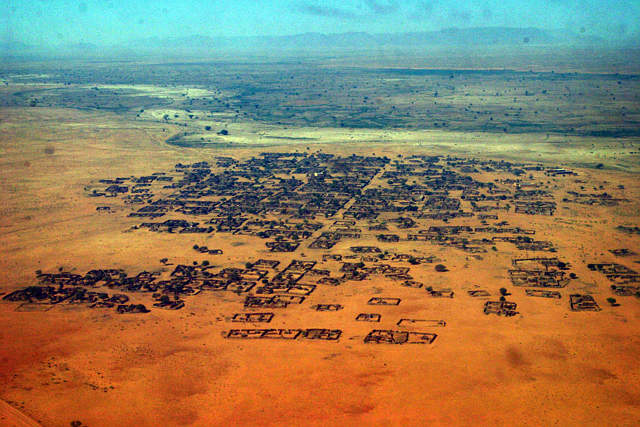
Sudan says no to UN force in Darfur
Sudan on Wednesday said it would not accept the deployment of UN peacekeepers in Darfur as a Security Council deadline for a UN team to be allowed into the strife-torn region expired.
"The government does not accept the deployment of foreign forces under (UN Security Council) Chapter Seven," presidential adviser Majzoub al-Khalifa Ahmed told reporters. Read more >>>
"The government does not accept the deployment of foreign forces under (UN Security Council) Chapter Seven," presidential adviser Majzoub al-Khalifa Ahmed told reporters. Read more >>>
The Grim Threat of Peace
Jane Wells
"I feel like even if I screamed here, no one would hear a thing. Maybe because no one would be listening but mostly because no sound would be coming from my mouth. I would be muted." An Aid Worker in Darfur.
The Darfur Peace Agreement was signed on May 5th. This should be cause for rejoicing, but history has taught us that Peace Deals do not end genocide and alas this is shaping up to be no different. Read more >>>
"I feel like even if I screamed here, no one would hear a thing. Maybe because no one would be listening but mostly because no sound would be coming from my mouth. I would be muted." An Aid Worker in Darfur.
The Darfur Peace Agreement was signed on May 5th. This should be cause for rejoicing, but history has taught us that Peace Deals do not end genocide and alas this is shaping up to be no different. Read more >>>
Sunday, May 21, 2006
U.S. must be more forceful if genocide is going to come to an end in Darfur
Laura Brunelle, Hudson
The United States has been a nation that espouses human rights; many Americans tout the ideals of life, liberty and the pursuit if happiness for every person, even on a global level.
Why then are so many Americans ignorant about the atrocities occurring in Sudan? Why has the American media afforded so little time and energy to the genocide of hundreds of thousands of ethnic Sudanese by government-sponsored militants? Read more >>>
The United States has been a nation that espouses human rights; many Americans tout the ideals of life, liberty and the pursuit if happiness for every person, even on a global level.
Why then are so many Americans ignorant about the atrocities occurring in Sudan? Why has the American media afforded so little time and energy to the genocide of hundreds of thousands of ethnic Sudanese by government-sponsored militants? Read more >>>
Saturday, May 20, 2006
Khartoum Clamps Down Hard on News Access to Darfur
What do the regime’s genocidaires wish to obscure from international view?
Eric Reeves
The May 18, 2006 Reuters dispatch from Khartoum, by the superbly well-informed Opheera McDoom, offers a telling picture of newly imposed and severe restrictions on the ability of journalists to travel to and report from Darfur: Read more >>>
Eric Reeves
The May 18, 2006 Reuters dispatch from Khartoum, by the superbly well-informed Opheera McDoom, offers a telling picture of newly imposed and severe restrictions on the ability of journalists to travel to and report from Darfur: Read more >>>
Militias kill dozens despite Darfur peace-rebels
KHARTOUM, May 20 (Reuters) - Dozens were killed in a major attack by government-backed militias on Shearia town in Sudan's Darfur region, the latest in a wave of raids since a peace deal was signed earlier this month, rebels said on Saturday.
A spokesman for the main rebel faction group who signed the deal in the Nigerian capital Abuja on May 5 told Reuters from the field in Darfur that despite the agreement, heavy attacks have continued on the ground. Read more >>>>>
A spokesman for the main rebel faction group who signed the deal in the Nigerian capital Abuja on May 5 told Reuters from the field in Darfur that despite the agreement, heavy attacks have continued on the ground. Read more >>>>>
Thursday, May 18, 2006
Experts Discuss the Sudan Crisis
Journalist Nicholas Kristof and Sudan expert John Prendergast talk about the continuing crisis in the Sudanese region of Darfur in Africa. Listen to the entire discussion >>>>
Radio >>>
Radio >>>

'AU needs to enforce Darfur peace deal'
Johannesburg -
A South African peacemaker who participated in the negotiations for last week's peace deal in Darfur has warned that the agreement is very fragile and could collapse unless the African Union finds the "political stomach" to enforce it robustly.
Most fighting forces did not sign the accord and those which did had repeatedly broken ceasefires before and the African Union lacked the strength to enforce it, warned Laurie Nathan, a research fellow at the University of Cape Town and the London School of Economics. Read more >>>
A South African peacemaker who participated in the negotiations for last week's peace deal in Darfur has warned that the agreement is very fragile and could collapse unless the African Union finds the "political stomach" to enforce it robustly.
Most fighting forces did not sign the accord and those which did had repeatedly broken ceasefires before and the African Union lacked the strength to enforce it, warned Laurie Nathan, a research fellow at the University of Cape Town and the London School of Economics. Read more >>>
Wednesday, May 17, 2006
Complete, Inclusive and Comprehensive Pease for Darfur
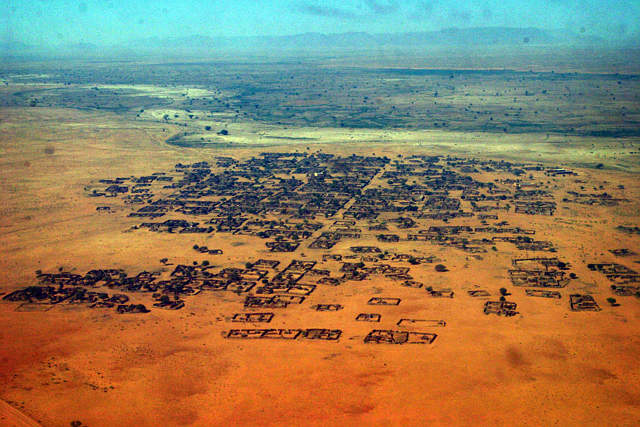
To African Union, Unite Nations, European Union, President Obasanjo and People of Nigeria, USA, Canada, Safe Darfur and All Civil Society and Human Rights organizations and Individuals concerned about Darfur, we undersigned are representatives of Darfur and other Sudanese civil society organizations and Sudanese experts...Read more >>>>>>>
Controversy surrounds peace deal for Sudan's Darfur
By Noel King
Controversy continues to swirl around Sudan's Darfur peace accord, which entered into effect this week despite the refusal of two factions to sign up to the deal.
The African Union has extended the deadline for the dissenting factions until 31 May, threatening sanctions if the groups continue to refuse to sign. Read more >>>
Controversy continues to swirl around Sudan's Darfur peace accord, which entered into effect this week despite the refusal of two factions to sign up to the deal.
The African Union has extended the deadline for the dissenting factions until 31 May, threatening sanctions if the groups continue to refuse to sign. Read more >>>
Tuesday, May 16, 2006
THE FUTURE OF DARFUR.
For Suad Abdalaziz, prospects are bleak. A Zaghawa from the Tawilla area of Northern Darfur, Suad was raped repeatedly by three Janjaweed militiamen in February 2004. The Janjaweed were ferociously active that month in the Tawilla region; in a single assault, led by the notorious Musa Hilal, they burned to the ground more than 30 villages, killing more than 200 people and raping more than 200 girls and women--some by up to 14 assailants and in front of their fathers, who were later killed. The men who raped Suad told her, "We want to change the color of your children." And they did: Nine months later, she bore a daughter. Now she is unlikely to get married, because, as she put it, "I have lost my honor." Read more >>>
Monday, May 15, 2006
Can Darfur's peace survive?
No-one was expecting Darfur's peace agreement to bring about an immediate transformation on the ground.
But the short time since the deal in Abuja have shown the size of the challenge ahead.
The Sudan Liberation Army, the region's biggest rebel movement is split in two.
One faction lead by the wiry Minni Minnawi has signed the deal while the other faction under Abdul Wahid Mohammed al-Nur demands further concessions from the Sudanese government.
In Gereida and Kalma - two of Darfur's biggest camps - the impact of the deal on the rebels and their supporters could be immediately seen. Read more >>>
But the short time since the deal in Abuja have shown the size of the challenge ahead.
The Sudan Liberation Army, the region's biggest rebel movement is split in two.
One faction lead by the wiry Minni Minnawi has signed the deal while the other faction under Abdul Wahid Mohammed al-Nur demands further concessions from the Sudanese government.
In Gereida and Kalma - two of Darfur's biggest camps - the impact of the deal on the rebels and their supporters could be immediately seen. Read more >>>
Sunday, May 14, 2006
Complete, Inclusive and Comprehensive Pease for Darfur
UN, EU, AU, USA, UK, Civil Society, H Rights, International Community
The door for comprehensive and complete peace in Darfur should be left open.
We, the undersigned, are Darfurians, other Sudanese and concerned non-Sudanese who sincerely believe that the agreement that was signed on May 5, 2006 in Abuja, between one faction of SLM/A and the National Congress Party, does not address the root causes of Sudanese Conflict in Darfur and it is therefore unacceptable. We believe it will lead to more destruction of Darfurians and their region.
Join those who are for genuine and everlasting peace for Darfur.
The door for comprehensive and complete peace in Darfur should be left open.
We, the undersigned, are Darfurians, other Sudanese and concerned non-Sudanese who sincerely believe that the agreement that was signed on May 5, 2006 in Abuja, between one faction of SLM/A and the National Congress Party, does not address the root causes of Sudanese Conflict in Darfur and it is therefore unacceptable. We believe it will lead to more destruction of Darfurians and their region.
Join those who are for genuine and everlasting peace for Darfur.
QUANTIFYING GENOCIDE IN DARFUR: May 13, 2006 (Part 2)
Current data for total mortality from violence, malnutrition, and disease
Eric Reeves
Part 1 of this mortality assessment (April 28, 2006), surveying all relevant extant data, concludes that since the outbreak of major conflict in Darfur (February 2003), over 450,000 people have died from violence, disease, and malnutrition (see http://www.sudanreeves.org/index.php?name=News&file=article&sid=102). Moreover, despite the “peace agreement” reached in Abuja (Nigeria) last week, there is little reason to believe that the current mortality rate for disease and malnutrition (based on UN data) will decline from a level of almost 7,000 deaths per month (see Part 1). Read more >>>
Eric Reeves
Part 1 of this mortality assessment (April 28, 2006), surveying all relevant extant data, concludes that since the outbreak of major conflict in Darfur (February 2003), over 450,000 people have died from violence, disease, and malnutrition (see http://www.sudanreeves.org/index.php?name=News&file=article&sid=102). Moreover, despite the “peace agreement” reached in Abuja (Nigeria) last week, there is little reason to believe that the current mortality rate for disease and malnutrition (based on UN data) will decline from a level of almost 7,000 deaths per month (see Part 1). Read more >>>
'Creative death' in Darfur, The cure may be as deadly as the crisis
In Darfur, things have fallen apart terribly, and putting them back together again won't be easy -- no matter what treaties are signed or peacekeeping forces sent in.
There are so many ruined lives in Darfur, especially of women raped and impregnated, of children without parents, of witnesses to the slaughter of loved ones. Eric Reeves, the inspired American activist who has done so much to call attention to the plight of refugees and victims of state-sponsored Janjaweed violence in Darfur, writes in the New Republic that "it will be a long time before life in Darfur returns to normal -- if it ever does." Read more >>>
There are so many ruined lives in Darfur, especially of women raped and impregnated, of children without parents, of witnesses to the slaughter of loved ones. Eric Reeves, the inspired American activist who has done so much to call attention to the plight of refugees and victims of state-sponsored Janjaweed violence in Darfur, writes in the New Republic that "it will be a long time before life in Darfur returns to normal -- if it ever does." Read more >>>
Violence follows Darfur peace, Sudanese unhappy
By Opheera McDoom
KHARTOUM (Reuters) - Violent demonstrations and angry proclamations against a Darfur peace deal have marred the agreement hailed by the international community as a first step to end the violence that has killed tens of thousands.
Anger in the miserable camps where more than 2 million have sought refuge over three years of rape, killing and looting, has boiled over into violent protests throughout all three Darfur states and Khartoum.
Many Darfuris say they reject the deal, signed by only one rebel group faction on May 5 in the Nigerian capital Abuja. Two other factions, including one led by a member of Darfur's largest tribe, have refused to sign.
"It is a big mess," said Bashir Adam Rahman, political officer in the opposition Popular Congress Party. Read more >>>
KHARTOUM (Reuters) - Violent demonstrations and angry proclamations against a Darfur peace deal have marred the agreement hailed by the international community as a first step to end the violence that has killed tens of thousands.
Anger in the miserable camps where more than 2 million have sought refuge over three years of rape, killing and looting, has boiled over into violent protests throughout all three Darfur states and Khartoum.
Many Darfuris say they reject the deal, signed by only one rebel group faction on May 5 in the Nigerian capital Abuja. Two other factions, including one led by a member of Darfur's largest tribe, have refused to sign.
"It is a big mess," said Bashir Adam Rahman, political officer in the opposition Popular Congress Party. Read more >>>
Thursday, May 11, 2006
Phony Peace
May 11, 2006: In the wake of the "partial" peace deal in Darfur, the US is once again urging the United Nations to provide troops for a Darfur peacekeeping operation. The UN wants to deploy a "robust" UN force, which some have interpreted to mean a force of at least 20,000 troops. The government has indicated that it would reconsider it position on a UN-sponsored peacekeeping force. What that means precisely ("reconsider") isn't clear. Read more >>>
UN rights chief urges ICC to act on Darfur
By Richard Waddington
GENEVA (Reuters) - The International Criminal Court must act more decisively to bring to trial those guilty of war crimes in Darfur because Sudanese officials have so far proved incapable of doing so, the top U.N. human rights official said.
United Nations High Commissioner for Human Rights Louise Arbour, just back from a visit to Sudan, said on Thursday that despite government promises no official had been tried and punished for any of the serious human rights violations committed in the vast western region of Africa's largest state. Read more >>>
GENEVA (Reuters) - The International Criminal Court must act more decisively to bring to trial those guilty of war crimes in Darfur because Sudanese officials have so far proved incapable of doing so, the top U.N. human rights official said.
United Nations High Commissioner for Human Rights Louise Arbour, just back from a visit to Sudan, said on Thursday that despite government promises no official had been tried and punished for any of the serious human rights violations committed in the vast western region of Africa's largest state. Read more >>>
Wednesday, May 10, 2006
Peace in Darfur?
Our Sunday Visitor (www.osv.com)
The people of the Darfur region of Sudan in recent years have become the "poster children" for the horrors of starvation, famine and even genocide. They are the end result of an old, all-too-familiar story that has been revisited time and again over the past several decades in various parts of the African continent: civil war, rebel factions, atrocities against civilians, ethnic cleansing, displaced refugees, international apathy and humanitarian aid that arrives too little and too late for too many. Read more >>>
The people of the Darfur region of Sudan in recent years have become the "poster children" for the horrors of starvation, famine and even genocide. They are the end result of an old, all-too-familiar story that has been revisited time and again over the past several decades in various parts of the African continent: civil war, rebel factions, atrocities against civilians, ethnic cleansing, displaced refugees, international apathy and humanitarian aid that arrives too little and too late for too many. Read more >>>
Tuesday, May 09, 2006
Cracks appear in main rebel group over Darfur peace deal
Abuja, Nigeria
Divisions emerged on Tuesday in the Darfur rebel group that signed a peace deal with Khartoum last week, with the top adviser to the movement's chairperson urging the United Nations to freeze its implementation.
Ibrahim Ahmed Ibrahim, top adviser to Sudan Liberation Movement (SLM) leader Minni Arko Minnawi, sent a letter to UN Secretary General Kofi Annan charging that his boss had been pressured into signing Friday's peace agreement. Read more >>>
Divisions emerged on Tuesday in the Darfur rebel group that signed a peace deal with Khartoum last week, with the top adviser to the movement's chairperson urging the United Nations to freeze its implementation.
Ibrahim Ahmed Ibrahim, top adviser to Sudan Liberation Movement (SLM) leader Minni Arko Minnawi, sent a letter to UN Secretary General Kofi Annan charging that his boss had been pressured into signing Friday's peace agreement. Read more >>>
Monday, May 08, 2006
Darfur: Back to Business as Usual
By: Anne Bartlett, Chicago, USA
Only hours after the ink has dried on the Darfur Peace Agreement (DPA), the Government of Sudan has revealed its contempt for the peace process and humanitarian norms.
In a show of what can only be described as “business as usual” Jamal Muhammad Ibrahim put paid to suggestions that a UN force would automatically be allowed into the region. Speaking to Reuters he argued that the idea of an immanent UN force was untrue: "This is not accurate. I don’t know who made this statement. ... It has to come after an assessment by the Sudan government. If the need arises then Sudan may decide to do so. Otherwise no one has the right to impose foreign forces on Sudan," Read more >>>
Only hours after the ink has dried on the Darfur Peace Agreement (DPA), the Government of Sudan has revealed its contempt for the peace process and humanitarian norms.
In a show of what can only be described as “business as usual” Jamal Muhammad Ibrahim put paid to suggestions that a UN force would automatically be allowed into the region. Speaking to Reuters he argued that the idea of an immanent UN force was untrue: "This is not accurate. I don’t know who made this statement. ... It has to come after an assessment by the Sudan government. If the need arises then Sudan may decide to do so. Otherwise no one has the right to impose foreign forces on Sudan," Read more >>>
Darfur refugees fear peace deal leaves them vulnerable
CBC News
Riots erupted in Sudan on Monday during a senior UN humanitarian official's visit to a camp for displaced people in Darfur.
A Sudanese interpreter was killed by the angry demonstrators.
Tensions are increasing in the camps as refugees learn details of the peace deal signed on Friday between the Sudanese government and the main rebel groups in Darfur. They fear the deal doesn't do enough to protect them from government-backed militia, the Janjaweed. Read more >>>
Riots erupted in Sudan on Monday during a senior UN humanitarian official's visit to a camp for displaced people in Darfur.
A Sudanese interpreter was killed by the angry demonstrators.
Tensions are increasing in the camps as refugees learn details of the peace deal signed on Friday between the Sudanese government and the main rebel groups in Darfur. They fear the deal doesn't do enough to protect them from government-backed militia, the Janjaweed. Read more >>>
Sunday, May 07, 2006
Darfur refugees wary of peace deal
By Claire Soares
GAGA, Chad, May 6 (Reuters) - Darfuri refugees sheltering in crowded camps in arid eastern Chad might have been expected to celebrate a long-awaited peace deal but they say they are in no rush to pack bags, load mules and begin the trek back home.
Many are wary of the agreement struck on Friday because it does not include all rebel factions, while others are highly sceptical the Sudanese government will keep its side of the bargain.
"I'm all for peace, but the deal has to be a realistic one or we'll end up back home facing the same violence that caused us to flee in the first place," said Adam Dingila, a community leader at the Gaga refugee camp, who has lost 15 members of his family to the conflict in Darfur. Read more >>>
GAGA, Chad, May 6 (Reuters) - Darfuri refugees sheltering in crowded camps in arid eastern Chad might have been expected to celebrate a long-awaited peace deal but they say they are in no rush to pack bags, load mules and begin the trek back home.
Many are wary of the agreement struck on Friday because it does not include all rebel factions, while others are highly sceptical the Sudanese government will keep its side of the bargain.
"I'm all for peace, but the deal has to be a realistic one or we'll end up back home facing the same violence that caused us to flee in the first place," said Adam Dingila, a community leader at the Gaga refugee camp, who has lost 15 members of his family to the conflict in Darfur. Read more >>>
Sudan denies reports that it will allow UN troops in Darfur
Khartoum -
Sudan's government has denied reports that it will allow United Nations peacekeepers to enter the war-torn Darfur region.
'Either I have been misquoted or someone else has made an erroneous statement,' Foreign Ministry Spokesman Jamal Ibrahim told Deutsche Presse-Agentur dpa on Sunday, as the UN's top humanitarian official Jan Egeland was due in the region. More >>>
Sudan's government has denied reports that it will allow United Nations peacekeepers to enter the war-torn Darfur region.
'Either I have been misquoted or someone else has made an erroneous statement,' Foreign Ministry Spokesman Jamal Ibrahim told Deutsche Presse-Agentur dpa on Sunday, as the UN's top humanitarian official Jan Egeland was due in the region. More >>>
Subscribe to:
Posts (Atom)