By: Michelle Singerman
The genocide in Darfur is escalating. To date, the number of murders is estimated at 400,000 people with another three million displaced.
International governments' continued failed responses contribute to the climbing casualties. Similar to previous genocides, nations around the world have blinders on, and focus only on their internal affairs. The world's inaction has permitted the perpetrators to continue achieving their genocidal intent. The full story >>>
Friday, March 24, 2006


Stop another holocaust
Close to a million people were killed in Rwanda in 1994 when the dominant Hutus turned against the Tutsis. The slaughter that went unchecked should have ensured that at the first signs of genocide the United Nations would act to prevent yet another human tragedy.
Not so. Genocide has been proceeding in the Darfur region of Sudan as if there had never been a commitment by the international community to make the vow "Never Again," after the Jewish Holocaust, mean something. To date, the United Nations has shrunk from its responsibility to intervene and the United States, overstretched in Afghanistan and Iraq, is in no position to act unilaterally. Read the entire editorial >>
Not so. Genocide has been proceeding in the Darfur region of Sudan as if there had never been a commitment by the international community to make the vow "Never Again," after the Jewish Holocaust, mean something. To date, the United Nations has shrunk from its responsibility to intervene and the United States, overstretched in Afghanistan and Iraq, is in no position to act unilaterally. Read the entire editorial >>
Thursday, March 23, 2006
UN: 'Darfur is unravelling'
Brussels -
Sudan's strife-torn region of Darfur is unravelling and two million people there are increasingly vulnerable to human rights abuse, the UN envoy on genocide warned on Wednesday.
"No one disputes that the situation on the ground is unravelling, it's getting worse," Juan Mendez, special adviser to UN Secretary-General Kofi Annan on the prevention of genocide, said.
"The almost two million Darfurians who were vulnerable to human rights violations are more vulnerable now than they were a year ago," he said. The full story >>>
Sudan's strife-torn region of Darfur is unravelling and two million people there are increasingly vulnerable to human rights abuse, the UN envoy on genocide warned on Wednesday.
"No one disputes that the situation on the ground is unravelling, it's getting worse," Juan Mendez, special adviser to UN Secretary-General Kofi Annan on the prevention of genocide, said.
"The almost two million Darfurians who were vulnerable to human rights violations are more vulnerable now than they were a year ago," he said. The full story >>>
Darfur: Increasing violence forcing international humanitarian agencies to withdraw
International humanitarian agencies may be forced to withdraw from Darfur because of an escalation in violence, GOAL warned today.
Hot on the heels of a UN report outlining a sharp deterioration in the security situation in the troubled Sudanese province, GOAL's CEO, John O'Shea, warned:
"The world may soon witness another Rwanda-style genocide." Click here for more >>
Hot on the heels of a UN report outlining a sharp deterioration in the security situation in the troubled Sudanese province, GOAL's CEO, John O'Shea, warned:
"The world may soon witness another Rwanda-style genocide." Click here for more >>
Wednesday, March 22, 2006
The silence of bystanders
By Nicholas D. Kristof is a New York Times columnist.
I saw a lot of heartbreak on my latest visit to the fringes of Darfur: two orphan boys living under a tree after their family was murdered, a 13-year-old girl shot in the chest and a six-year-old boy trying desperately not to cry as doctors treated shrapnel wounds to his leg. But the face of genocide I found most searing belonged to Idris Ismael, a 32-year-old Chadian. Idris said that a Sudan-sponsored Janjaweed militia had attacked his village, Damri, that very morning. He had managed to run away. But his wife, Halima, eight months pregnant, could only hobble. And so she was still in the village, along with their four children, ages 3 to 12. ''The village is surrounded by Janjaweed, with civilians inside,'' Idris said. ''There's no way for people to escape. The Janjaweed will kill all the men, women and children, take all our blankets and other property, and then burn our homes. They will kill every last person. The Janjaweed will rape and kill my family, and there's nothing I can do.'' The full story >>>
I saw a lot of heartbreak on my latest visit to the fringes of Darfur: two orphan boys living under a tree after their family was murdered, a 13-year-old girl shot in the chest and a six-year-old boy trying desperately not to cry as doctors treated shrapnel wounds to his leg. But the face of genocide I found most searing belonged to Idris Ismael, a 32-year-old Chadian. Idris said that a Sudan-sponsored Janjaweed militia had attacked his village, Damri, that very morning. He had managed to run away. But his wife, Halima, eight months pregnant, could only hobble. And so she was still in the village, along with their four children, ages 3 to 12. ''The village is surrounded by Janjaweed, with civilians inside,'' Idris said. ''There's no way for people to escape. The Janjaweed will kill all the men, women and children, take all our blankets and other property, and then burn our homes. They will kill every last person. The Janjaweed will rape and kill my family, and there's nothing I can do.'' The full story >>>
Hillary Clinton to Bush: Send Military to Darfur
2008 presidential hopeful Hillary Clinton, who says she was misled into voting for military intervention in Iraq, now wants the U.S. Air Force to lead an international coalition to stop the genocide in Darfur.
Mrs. Clinton, whose husband did nothing to stop the 1994 Rwandan genocide, sent a letter to Bush on Thursday where she urges:
"The United States can and must do more." Clinton then adds helpfully: "Below are 13 ways in which you can take action." Read more >>>
Mrs. Clinton, whose husband did nothing to stop the 1994 Rwandan genocide, sent a letter to Bush on Thursday where she urges:
"The United States can and must do more." Clinton then adds helpfully: "Below are 13 ways in which you can take action." Read more >>>
Darfur genocide demands immediate global attention
By Brandon Guichard, regular columnist
In 2004, Colin Powell called the turmoil in Darfur the “worst humanitarian crisis” we face today. Two years later, and the issue hasn’t moved from the back burner of either American or international politics. Thus far, the global reaction to the chaos in Sudan’s southwest province of Darfur has consisted of little more than sympathetic rhetoric and talk of action. The failure, humanities failure, to respond has been recently described as a challenge to “the conscience of our country” and of the world. Read more >>>
In 2004, Colin Powell called the turmoil in Darfur the “worst humanitarian crisis” we face today. Two years later, and the issue hasn’t moved from the back burner of either American or international politics. Thus far, the global reaction to the chaos in Sudan’s southwest province of Darfur has consisted of little more than sympathetic rhetoric and talk of action. The failure, humanities failure, to respond has been recently described as a challenge to “the conscience of our country” and of the world. Read more >>>
Monday, March 20, 2006
Darfur: Rape; Attempted Rape; Risk of Death Penalty
SOAT
Sudan Organisation Against Torture
On 07 March 2005, two armed militias in military uniform attacked four girls from Seraif IDP camp, Hay AlGeer, West Nyala, Southern Darfur. The girls were attacked whilst collecting firewood outside the camp at 11:30. During the attack, one of the men assaulted one of the girls and attempted to rape her. The armed man touched the girl’s breasts and attempted to forcefully remove her underwear. When she resisted, the man began to beat her. In defence she grabbed a knife that she had been using to cut the firewood and stabbed the attacker in the stomach. The details of the girls are as follows: Read the details >>>
Sudan Organisation Against Torture
On 07 March 2005, two armed militias in military uniform attacked four girls from Seraif IDP camp, Hay AlGeer, West Nyala, Southern Darfur. The girls were attacked whilst collecting firewood outside the camp at 11:30. During the attack, one of the men assaulted one of the girls and attempted to rape her. The armed man touched the girl’s breasts and attempted to forcefully remove her underwear. When she resisted, the man began to beat her. In defence she grabbed a knife that she had been using to cut the firewood and stabbed the attacker in the stomach. The details of the girls are as follows: Read the details >>>
Darfur: Attacks on Tibon IDP camp and Villages in Jebel Marra
SOAT
Sudan Organisation Against Torture
On 15 March 2006, armed forces with land cruisers and armed militias on horses and camels, allegedly the Janjaweed militias numbering more than 900 attacked and looted Tibon IDP camp in Jebel Marra, West Darfur. The militias also attacked three other villages on the same day, Daya, Turra and Kindo in Jebel Marra. During the attack, approximately 26 internally displaced persons (IDPs) were killed and 6 wounded. The injured IDPs have not been able to receive medical treatment. There are currently no medical clinics in Jebel Marra due to the departure of humanitarian organizations in February 2005 on account of the deterioration in the security situation in the area.
The details of the persons killed and wounded are as follows: Read the full details >>>
Sudan Organisation Against Torture
On 15 March 2006, armed forces with land cruisers and armed militias on horses and camels, allegedly the Janjaweed militias numbering more than 900 attacked and looted Tibon IDP camp in Jebel Marra, West Darfur. The militias also attacked three other villages on the same day, Daya, Turra and Kindo in Jebel Marra. During the attack, approximately 26 internally displaced persons (IDPs) were killed and 6 wounded. The injured IDPs have not been able to receive medical treatment. There are currently no medical clinics in Jebel Marra due to the departure of humanitarian organizations in February 2005 on account of the deterioration in the security situation in the area.
The details of the persons killed and wounded are as follows: Read the full details >>>
Sunday, March 19, 2006
Tied to terror?
W.Va. pensions find way to rogue regimes
By Joe Morris
West Virginia’s public pensions may have hundreds of millions of dollars invested in companies doing business with terrorist-sponsoring countries.
According to an analysis conducted for the Sunday Gazette-Mail, 55 stocks in state pension portfolios belong to companies that have ties to the governments of Iran, Libya, North Korea, Sudan or Syria.
The U.S. State Department has designated all these countries as state sponsors of terrorism and barred U.S. businesses from conducting operations there, but foreign companies are under no such constraints. Read more >>>
By Joe Morris
West Virginia’s public pensions may have hundreds of millions of dollars invested in companies doing business with terrorist-sponsoring countries.
According to an analysis conducted for the Sunday Gazette-Mail, 55 stocks in state pension portfolios belong to companies that have ties to the governments of Iran, Libya, North Korea, Sudan or Syria.
The U.S. State Department has designated all these countries as state sponsors of terrorism and barred U.S. businesses from conducting operations there, but foreign companies are under no such constraints. Read more >>>
Senior US Congresswoman Calls for End to Darfur Genocide
By Catherine Maddux
Washington
U.S. House Democratic Leader Nancy Pelosi, who recently returned from a fact-finding mission to Sudan's conflict-ridden Darfur region, has made a strong appeal for an end to what she called the "genocide" in Darfur. Ms. Pelosi called for the appointment of a U.S. envoy for Sudan.
Congresswoman Pelosi recently led a congressional delegation to Darfur. In remarks Friday, she described the devastating conditions for tens-of-thousands of displaced people in the region. The full story >>>
Washington
U.S. House Democratic Leader Nancy Pelosi, who recently returned from a fact-finding mission to Sudan's conflict-ridden Darfur region, has made a strong appeal for an end to what she called the "genocide" in Darfur. Ms. Pelosi called for the appointment of a U.S. envoy for Sudan.
Congresswoman Pelosi recently led a congressional delegation to Darfur. In remarks Friday, she described the devastating conditions for tens-of-thousands of displaced people in the region. The full story >>>
Saturday, March 18, 2006
Sudan facing fresh charges of genocide in Darfur
SUDANESE government forces massacred their own citizens in a mosque in Darfur, according to fresh evidence presented by the African Union.
The AU, which is attempting to keep the peace in the devastated region, sent monitors to the town of Tawilla to investigate reports of a massacre last September.
A confidential AU report, obtained by The Scotsman, reveals that four people were killed and 24 injured.
It came to light as human rights organisations criticised the Sudanese government for its continued attempts to prevent the United Nations from taking over the peacekeeping role in Darfur, where upwards of 400,000 people are believed to have been killed in genocidal attacks. Read more >>>
The AU, which is attempting to keep the peace in the devastated region, sent monitors to the town of Tawilla to investigate reports of a massacre last September.
A confidential AU report, obtained by The Scotsman, reveals that four people were killed and 24 injured.
It came to light as human rights organisations criticised the Sudanese government for its continued attempts to prevent the United Nations from taking over the peacekeeping role in Darfur, where upwards of 400,000 people are believed to have been killed in genocidal attacks. Read more >>>
Friday, March 17, 2006
DARFUR: UN REPORTS DEADLY ATTACKS IN WEST

The United Nations Mission in Sudan (UNMIS) has announced that it has received various reports about a series of deadly attacks in West Darfur over the past week. Around 1,000 unidentified militants, travelling in motor vehicles and on camels and horses, reportedly attacked a village and killed eight people and stole livestock, the UN said in a statment released at its New York headquarters. Full story >>>
Darfur ceasefire crumbling, wider crisis looms
(CWNews.com) - The International Crisis Group, a global conflict watch group, has said the Darfur ceasefire is in tatters, and described the international strategy for dealing with the crisis through the small Africa Union Mission on Sudan as having reached a the dead end. Read more >>>
Thursday, March 16, 2006
Raising a Million Voices for Darfur
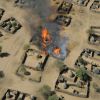
By Christopher Hayes
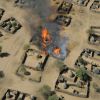
Aerial photos from Darfur show the scope of devastation.
Right now, hundreds of thousands of people who have fled the Sudanese government’s genocide in Darfur are packed into camps along both sides of the border with Chad. Mortality rates inside the camps are already shockingly high, since the Sudanese government restricts the amount of food aid groups can bring in. Recent reports indicate that the Janjaweed—the Arab militias who have carried out much of the genocide in the region—are now crossing into Chad along with Sudanese troops to attack the camps and villages. All this comes despite the presence of 7,000 African Union troops and a putative ceasefire. Read more >>>
Darfur, more than a conflict
It is genocide.î That is, at least, how Mukesh Kapila, the outgoing UN humanitarian coordinator in Khartoum, describes the fighting in the Darfur region of western Sudan.
"The only difference between Rwanda and Darfur now is the numbers involved,î says Mukesh Kapila, the UN humanitarian coordinator for Sudan, who was in Rwanda when the 1994 genocide occurred. Read more >>>
"The only difference between Rwanda and Darfur now is the numbers involved,î says Mukesh Kapila, the UN humanitarian coordinator for Sudan, who was in Rwanda when the 1994 genocide occurred. Read more >>>
Wednesday, March 15, 2006
Women in Darfur Look to ICC
The court may offer the only hope for many rape victims to see justice done.
By Christine Butegwa in Nairobi
If you are a woman in the Darfur region of Sudan who has been raped and you want to lay a charge, it is virtually certain that legal officers will automatically reduce your allegation to one of assault. If you persevere with your rape accusation, you will be told to do the impossible and provide four male witnesses to support your charge.
As a result, sexual violence goes almost totally unpunished and is one of the biggest violations of women's rights in Darfur. It is why members of
the Darfur Consortium, a group of African civil society and women's rights organisations, have high hopes that the new International Criminal Court in The Hague will be able to change the situation. Read more >>>
By Christine Butegwa in Nairobi
If you are a woman in the Darfur region of Sudan who has been raped and you want to lay a charge, it is virtually certain that legal officers will automatically reduce your allegation to one of assault. If you persevere with your rape accusation, you will be told to do the impossible and provide four male witnesses to support your charge.
As a result, sexual violence goes almost totally unpunished and is one of the biggest violations of women's rights in Darfur. It is why members of
the Darfur Consortium, a group of African civil society and women's rights organisations, have high hopes that the new International Criminal Court in The Hague will be able to change the situation. Read more >>>
Tuesday, March 14, 2006
U.N. Says Thousands in Darfur Have No Food
U.N. Official: Violence Leaves Thousands in Darfur Without Food and Facing Death and Disease
Increasing violence has left hundreds of thousands of civilians in Sudan's Darfur region without food and facing the prospect of widespread disease and death within weeks, the U.N. humanitarian chief said Monday.
Jan Egeland said he fears that Darfur is returning to "the abyss" of early 2004 when the region was "the killing fields of this world." Since that time, he said, the U.N. humanitarian operation in the region has succeeded in saving lives. The full story >>>
Increasing violence has left hundreds of thousands of civilians in Sudan's Darfur region without food and facing the prospect of widespread disease and death within weeks, the U.N. humanitarian chief said Monday.
Jan Egeland said he fears that Darfur is returning to "the abyss" of early 2004 when the region was "the killing fields of this world." Since that time, he said, the U.N. humanitarian operation in the region has succeeded in saving lives. The full story >>>
Monday, March 13, 2006
Bad to Worse in Darfur
by Eric Reeves
If you thought the situation in Darfur couldn't get any more dire, think again. True, things are already terrible: Some 400,000 Darfuris have perished; more than two million have been driven from their homes to squalid and dangerous camps; and the United Nations estimates that altogether roughly four million people in the region need humanitarian assistance. Click here for the full story >>>
If you thought the situation in Darfur couldn't get any more dire, think again. True, things are already terrible: Some 400,000 Darfuris have perished; more than two million have been driven from their homes to squalid and dangerous camps; and the United Nations estimates that altogether roughly four million people in the region need humanitarian assistance. Click here for the full story >>>
Bush's turn on genocide: He has a chance to succeed where Clinton failed
Survivors of the 1994 Rwanda genocide often recall that when the killing started they comforted themselves with the belief that the nations of world, led by the United States, would come to their rescue.
But the nations never came. They stood by, eyes wide open, as a militant Hutu government systematically slaughtered nearly a million members of the Tutsi minority and Hutu moderates. The United States, under President Clinton, had full knowledge of the machete-wielding militias that were killing an average of 8,000 Rwandans daily and even had intelligence information that could have stopped the mass killings before they began. Yet Clinton did nothing and even worked to block the United Nations from sending additional peacekeeping troops.
Twelve years later, the people of Darfur are wondering when the nations of the world, led by the United States, will come to their rescue. Read the full editorial >>
But the nations never came. They stood by, eyes wide open, as a militant Hutu government systematically slaughtered nearly a million members of the Tutsi minority and Hutu moderates. The United States, under President Clinton, had full knowledge of the machete-wielding militias that were killing an average of 8,000 Rwandans daily and even had intelligence information that could have stopped the mass killings before they began. Yet Clinton did nothing and even worked to block the United Nations from sending additional peacekeeping troops.
Twelve years later, the people of Darfur are wondering when the nations of the world, led by the United States, will come to their rescue. Read the full editorial >>
Sunday, March 12, 2006
Darfur's turn for the worse
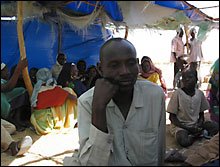
The African Union votes Friday on whether to let the UN take command of its military forces in Darfur.
By Dan Morrison | Correspondent of The Christian Science Monitor
NYALA, SUDAN – The situation in Sudan's Darfur region, already considered to be the world's most complex humanitarian emergency, is expected to worsen this year before it gets any better.
Troubles are mounting on many fronts. Attacks on non-Arab villagers by Arab militias continue. Aid workers say their stores of grain and other essentials for the region's 2.8 million people who rely on food aid are nearly depleted. The conflict has spread into neighboring Chad. The full story >>>
Massacres suspect let into Britain
By Hala Jaber
A SENIOR Sudanese security official blamed for massacres in the Darfur region of the country was allowed into Britain for medical treatment last week.
Salah Abdallah Gosh, director of the national security and intelligence service in Khartoum, obtained a British visa even though a United Nations panel has recommended that he and 16 other officials be banned from travelling abroad.The rest of the story >>>
A SENIOR Sudanese security official blamed for massacres in the Darfur region of the country was allowed into Britain for medical treatment last week.
Salah Abdallah Gosh, director of the national security and intelligence service in Khartoum, obtained a British visa even though a United Nations panel has recommended that he and 16 other officials be banned from travelling abroad.The rest of the story >>>
Thursday, March 09, 2006
Rural populations at risk as Darfur violence escalates
Source: IRIN
NYALA, 9 March (IRIN) - As the security situation throughout Darfur deteriorates, the civilian population - especially in rural areas - continues to suffer the brunt of the violence.
According to the United Nations Children's Fund (UNICEF), around 1.7 million people in rural communities and host populations are either sharing dwindling resources with those who have been displaced or suffered loss of livelihoods due to social and economic collapse. The entire story >>>
NYALA, 9 March (IRIN) - As the security situation throughout Darfur deteriorates, the civilian population - especially in rural areas - continues to suffer the brunt of the violence.
According to the United Nations Children's Fund (UNICEF), around 1.7 million people in rural communities and host populations are either sharing dwindling resources with those who have been displaced or suffered loss of livelihoods due to social and economic collapse. The entire story >>>
Stunning photographs show the horror of genocide in Darfur
Former U.S. monitor is touring Bay Area to appeal for action
Jim Doyle, Chronicle Staff Writer
Brian Steidle, a former Marine captain, enjoyed photography as a lark. Then he began shooting images of genocide in Sudan. Now he recalls the awful buzz of flies in a village that was looted and burned after its inhabitants were killed.
As a U.S. representative to the African Union peacekeeping mission, Steidle had access to certain areas of Sudan's troubled Darfur provinces that are restricted to journalists. The Sudanese government reluctantly allowed him to be a witness.The full story >>>
Wednesday, March 08, 2006
U.S. must work to halt Darfur genocide
By Michael Capuano
We look back on the Holocaust and wonder how the world stood by while 6 million Jews were slaughtered. Never again, we pledged. Yet in 1994, 1 million Rwandans were massacred. Afterward, we declared it genocide and pledged never again. Many leaders later expressed deep regret over our inaction. The rest of the picture >>>
We look back on the Holocaust and wonder how the world stood by while 6 million Jews were slaughtered. Never again, we pledged. Yet in 1994, 1 million Rwandans were massacred. Afterward, we declared it genocide and pledged never again. Many leaders later expressed deep regret over our inaction. The rest of the picture >>>
As Rainy Season Nears, Darfur Faces "Perfect Storm" of Human Destruction
Collapsing security, funding shortfalls, humanitarian evacuations, growing violence in Chad, looming war in Eastern Sudan---and political dithering by international community
Eric Reeves
The Economist (UK) began a recent news analysis with an appropriately blunt question:
“The mayhem in Darfur, in western Sudan, where some 400,000 people may have been killed and 2 million-plus displaced, is worsening. The misery is spreading west into neighbouring Chad, unhinging that country and threatening a proxy war with Sudan. What can be done?” (“Chaos in western Sudan is threatening to engulf neighboring Chad” [dateline: N’Djamena, Chad], The Economist, March 2, 2006). The full story >>>
Eric Reeves
The Economist (UK) began a recent news analysis with an appropriately blunt question:
“The mayhem in Darfur, in western Sudan, where some 400,000 people may have been killed and 2 million-plus displaced, is worsening. The misery is spreading west into neighbouring Chad, unhinging that country and threatening a proxy war with Sudan. What can be done?” (“Chaos in western Sudan is threatening to engulf neighboring Chad” [dateline: N’Djamena, Chad], The Economist, March 2, 2006). The full story >>>
Tuesday, March 07, 2006
Groups threatening U.N. and U.S. interests in Sudan
Sudanese students demonstrate, reject U.N. troops07 Mar 2006 13:27:20 GMT
Source: Reuters
By Opheera McDoom and Jilan Sherif
KHARTOUM, March 7 (Reuters) - About 200 Sudanese students demonstrated on Tuesday urging the United Nations to leave their country and calling it a colonial force, days ahead of a decision to deploy U.N. troops to the violent Darfur region.
Tuesday's protest outside the U.S. embassy in Khartoum followed unconfirmed reports in a pro-government newspaper of new Islamist groups threatening U.N. and U.S. interests in Sudan, and rejecting the presence of any U.N. soldiers in Darfur. Full story >>>>
Source: Reuters
By Opheera McDoom and Jilan Sherif
KHARTOUM, March 7 (Reuters) - About 200 Sudanese students demonstrated on Tuesday urging the United Nations to leave their country and calling it a colonial force, days ahead of a decision to deploy U.N. troops to the violent Darfur region.
Tuesday's protest outside the U.S. embassy in Khartoum followed unconfirmed reports in a pro-government newspaper of new Islamist groups threatening U.N. and U.S. interests in Sudan, and rejecting the presence of any U.N. soldiers in Darfur. Full story >>>>
Darfur's Genocide Continues; The World Dawdles
By Lawrence Uniglicht
The human species, bereft of soul, vacillates as Arab janjaweed Muslim monsters, at the behest of a fascist Wahhabi driven fanatical Sudanese government, perpetrate genocide on helpless Black African Muslims within the hellhole Darfur region of Sudan, a fundamentally flawed fossil fuel drenched savage Islamic sovereignty, led by the aforementioned sadistic racist psychopaths, hellacious robed hindquarters cynically squatting on the ‘oil for food’ scandalized Kofi Annan led Kafkaesque United Nation’s Commission on Human Rights. Shame on the swaggering White House Texan for talking the talk, yet not bullying enough boots on the ground to walk the merciful walk ceasing a horrific abomination. Shame on sanctimonious feel-no-guilt first world governments, unmoved to end this out of sight out of mind replay of the Rwandan bloodbath; especially U.N. Security Council stalwarts China, coincidentally a Sudanese oil customer, Russia, and current Arab council representative Qatar; enamored by Sudan’s low life lobbying efforts thus opposed to any beefed up deployment of U.N. troops that just might stop the bleeding. The rest of the story >>
The human species, bereft of soul, vacillates as Arab janjaweed Muslim monsters, at the behest of a fascist Wahhabi driven fanatical Sudanese government, perpetrate genocide on helpless Black African Muslims within the hellhole Darfur region of Sudan, a fundamentally flawed fossil fuel drenched savage Islamic sovereignty, led by the aforementioned sadistic racist psychopaths, hellacious robed hindquarters cynically squatting on the ‘oil for food’ scandalized Kofi Annan led Kafkaesque United Nation’s Commission on Human Rights. Shame on the swaggering White House Texan for talking the talk, yet not bullying enough boots on the ground to walk the merciful walk ceasing a horrific abomination. Shame on sanctimonious feel-no-guilt first world governments, unmoved to end this out of sight out of mind replay of the Rwandan bloodbath; especially U.N. Security Council stalwarts China, coincidentally a Sudanese oil customer, Russia, and current Arab council representative Qatar; enamored by Sudan’s low life lobbying efforts thus opposed to any beefed up deployment of U.N. troops that just might stop the bleeding. The rest of the story >>
Monday, March 06, 2006
UN Envoy Urges Darfur War Crimes Prosecution
By Noel King
Khartoum
A top United Nation's envoy to Sudan has charged that little is being done to prosecute suspected criminals of war in the war-torn western Darfur region, and says worsening security is perpetuating human rights abuses. Sima Samar says that human rights abuses persist throughout Sudan, including arbitrary arrests and torture.
Amid increasing violence in Darfur, the United Nations Human Rights Rapporteur to Sudan says that there has been little accountability for war crimes in the region, and suggests that Sudanese courts set up to try war criminals have failed to do the job. For the full story, click here >>>
Khartoum
A top United Nation's envoy to Sudan has charged that little is being done to prosecute suspected criminals of war in the war-torn western Darfur region, and says worsening security is perpetuating human rights abuses. Sima Samar says that human rights abuses persist throughout Sudan, including arbitrary arrests and torture.
Amid increasing violence in Darfur, the United Nations Human Rights Rapporteur to Sudan says that there has been little accountability for war crimes in the region, and suggests that Sudanese courts set up to try war criminals have failed to do the job. For the full story, click here >>>
Sunday, March 05, 2006
Killing worsens in Darfur as media attention fades
By Fred Bridgland in Johannesburg
ETHNIC cleansing in the remote Darfur region of Sudan – which many human rights groups say amounts to genocide – has all but slid off the international media radar in recent months. But as the news coverage has faded, the suffering and oppression of ordinary Darfurians has steadily worsened.
The crackdown by Sudan’s Arab government in Khartoum on its fellow Muslims in Darfur – who are ethnically black Africans – is now so tyrannical that UN Secretary General Kofi Annan last week wrote to the United States ambassador to the UN asking for air support to counter government-backed militias creating mayhem in Darfur. For more click here >>>
ETHNIC cleansing in the remote Darfur region of Sudan – which many human rights groups say amounts to genocide – has all but slid off the international media radar in recent months. But as the news coverage has faded, the suffering and oppression of ordinary Darfurians has steadily worsened.
The crackdown by Sudan’s Arab government in Khartoum on its fellow Muslims in Darfur – who are ethnically black Africans – is now so tyrannical that UN Secretary General Kofi Annan last week wrote to the United States ambassador to the UN asking for air support to counter government-backed militias creating mayhem in Darfur. For more click here >>>
Darfur Refugee Crisis Deepens As Security Council Deadlocked
By Jeremy Bransten, Radio Free Europe/Radio Liberty
The humanitarian catastrophe in Sudan's Darfur province -- one of the world's most pressing refugee crises -- is deepening and spreading across the border to Chad. But the UN Security Council, which is discussing the issue this week, remains deadlocked over what to do. Click here for the full story >>>
The humanitarian catastrophe in Sudan's Darfur province -- one of the world's most pressing refugee crises -- is deepening and spreading across the border to Chad. But the UN Security Council, which is discussing the issue this week, remains deadlocked over what to do. Click here for the full story >>>
Sunday, February 26, 2006
Worse than a FEMA trailer
Times are hard, no doubt about it, on the Mississippi Gulf Coast.
But it could be worse.
We could be living in the Darfur region of Sudan, where women are raped while getting firewood and at least 200,000 people, many of them Christians, have been killed. Two million more are displaced, living in squalid refugee camps.
Children are being forced into slavery. It is an international nightmare.
Half of the region's 6 million people rely on outside assistance for food.
The Darfur crisis has been bumped off the world stage, by a mushbrained world worried about the latest Britney Spears brouhaha and the pontifications of George Clooney. Full story >>>
But it could be worse.
We could be living in the Darfur region of Sudan, where women are raped while getting firewood and at least 200,000 people, many of them Christians, have been killed. Two million more are displaced, living in squalid refugee camps.
Children are being forced into slavery. It is an international nightmare.
Half of the region's 6 million people rely on outside assistance for food.
The Darfur crisis has been bumped off the world stage, by a mushbrained world worried about the latest Britney Spears brouhaha and the pontifications of George Clooney. Full story >>>
Saturday, February 25, 2006
Many lives at stake
EDITORIAL
Our position: NATO forces are needed in Darfur now to try to stop the genocide.
At least 200,000 men, women and children have died in the Darfur region of Sudan in the past three years, the victims of what the United States has rightly labeled genocide. The toll will keep climbing if the world does not do more to stop the carnage.
It was heartening that President George W. Bush, in a recent visit to Central Florida, called for more international action in Darfur, and for NATO to take a leading role.
Sudan's government has responded ruthlessly to a rebellion in Darfur, backing Arab militias that have burned, raped and killed their way through villages in the region. More than 2 million people have been driven from their homes. For the full story click here >>>
Our position: NATO forces are needed in Darfur now to try to stop the genocide.
At least 200,000 men, women and children have died in the Darfur region of Sudan in the past three years, the victims of what the United States has rightly labeled genocide. The toll will keep climbing if the world does not do more to stop the carnage.
It was heartening that President George W. Bush, in a recent visit to Central Florida, called for more international action in Darfur, and for NATO to take a leading role.
Sudan's government has responded ruthlessly to a rebellion in Darfur, backing Arab militias that have burned, raped and killed their way through villages in the region. More than 2 million people have been driven from their homes. For the full story click here >>>
Friday, February 24, 2006
The Sudan & The Darfur
[from CAQ #78]
By:Gillian Lusk
And they keep on dying. Over a year since Sudan’s Islamist1 government began slaughtering its own citizens in the remote western region of Darfur, those citizens continue to be killed by a government that claims to represent them. In April 2004, many people marked the commemoration of the Rwandan genocide of April 1994 by saying “Never again!” Yet Darfur’s genocide is still underway.2
Among those warning that “Rwanda in slow motion” was taking place were Sudanese, journalists, human rights activists and the Canadian General Roméo Dallaire, who had helplessly watched his own United Nations troops helplessly watching Rwanda’s genocide unfold.3 Also among them was the man who had headed the U.N. Peacekeeping Operations Department at that terrible time and who is now head of the entire U.N. machine, Kofi Annan.4 For more click here >>>
By:Gillian Lusk
And they keep on dying. Over a year since Sudan’s Islamist1 government began slaughtering its own citizens in the remote western region of Darfur, those citizens continue to be killed by a government that claims to represent them. In April 2004, many people marked the commemoration of the Rwandan genocide of April 1994 by saying “Never again!” Yet Darfur’s genocide is still underway.2
Among those warning that “Rwanda in slow motion” was taking place were Sudanese, journalists, human rights activists and the Canadian General Roméo Dallaire, who had helplessly watched his own United Nations troops helplessly watching Rwanda’s genocide unfold.3 Also among them was the man who had headed the U.N. Peacekeeping Operations Department at that terrible time and who is now head of the entire U.N. machine, Kofi Annan.4 For more click here >>>
Thursday, February 23, 2006
Darfur issue presents chance to think globally
by Carlo Romero
Someone tell Kanye West: George Bush does care about black people.
So does U.S. Sen. Tom Coburn, actor Don Cheadle, Nobel Prize-winning author Elie Wiesel, evangelist Billy Graham, actress Angelina Jolie, New York Times columnist Nicholas Kristof, Harvard President Larry Summers, Olympic speedskater Joey Cheek and thousands of students at OU.
All these individuals comprise a growing coalition calling for an international intervention to stop the genocide that has been taking place since 2003 in Darfur, Sudan. Click here for the rest of the story >>>
Someone tell Kanye West: George Bush does care about black people.
So does U.S. Sen. Tom Coburn, actor Don Cheadle, Nobel Prize-winning author Elie Wiesel, evangelist Billy Graham, actress Angelina Jolie, New York Times columnist Nicholas Kristof, Harvard President Larry Summers, Olympic speedskater Joey Cheek and thousands of students at OU.
All these individuals comprise a growing coalition calling for an international intervention to stop the genocide that has been taking place since 2003 in Darfur, Sudan. Click here for the rest of the story >>>
Wednesday, February 22, 2006
Living a restricted life in Darfur
Source: IRIN
KABKABIYA, 22 February (IRIN) - On the plains of Kabkabiya town in North Darfur, numerous abandoned villages dot the empty landscape. Their burned remains bear witness to the escalation of the Darfur conflict in 2003.
"When the conflict began here," said a community leader who requested anonymity, "the Janjawid [militias] attacked the villages around Kabkabiya, especially to the east and south. They killed many people, took their animals and destroyed their belongings." For the entire picture >>>
KABKABIYA, 22 February (IRIN) - On the plains of Kabkabiya town in North Darfur, numerous abandoned villages dot the empty landscape. Their burned remains bear witness to the escalation of the Darfur conflict in 2003.
"When the conflict began here," said a community leader who requested anonymity, "the Janjawid [militias] attacked the villages around Kabkabiya, especially to the east and south. They killed many people, took their animals and destroyed their belongings." For the entire picture >>>
Darfur crisis deepening, says Benn
On a visit to Sudan, the international development secretary said the situation in Darfur is worsening.
Hilary Benn was in the region on Wednesday, where he inspected the situation on the ground for the second time in eight months.
The cabinet minister told the BBC that, following the fallout from the refugee crisis sparked by civil war, security had got worse in the intervening period. Read more >>>
Hilary Benn was in the region on Wednesday, where he inspected the situation on the ground for the second time in eight months.
The cabinet minister told the BBC that, following the fallout from the refugee crisis sparked by civil war, security had got worse in the intervening period. Read more >>>
Tuesday, February 21, 2006
Sudan hindering peace mission in Darfur
AU says Sudan curfew hinders peace force in Darfur
By Opheera McDoom
EL-FASHER, Sudan, Feb 21 (Reuters) - Sudan is hindering an African Union peace mission's ability to monitor a tentative truce in the Darfur region by imposing a curfew and restricting airport access, the head of the mission said on Tuesday. For the full story, click here >>>
By Opheera McDoom
EL-FASHER, Sudan, Feb 21 (Reuters) - Sudan is hindering an African Union peace mission's ability to monitor a tentative truce in the Darfur region by imposing a curfew and restricting airport access, the head of the mission said on Tuesday. For the full story, click here >>>
Rhetoric isn't ending the killing in Darfur
By Rabbi Rudin
RELIGION NEWS SERVICE
Never Again!" is a well-worn mantra invoked by many people when they remember the mass murder of 6 million Jews during the Holocaust. The phrase is meant to indicate that we have learned the disastrous effects of remaining silent or indifferent in the face of genocide, the systematic killing of an entire people.
But have we truly learned such a lesson? Or is "Never Again!" rhetorical comfort food for our souls? Somewhere in the answers to those questions must come a mention of Darfur, a region about the size of France that is in the African nation of Sudan. Click here for the rest of the story >>
RELIGION NEWS SERVICE
Never Again!" is a well-worn mantra invoked by many people when they remember the mass murder of 6 million Jews during the Holocaust. The phrase is meant to indicate that we have learned the disastrous effects of remaining silent or indifferent in the face of genocide, the systematic killing of an entire people.
But have we truly learned such a lesson? Or is "Never Again!" rhetorical comfort food for our souls? Somewhere in the answers to those questions must come a mention of Darfur, a region about the size of France that is in the African nation of Sudan. Click here for the rest of the story >>
Monday, February 20, 2006
On the continuing misery in Darfur
By EMMA ELLIS
The Holocaust. Rwanda. The Armenian genocide. These words evoke thoughts of ineffable death and suffering. After these tragedies, the world vowed "never again." Genocide is a problem of the past, right? But what about Darfur? Do you even know where it is?
In Darfur people are being systematically eliminated. However, only a fraction of what could be done to help has been done. The general public is not demanding further action, but we are the very group that could make the difference.
The time is long passed when we could say that just because it isn't happening to us it is not our problem. Genocide is the world's problem. Read more >>>>
The Holocaust. Rwanda. The Armenian genocide. These words evoke thoughts of ineffable death and suffering. After these tragedies, the world vowed "never again." Genocide is a problem of the past, right? But what about Darfur? Do you even know where it is?
In Darfur people are being systematically eliminated. However, only a fraction of what could be done to help has been done. The general public is not demanding further action, but we are the very group that could make the difference.
The time is long passed when we could say that just because it isn't happening to us it is not our problem. Genocide is the world's problem. Read more >>>>
SUDAN: Tension still high in Kutum town
Source: IRIN
KUTUM, 20 February (IRIN) - At the Monday market in Kutum town, North Darfur, heavily armed Janjawid militia openly stroll between the fruit and vegetable stalls, closely watched by Sudanese soldiers.
It is the first day the market is open again after a week of unrest. Unease and fear are palpable.
On 1 February, rebels of the Sudan Liberation Movement/Army (SLM/A) killed a lieutenant of the Sudanese military in the town. In retaliation, the Janjawid militia took over the town's streets for a week, culminating in a violent assault on the local population on 6 February. Click here for the full story >>>
KUTUM, 20 February (IRIN) - At the Monday market in Kutum town, North Darfur, heavily armed Janjawid militia openly stroll between the fruit and vegetable stalls, closely watched by Sudanese soldiers.
It is the first day the market is open again after a week of unrest. Unease and fear are palpable.
On 1 February, rebels of the Sudan Liberation Movement/Army (SLM/A) killed a lieutenant of the Sudanese military in the town. In retaliation, the Janjawid militia took over the town's streets for a week, culminating in a violent assault on the local population on 6 February. Click here for the full story >>>
Thursday, February 16, 2006
Pali Students Step Up Support for Darfur
Alyson Sena , Reporter
An ongoing community effort to halt the genocide in Darfur, Africa, continues at Palisades Charter High School, where four Human Rights Watch Student Task Force groups met with Darfur activists last week. Students from four high schools joined the national Million Voices campaign to help collect one million signed postcards urging President Bush to take action.
PaliHi's HRW Student Task Force alone projected it could gather 4,760 postcards by targeting mass-attendance events at the school, doing outreach in the larger community and publicizing their mission through media and networking systems. The nationwide goal is to deliver one million postcards to the president by April 30. Click here for more >>
An ongoing community effort to halt the genocide in Darfur, Africa, continues at Palisades Charter High School, where four Human Rights Watch Student Task Force groups met with Darfur activists last week. Students from four high schools joined the national Million Voices campaign to help collect one million signed postcards urging President Bush to take action.
PaliHi's HRW Student Task Force alone projected it could gather 4,760 postcards by targeting mass-attendance events at the school, doing outreach in the larger community and publicizing their mission through media and networking systems. The nationwide goal is to deliver one million postcards to the president by April 30. Click here for more >>
Break the Silence, and Speak Up on Darfur
Burt Siegel
Many who have no idea who the 18th-century British parliamentarian and essayist Edmund Burke was are probably familiar with his observation that all that is needed for evil to succeed is for good people to do nothing.
As the toll of murdered Darfurians in the nation of Sudan rises each day, I can't help think that the world has learned very little. Neither the Holocaust - in which six million Jews were killed - nor the Hutu massacre of co-religionist Catholic Tutsis, nor the murder of Muslims in Bosnia and Kosovo by Eastern Orthodox Serbs or Catholic Croats seems to have reached that part of our souls where we are so horrified that we demand that steps be taken to stop another genocide.
According to estimates, since February 2003, more than 400,000 African men, women and children have died, while another 2.5 million civilians have been forced into refugee camps in Sudan and neighboring Chad. Read the full story >>
Many who have no idea who the 18th-century British parliamentarian and essayist Edmund Burke was are probably familiar with his observation that all that is needed for evil to succeed is for good people to do nothing.
As the toll of murdered Darfurians in the nation of Sudan rises each day, I can't help think that the world has learned very little. Neither the Holocaust - in which six million Jews were killed - nor the Hutu massacre of co-religionist Catholic Tutsis, nor the murder of Muslims in Bosnia and Kosovo by Eastern Orthodox Serbs or Catholic Croats seems to have reached that part of our souls where we are so horrified that we demand that steps be taken to stop another genocide.
According to estimates, since February 2003, more than 400,000 African men, women and children have died, while another 2.5 million civilians have been forced into refugee camps in Sudan and neighboring Chad. Read the full story >>
Wednesday, February 15, 2006
No more talk on Darfur
A Register-Guard Editorial
Two years have passed since the Bush administration first acknowledged that genocide was occurring in Sudan's Darfur region. Yet the world has done little more than talk eloquently about the suffering.
There was more talk in Washington, D.C., Monday as President Bush and U.N. Secretary-General Kofi Annan discussed the need for an effective peacekeeping force in Darfur. Bush made no commitments of military support or additional funding. Afterward, Bush made no mention of Annan's proposal for an international mission and would only say that they'd had "a good discussion." Click here for more >>>
Two years have passed since the Bush administration first acknowledged that genocide was occurring in Sudan's Darfur region. Yet the world has done little more than talk eloquently about the suffering.
There was more talk in Washington, D.C., Monday as President Bush and U.N. Secretary-General Kofi Annan discussed the need for an effective peacekeeping force in Darfur. Bush made no commitments of military support or additional funding. Afterward, Bush made no mention of Annan's proposal for an international mission and would only say that they'd had "a good discussion." Click here for more >>>
Tuesday, February 14, 2006
Our friend, an architect of the genocide in Darfur
The U.S. sacrifices moral leadership when it cozies up to killers for snippets of counterterrorism information.
IT HAS BEEN 18 months since the United States concluded that genocide was taking place in Darfur. Yet President Bush, the only president to declare an ongoing genocide since the term was coined 50 years ago, has done little to stop this crime against humanity.
Why not? The answer may lie in the complex story of Salah Abdallah Gosh. Gosh isn't exactly a household name, but there are two groups of people for whom his name is exceedingly important: U.S. counterterrorism officials and victims of atrocities in Sudan. For the entire picture click here >>
IT HAS BEEN 18 months since the United States concluded that genocide was taking place in Darfur. Yet President Bush, the only president to declare an ongoing genocide since the term was coined 50 years ago, has done little to stop this crime against humanity.
Why not? The answer may lie in the complex story of Salah Abdallah Gosh. Gosh isn't exactly a household name, but there are two groups of people for whom his name is exceedingly important: U.S. counterterrorism officials and victims of atrocities in Sudan. For the entire picture click here >>
Monday, February 13, 2006
Stop genocide in Darfur
The Holocaust, Cambodia, Bosnia, Rwanda — if the world community could undo or at least lessen any of those historic horrors, would it?
If the answer is yes, then the world must train its energy on Darfur in Sudan, where a slaughter that President Bush called a genocide two years ago is getting worse. For the full story click here >>
If the answer is yes, then the world must train its energy on Darfur in Sudan, where a slaughter that President Bush called a genocide two years ago is getting worse. For the full story click here >>
Children of Darfur reveal their pain with pictures of rape and murder
By Kim Sengupta
Published: 13 February 2006
The images are of murder and rape, burning villages, helicopter gunships and terrified, fleeing refugees. They have been drawn by children, some as young as eight, who are victims of a wave of bloody ethnic cleansing in Darfur.
Two years after the international outcry over the man-made catastrophe in Sudan, the Janjaweed militia have returned with a vengeance, bringing death and destruction, backed by forces of the Khartoum government. Click here for the full story >>
Published: 13 February 2006
The images are of murder and rape, burning villages, helicopter gunships and terrified, fleeing refugees. They have been drawn by children, some as young as eight, who are victims of a wave of bloody ethnic cleansing in Darfur.
Two years after the international outcry over the man-made catastrophe in Sudan, the Janjaweed militia have returned with a vengeance, bringing death and destruction, backed by forces of the Khartoum government. Click here for the full story >>
Sunday, February 12, 2006
Mr. Bush and Genocide
Sunday, February 12, 2006; B06
FOR THE PAST 18 months, the Bush administration and its allies have clung to the fiction that they could stop the genocide in the Sudanese territory of Darfur by sending in African Union forces. On Thursday United Nations Secretary General Kofi Annan spoke the truth about these troops: "They didn't have the large numbers that would have been required for a region the size of Darfur. They didn't have logistical support. They didn't have the mobility, either on the ground or in the air." Mr. Annan went on to say that the U.N. force that may replace the African Union had better be "a completely different force and have a completely different concept of operation." The issue is whether President Bush, who is due to meet Mr. Annan tomorrow, is willing to hear this message. Click here for the entire story >
FOR THE PAST 18 months, the Bush administration and its allies have clung to the fiction that they could stop the genocide in the Sudanese territory of Darfur by sending in African Union forces. On Thursday United Nations Secretary General Kofi Annan spoke the truth about these troops: "They didn't have the large numbers that would have been required for a region the size of Darfur. They didn't have logistical support. They didn't have the mobility, either on the ground or in the air." Mr. Annan went on to say that the U.N. force that may replace the African Union had better be "a completely different force and have a completely different concept of operation." The issue is whether President Bush, who is due to meet Mr. Annan tomorrow, is willing to hear this message. Click here for the entire story >
Saturday, February 11, 2006
Desperation in Darfur

Can the United Nations now succeed where African peacekeepers have failed?
By Dan Morrison
NYALA, SUDAN--The murderous Janjaweed militia are camped in a dusty swirl 6 miles outside the South Darfur town of Gereida, where the 60,000 residents fear an attack could come at any moment. With armed horsemen practically on their doorstep, the women of Gereida took an unusual step--they wrote a letter swearing to rampage with knives and machetes unless a group of outsiders leaves within 72 hours. Click here for the whole story >>
Genocide is not negotiable
By John Morlino
Humanitarian aid notwithstanding, the international community has done little more than watch while the Sudanese military and its government-sponsored militias have killed 400,000 people and violently displaced 2 million more in Darfur. On top of this nightmare, women and young girls who have, thus far, survived continue to face the terrifying prospect of rape whenever they leave their refugee camps in search of firewood or water. Read the full story >>>>>>
Humanitarian aid notwithstanding, the international community has done little more than watch while the Sudanese military and its government-sponsored militias have killed 400,000 people and violently displaced 2 million more in Darfur. On top of this nightmare, women and young girls who have, thus far, survived continue to face the terrifying prospect of rape whenever they leave their refugee camps in search of firewood or water. Read the full story >>>>>>
Thursday, February 09, 2006
Bring on the blue helmets

Feb 9th 2006 | NAIROBI
From The Economist
Thousands of defenceless people in western Sudan still need protecting
SINCE the tragedy in Darfur, Sudan's western region, began three years ago, at least 200,000 people—some say more than 300,000—have died; another 2m, in a population of 6m, have been displaced, many of them fleeing across the border into Chad; peace talks in Nigeria between the rebels and the Sudanese government have stalled yet again; there is a risk of a proxy war breaking out between Chad and Sudan; and the African Union (AU), with some 7,000 ill-equipped troops, admits it cannot keep the peace. Now, belatedly, the UN is likely, as a last resort, to send blue helmets to Darfur. Click here for the full story >>>>>
Tuesday, February 07, 2006
Refugee voices - Women in Kalma camp, Darfur
"Controlled anarchy" is how one humanitarian worker described Kalma camp, in South Darfur. Located 17 kilometers outside of Nyala, Kalma camp is also one of Darfur's largest, with nearly 90,000 inhabitants. Most have lived there for nearly two years, fleeing the fighting between rebel groups and government-sponsored Janjaweed militias. For more click here >>>>>>>>>>>>>>>>>>>>>>>>>>>
Darfur is dying: save it with a video game
CMU graduate students’ video game reaches finals of mtvU competition
Justin Brown
Just a spoonful of interactive pixels helps the need for social welfare and reform go down. Such is the philosophy of the recent mtvU Darfur Digital Activist Contest. The contest, which called for groups of college students to create video games that would help increase awareness of travesties in Sudan, is in its final stages. One of the four finalists is by a group of five CMU (more specifically, Entertainment Technology Center) masters students. Click here for the full story >>>>>>>>>>>>
Justin Brown
Just a spoonful of interactive pixels helps the need for social welfare and reform go down. Such is the philosophy of the recent mtvU Darfur Digital Activist Contest. The contest, which called for groups of college students to create video games that would help increase awareness of travesties in Sudan, is in its final stages. One of the four finalists is by a group of five CMU (more specifically, Entertainment Technology Center) masters students. Click here for the full story >>>>>>>>>>>>
Monday, February 06, 2006
Will the world rescue Darfur?
February 6, 2006
The African Union sent a strong message last week to Sudan's government, and to the world, about its commitment to ending the indiscriminate violence in the country's western province of Darfur.
The 53-member union refused to elect Sudan President Omar al-Bashir as its chairman even though he was the only announced candidate. Leaders of several other African countries opposed his election because of escalating human rights abuses in Darfur.
Maybe Sudan got the message. Maybe, just maybe, the United Nations got the message too. On Friday, following the union's action, the UN Security Council unanimously approved a U.S.-sponsored motion to deploy peacekeepers to Darfur. Click here for full story >>>>>>>>>>>>>>>
The African Union sent a strong message last week to Sudan's government, and to the world, about its commitment to ending the indiscriminate violence in the country's western province of Darfur.
The 53-member union refused to elect Sudan President Omar al-Bashir as its chairman even though he was the only announced candidate. Leaders of several other African countries opposed his election because of escalating human rights abuses in Darfur.
Maybe Sudan got the message. Maybe, just maybe, the United Nations got the message too. On Friday, following the union's action, the UN Security Council unanimously approved a U.S.-sponsored motion to deploy peacekeepers to Darfur. Click here for full story >>>>>>>>>>>>>>>
Silent terror of the Darfur refugee
By David Blair
(Filed: 06/02/2006)
A terrified young boy joins the countless thousands of victims of the civil war that is destroying Sudan. David Blair reports from the chaos of Kalma camp
When mounted Arab raiders struck Nasir Ali Hassan's village, firing from the saddle and setting huts ablaze, the seven-year-old boy fled with his mother across the arid plains of Darfur. Follow the full story >>>>>>>>>>>>>>>>>>>>>>>>>>>>
(Filed: 06/02/2006)
A terrified young boy joins the countless thousands of victims of the civil war that is destroying Sudan. David Blair reports from the chaos of Kalma camp
When mounted Arab raiders struck Nasir Ali Hassan's village, firing from the saddle and setting huts ablaze, the seven-year-old boy fled with his mother across the arid plains of Darfur. Follow the full story >>>>>>>>>>>>>>>>>>>>>>>>>>>>
Sunday, February 05, 2006
The hidden legacy of war
Mary Anne Fitzgerald International Herald Tribune
As the sun set behind the mud hut, four young boys and their teenage sister sat around the dying embers of a cooking fire. "I was standing next to my uncle when they shot him dead. They set fire to the house. There were flames everywhere," said eight-year-old Toum. It was the first time he had spoken of the day, after a year of silence, when armed militia known as janjaweed razed his village to the ground as part of an ongoing campaign of genocide in Sudan's As the sun set behind the mud hut, four young boys and their teenage sister sat around the dying embers of a cooking fire. "I was standing next to my uncle when they shot him dead. They set fire to the house. There were flames everywhere," said eight-year-old Toum. It was the first time he had spoken of the day, after a year of silence, when armed militia known as janjaweed razed his village to the ground as part of an ongoing campaign of genocide in Sudan's Darfur region. Read the entire story >>>>>>>>>>>>>>>>>>>>>
As the sun set behind the mud hut, four young boys and their teenage sister sat around the dying embers of a cooking fire. "I was standing next to my uncle when they shot him dead. They set fire to the house. There were flames everywhere," said eight-year-old Toum. It was the first time he had spoken of the day, after a year of silence, when armed militia known as janjaweed razed his village to the ground as part of an ongoing campaign of genocide in Sudan's As the sun set behind the mud hut, four young boys and their teenage sister sat around the dying embers of a cooking fire. "I was standing next to my uncle when they shot him dead. They set fire to the house. There were flames everywhere," said eight-year-old Toum. It was the first time he had spoken of the day, after a year of silence, when armed militia known as janjaweed razed his village to the ground as part of an ongoing campaign of genocide in Sudan's Darfur region. Read the entire story >>>>>>>>>>>>>>>>>>>>>
UN agrees to deployment of peacekeepers in Sudan
NY TIMES NEWS SERVICE , WASHINGTON
Sunday, Feb 05, 2006,Page 6
The UN Security Council, acknowledging the failure of the current strategy for ending the carnage in Darfur, Sudan, agreed on Friday to deploy thousands of peacekeepers to the troubled province.
The US, which holds the council presidency this month, offered the motion, and it was approved unanimously. Officials acknowledged that winning council approval was probably the least difficult step. Click here for the full story >>>>>>>>>>>>>
Sunday, Feb 05, 2006,Page 6
The UN Security Council, acknowledging the failure of the current strategy for ending the carnage in Darfur, Sudan, agreed on Friday to deploy thousands of peacekeepers to the troubled province.
The US, which holds the council presidency this month, offered the motion, and it was approved unanimously. Officials acknowledged that winning council approval was probably the least difficult step. Click here for the full story >>>>>>>>>>>>>
Saturday, February 04, 2006
New Violence Displaces Many Tens of Thousands of Darfuris, February 4, 2006
As New Violence Displaces Many Tens of Thousands of Darfuris,
as humanitarian security deteriorates badly, threatening hundreds of thousands,
the Bush administration decides these people are no longer victims of genocide. Click here for the full story >>>>>>>
Eric Reeves
February 4, 2006
as humanitarian security deteriorates badly, threatening hundreds of thousands,
the Bush administration decides these people are no longer victims of genocide. Click here for the full story >>>>>>>
Eric Reeves
February 4, 2006
Entire Darfur village of 55,000 flees after raids by Janjaweed gunmen
By David Blair in Menawashi
(Filed: 04/02/2006)
Exhausted refugees were building ramshackle shelters in a dry river bed yesterday after 55,000 people fled a raid mounted by the Janjaweed militia in the Sudanese province of Darfur.
It was the biggest movement of refugees there so far this year. The victims, many of whom have fled attacks twice or even three times before, are camped around the town of Menawashi in southern Darfur. Read the full episode >>>>>>>>>>>>>>>
(Filed: 04/02/2006)
Exhausted refugees were building ramshackle shelters in a dry river bed yesterday after 55,000 people fled a raid mounted by the Janjaweed militia in the Sudanese province of Darfur.
It was the biggest movement of refugees there so far this year. The victims, many of whom have fled attacks twice or even three times before, are camped around the town of Menawashi in southern Darfur. Read the full episode >>>>>>>>>>>>>>>
Friday, February 03, 2006
African Union may pull troops from Darfur
By UNITED PRESS INTERNATIONAL
Published February 3, 2006
The African Union says violence is worsening in Sudan's western Darfur region and it may have to withdraw troops for lack of funds.
The United States wants the United Nations to take control of the Darfur peacekeeping force, the BBC said.
The head of the AU Sudan peacekeeping mission, Baba Gana Kingibe, blamed intertribal fighting, Arab militias and "opportunistic bandits" for the escalation in violence. He urged the government to take immediate steps to disarm the militias.
He said there were fewer confrontations between the three main parties involved in peace talks -- the government and the two rebel groups, the Sudan Liberation Army and the Justice and Equality Movement.
www.wpherald.com
Published February 3, 2006
The African Union says violence is worsening in Sudan's western Darfur region and it may have to withdraw troops for lack of funds.
The United States wants the United Nations to take control of the Darfur peacekeeping force, the BBC said.
The head of the AU Sudan peacekeeping mission, Baba Gana Kingibe, blamed intertribal fighting, Arab militias and "opportunistic bandits" for the escalation in violence. He urged the government to take immediate steps to disarm the militias.
He said there were fewer confrontations between the three main parties involved in peace talks -- the government and the two rebel groups, the Sudan Liberation Army and the Justice and Equality Movement.
www.wpherald.com
Thursday, February 02, 2006
War Crimes in Crayola
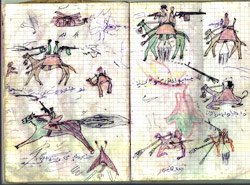
Children depict the atrocities of Darfur in crayon.
By Sue Peters
Helicopters and airplanes vs. camels and horses in Darfur.It can be easy to forget about troubles in distant countries when so many crises explode into the headlines with disturbing regularity: New Orleans, the Pakistan-Kashmir earthquake, Iraq. And then there's Darfur. Read the full story >>>>>>>>>>>>>>>>>
Wednesday, February 01, 2006
Dealing With the Genocide in Darfur
Wednesday, February 1, 2006; A22
The plan that U.N. Secretary General Kofi A. Annan laid out in his Jan. 25 op-ed, "Darfur Descending," epitomized why the United Nations is viewed as ineffectual by much of the world.
Mr. Annan identified the hunger-relief effort, the African Union (A.U.) peacekeeping force and a negotiated cease-fire as reasons for hope when he visited Darfur last May. But efforts to relieve hunger are mitigating actions, not solutions; the African Union force was known to lack resources, training, manpower and effective rules of engagement; and negotiations work only when driven by real carrots and real sticks. Read the full story >>>>>>>>>>>>>>>>>>>>>>>>>>>
The plan that U.N. Secretary General Kofi A. Annan laid out in his Jan. 25 op-ed, "Darfur Descending," epitomized why the United Nations is viewed as ineffectual by much of the world.
Mr. Annan identified the hunger-relief effort, the African Union (A.U.) peacekeeping force and a negotiated cease-fire as reasons for hope when he visited Darfur last May. But efforts to relieve hunger are mitigating actions, not solutions; the African Union force was known to lack resources, training, manpower and effective rules of engagement; and negotiations work only when driven by real carrots and real sticks. Read the full story >>>>>>>>>>>>>>>>>>>>>>>>>>>
Tuesday, January 31, 2006
Stop Darfur's Freefall
Posted by Derek Chollet
The State of the Union address is one of those policy Chirstmas trees where every pet project and issue wants (and usually gets) its own ornament – Suzanne and Heather’s posts below illustrate how once one gets into the business of listing the many worthy issues, they add up quickly -- and that’s just on the international stuff. So, in that spirit I’d like to make a wish for my own special ornament: that President Bush says he’s going to do something about Darfur. The entire story >>>>>
The State of the Union address is one of those policy Chirstmas trees where every pet project and issue wants (and usually gets) its own ornament – Suzanne and Heather’s posts below illustrate how once one gets into the business of listing the many worthy issues, they add up quickly -- and that’s just on the international stuff. So, in that spirit I’d like to make a wish for my own special ornament: that President Bush says he’s going to do something about Darfur. The entire story >>>>>
28 Days to Save Darfur
By KENNETH H. BACON
Washington
HOW can the United States best use its monthlong turn as president of the United Nations Security Council, which it assumes tomorrow? It could start by devoting itself to ending the violence in the Darfur region of western Sudan — violence that President Bush has characterized as genocide. Click here for the full story >>>>
Washington
HOW can the United States best use its monthlong turn as president of the United Nations Security Council, which it assumes tomorrow? It could start by devoting itself to ending the violence in the Darfur region of western Sudan — violence that President Bush has characterized as genocide. Click here for the full story >>>>
Monday, January 30, 2006
Retiring professors to be honored
Inside Bay Area
Two retiring Caada College professors with a combined 67 years of teaching experience, will be honored at a reception at 1:30 p.m. Tuesday on the college campus.
Richard "Dick" Claire, accounting and business professor, and Dianne Widmeyer Eyer, coordinator/professor of the early childhood education and child development program, will be recognized for their years of teaching at the ceremony. Follow the full story >>>>>>>>>>>
Two retiring Caada College professors with a combined 67 years of teaching experience, will be honored at a reception at 1:30 p.m. Tuesday on the college campus.
Richard "Dick" Claire, accounting and business professor, and Dianne Widmeyer Eyer, coordinator/professor of the early childhood education and child development program, will be recognized for their years of teaching at the ceremony. Follow the full story >>>>>>>>>>>
Holocaust surviors urge an end to genocide in Darfur
On day of remembrance, survivors reflect
By Cara Hogan
Holocaust survivors and religious leaders united on Friday at the Statehouse and voiced their concern over the ignorance or apathy toward genocide they say is prevalent in America, at the same time urging activism to stop the current genocide in Darfur. The rest of the story >>>>>>>>>>
By Cara Hogan
Holocaust survivors and religious leaders united on Friday at the Statehouse and voiced their concern over the ignorance or apathy toward genocide they say is prevalent in America, at the same time urging activism to stop the current genocide in Darfur. The rest of the story >>>>>>>>>>
Sunday, January 29, 2006
UN sounds Darfur warning
KILLINGS, rapes and indiscriminate attacks are still forcing tens of thousands of people from their homes in Darfur, the United Nations said yesterday.
A 42-page report said those carrying out the violence included soldiers who fired at civilians from helicopter gunships.
The report criticised the government of coup leader Omar el-Bashir, saying promises to end centuries of discrimination and marginalisation of black African minorities were marked by "token gestures" while murder and torture went unpunished.
There has been growing pressure for stronger sanctions to be imposed by the UN Security Council, to be chaired from February by the United States, which accuses Sudan's government of genocide.
http://www.scotsman.com
A 42-page report said those carrying out the violence included soldiers who fired at civilians from helicopter gunships.
The report criticised the government of coup leader Omar el-Bashir, saying promises to end centuries of discrimination and marginalisation of black African minorities were marked by "token gestures" while murder and torture went unpunished.
There has been growing pressure for stronger sanctions to be imposed by the UN Security Council, to be chaired from February by the United States, which accuses Sudan's government of genocide.
http://www.scotsman.com
An Opportunity for Darfur
THE BUSH administration has an opportunity next month to lead the world out of its paralysis on Darfur. The brave but undermanned African Union force that has tried to stabilize the territory is facing the end of its mandate: Western donors may keep it going for a few more months, but they're not going to go beyond that. Read the entire editorial >>>>>>>>
Saturday, January 28, 2006
UN urges Sudan to stop Darfur violence
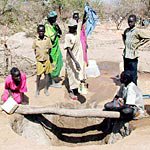
By Africa correspondent Zoe Daniel
Saturday, Feb 28, 2006
The United Nations (UN) has called on Sudan to end a climate of impunity and violence in Darfur, where aid agencies are being forced to pull out due to increasing violence.
Renewed fighting has displaced thousands around the Golo and Jebel Marra areas of Darfur in the last few days.
An aid worker was killed when a UN helicopter crashed evacuating humanitarian staff during the week.
The situation around Golo remains very tense but the number of people killed and fleeing is unclear because most observers have already been forced to leave.
Sudan Liberation Army rebels are trying to take the town from government control.
They may be retaliating against attacks on villages by pro-government militias.
The United Nations human rights head has admitted that the UN will eventually have to take on a peacekeeping role in Darfur.
source: ABC news on line
Friday, January 27, 2006
Genocides relive history's dark chapters
"Never again" is happening.
The world's duty never to let another genocide occur has been ignored and botched a number of times. The massacres in Cambodia, Rwanda and Srebrenica occurred on our watch. We were either unmindful or ineffective in combating those atrocities. The killing of civilians by the tens and hundreds of thousands has left bloodstained hands all across our world. Read more >>>>>>>>>>
The world's duty never to let another genocide occur has been ignored and botched a number of times. The massacres in Cambodia, Rwanda and Srebrenica occurred on our watch. We were either unmindful or ineffective in combating those atrocities. The killing of civilians by the tens and hundreds of thousands has left bloodstained hands all across our world. Read more >>>>>>>>>>
U.N.: Sudan turns blind eye to rape, murder
KHARTOUM, Sudan (AP) -- Killings, rapes and indiscriminate attacks driving tens of thousands of people from their homes continue in Darfur with perpetrators including soldiers who fired at civilians from helicopter gunships, the United Nations reported on Friday. Read the full article >>>>
Attacks, arrests, and obstruction: the people of Darfur continue to suffer
The last week has not been a good one for the people of Darfur. Civilians have been
attacked and killed, thousands more displaced, a ceasefire lies in tatters,while in Khartoum, humanrights activists were arrested while holding a meeting. Full story >>>
attacked and killed, thousands more displaced, a ceasefire lies in tatters,while in Khartoum, humanrights activists were arrested while holding a meeting. Full story >>>
Thursday, January 26, 2006
MPs demand sanctions over Darfur
A group of MPs wants the government to push the United Nations to impose sanctions against Sudan for failing to curb atrocities in the Darfur region. The full story >>>
Wednesday, January 25, 2006
Tuesday, January 24, 2006
U.S. Faces Moment of Truth on Darfur
By Ann-Louise Colgan | January 23, 2006
The Bush Administration will face a unique opportunity in February to end the genocide in Darfur when the United States takes over the presidency of the United Nations (UN) Security Council. Read the full story >>>>
The Bush Administration will face a unique opportunity in February to end the genocide in Darfur when the United States takes over the presidency of the United Nations (UN) Security Council. Read the full story >>>>
PHR's John Heffernan to Speak on Genocide in Darfur
Health, Human Rights and State Obligations:
Glimpses From Around the World
2nd Annual International Emergency Medicine Conference
Wednesday, February 8, 2006
NewYork-Presbyterian Hospital/ Columbia University Medical Center
At a conference presented by the Program on International Emergency Medicine at NewYork-Presbyterian Hospital, PHR Senior Investigator John Heffernan, will speak about genocide in Darfur. His talk, entitled "Assault on Survival: The Darfur Way of Life Destroyed," will be heard as part of a day-long program that will focus on issues of health and human rights facing physicians, relief workers, and policy makers in times of complex humanitarian emergencies and natural disasters.
For more information and to register, visit the conference Web site.
source www.phrusa.org
Glimpses From Around the World
2nd Annual International Emergency Medicine Conference
Wednesday, February 8, 2006
NewYork-Presbyterian Hospital/ Columbia University Medical Center
At a conference presented by the Program on International Emergency Medicine at NewYork-Presbyterian Hospital, PHR Senior Investigator John Heffernan, will speak about genocide in Darfur. His talk, entitled "Assault on Survival: The Darfur Way of Life Destroyed," will be heard as part of a day-long program that will focus on issues of health and human rights facing physicians, relief workers, and policy makers in times of complex humanitarian emergencies and natural disasters.
For more information and to register, visit the conference Web site.
source www.phrusa.org
Monday, January 23, 2006
The long road out of Darfur
The Monitor's View
Mon Jan 23, 3:00 AM ET
It can't be said that the world has completely forgotten Darfur, one of the world's worst humanitarian crises, but it nearly has. About 7,000 troops from the 53-member-nation African Union are doing their best to protect 2 million Darfurians uprooted by killing and pillaging. That's not nearly enough of a security presence.
Although the killing in this brutal internal conflict has subsided under a shaky cease-fire, the people of Sudan's Darfur region - a dry, undeveloped area the size of Texas - are still threatened by violence. Tens of thousands of Darfurians continue to be displaced. Women leaving displacement camps searching for firewood face the threat of rape. Bandits have closed road corridors, limiting access to vital aid workers.
And tension is growing on the Darfur border with Chad, threatening to expand this conflict. Chad, reported to be aiding Darfurian rebels, has accused Sudanese militias of border attacks.
The African Union (AU) deserves credit for stepping in militarily in 2004 where no one else has - even after the US condemned Darfur as a scene of genocide. But it's clearly overstretched. A report by the AU released earlier this month says it has had to make do with "about half the logistical capacity" it needs, and it doesn't even have money to last through March - let alone to oversee the hoped-for safe return of refugees.
The UN, with Washington's backing, is now working to enlarge the security mission and turn it over to the United Nations. Earlier this month, Jan Pronk, UN envoy to Sudan, called for as many as 20,000 troops to protect returning refugees. They should have a mandate to disarm the Sudanese-backed militias, known as janjaweed, who have driven so many Darfurians from their villages.
But it's a long, long way from here to there, and will require a lot more political will on the part of Washington and other players to get there.
The first hurdle, resistance within the AU, seems to be falling. The UN is talking with the AU, which agrees "in principle" to transfer its mission. But there's a certain degree of African pride involved, and the AU needs to be properly acknowledged for its contribution.
The bigger hurdle is Khartoum, which steadfastly refuses to allow nonAfrican intervention. Last week, US Secretary of State Condoleezza Rice endorsed a UN military role in Darfur, and told Khartoum to cooperate. But it will take far more high-level pressure from Washington to get Khartoum, accused of backing the pillaging janjaweed, to budge.
And should the Sudanese government agree to a UN mission, where will the troops come from? Because of its vastness, Darfur requires air support, not a specialty of the developing countries which normally make up UN peacekeeping. That leaves the US (too strapped in Afghanistan and Iraq) or NATO.
But NATO itself is still extremely wary (and tiresomely so) about missions outside Europe. The Dutch parliament, for instance, is holding up deployment of troops to southern Afghanistan, where NATO is to take over for the US.
Considering all of these obstacles, it's certainly a lot easier to muddle along and almost forget Darfur. Easier, that is, except for those living miserably in its refugee camps.
Copyright © 2006 The Christian Science Monitor
Mon Jan 23, 3:00 AM ET
It can't be said that the world has completely forgotten Darfur, one of the world's worst humanitarian crises, but it nearly has. About 7,000 troops from the 53-member-nation African Union are doing their best to protect 2 million Darfurians uprooted by killing and pillaging. That's not nearly enough of a security presence.
Although the killing in this brutal internal conflict has subsided under a shaky cease-fire, the people of Sudan's Darfur region - a dry, undeveloped area the size of Texas - are still threatened by violence. Tens of thousands of Darfurians continue to be displaced. Women leaving displacement camps searching for firewood face the threat of rape. Bandits have closed road corridors, limiting access to vital aid workers.
And tension is growing on the Darfur border with Chad, threatening to expand this conflict. Chad, reported to be aiding Darfurian rebels, has accused Sudanese militias of border attacks.
The African Union (AU) deserves credit for stepping in militarily in 2004 where no one else has - even after the US condemned Darfur as a scene of genocide. But it's clearly overstretched. A report by the AU released earlier this month says it has had to make do with "about half the logistical capacity" it needs, and it doesn't even have money to last through March - let alone to oversee the hoped-for safe return of refugees.
The UN, with Washington's backing, is now working to enlarge the security mission and turn it over to the United Nations. Earlier this month, Jan Pronk, UN envoy to Sudan, called for as many as 20,000 troops to protect returning refugees. They should have a mandate to disarm the Sudanese-backed militias, known as janjaweed, who have driven so many Darfurians from their villages.
But it's a long, long way from here to there, and will require a lot more political will on the part of Washington and other players to get there.
The first hurdle, resistance within the AU, seems to be falling. The UN is talking with the AU, which agrees "in principle" to transfer its mission. But there's a certain degree of African pride involved, and the AU needs to be properly acknowledged for its contribution.
The bigger hurdle is Khartoum, which steadfastly refuses to allow nonAfrican intervention. Last week, US Secretary of State Condoleezza Rice endorsed a UN military role in Darfur, and told Khartoum to cooperate. But it will take far more high-level pressure from Washington to get Khartoum, accused of backing the pillaging janjaweed, to budge.
And should the Sudanese government agree to a UN mission, where will the troops come from? Because of its vastness, Darfur requires air support, not a specialty of the developing countries which normally make up UN peacekeeping. That leaves the US (too strapped in Afghanistan and Iraq) or NATO.
But NATO itself is still extremely wary (and tiresomely so) about missions outside Europe. The Dutch parliament, for instance, is holding up deployment of troops to southern Afghanistan, where NATO is to take over for the US.
Considering all of these obstacles, it's certainly a lot easier to muddle along and almost forget Darfur. Easier, that is, except for those living miserably in its refugee camps.
Copyright © 2006 The Christian Science Monitor
Sunday, January 22, 2006
SUDAN: Government accused of catastrophic elimination of livelihoods in Darfur
A new report from Physicians for Human Rights (PHR) reveals, in unprecedented detail, the underreported catastrophic elimination of traditional livelihoods in Darfur, Sudan. Full story
Saturday, January 21, 2006
Regents Approve Inquiry In Sudan Divestment Case
UC’s Governing Board Also Allocates $37 Million for Grad Student Housing. Read the full story
Senior Eyewitnesses to Genocide to Call for Action Not Words on 'Responsibility to Protect'
Lt Gen Romeo Dallaire, UN Force Commander in Rwanda during the 1994 genocide, and Dr Mukesh Kapila, who as UN Humanitarian Coordinator for Sudan 2003-2004 blew the whistle on the Darfur crisis, will speak out in London next week on the need for movement from words to actions on the 'responsibility to protect' civilians at risk of mass murder - a responsibility to which international leaders signed up at the World Summit in September last year. Go through the entire press release
Friday, January 20, 2006
Darfur killings continuing unabated
The United Nations' Special Envoy in Sudan Jan Pronk has warned that peace talks aimed at ending years of conflict in the Darfur region have so far proved fruitless. More >>
Thursday, January 19, 2006

A problem from hell
Does applying the generic label of "genocide" to violence in Darfur make it even harder to stop the killing? Read more
Wednesday, January 18, 2006
The rape of Darfur
Now that most of the black African villages in Darfur have been destroyed, sexual violence against women and children is being used to break the will of the population that remains, says Glenys Kinnock.
Glenys Kinnock
Friday January 20, 2006
Guardian Unlimited
Saida Abdukarim was eight months pregnant and innocently tending her vegetables when she was set-upon, raped and beaten mercilessly.
Begging for the life of her child, she was told by her attackers: "You are black so we can rape you." As they raped her and beat her with the butts of their guns she crouched over, absorbing the blows in an attempt to protect her unborn baby.
So far, her strategy appears to have worked: her baby is still alive. She, by contrast, fared much worse. She was battered so badly that she was unable to walk. All this just because she left her village for food.
Sadly, this harrowing account, as told to American journalist Nicholas Kristof, is not unique.
In Darfur, where close to 400,000 people have been killed as part of a government-sponsored program of ethnic cleansing, the brutal rape of women and children has become a weapon of war.
Sexual violence is now an integral and devastating part of the conflict aimed at breaking the will of the local people, humiliating them so that they will abandon their lands and weakening tribal ethnic lines.
Every day women in Darfur face the prospect of being raped and beaten when they leave their homes to find food or search for firewood. They face this prospect even though the international community claims that it is protecting them.
Even if they survive this trauma, as I learnt when I visited the region last year, their prospects are bleak. Many of them have had their homes destroyed and their male relatives killed.
Their villages are burned to the ground, they are forced to walk for days, carrying their children through baking heat and dust storms, to insecure refugee camps. Here, instead of finding safety and comfort, they must build their own shelters, and they are still vulnerable to attack.
These are the physical aspects of the disaster. The psychological ones run much deeper. No one can estimate how often the women in Darfur are attacked and raped because their society shames the victims into silence.
Until a few weeks ago women who sought medical help after being raped were actually arrested by the Sudanese security forces. This silence leaves its marks on the society and on the women themselves.
Not only will many of the women be unable to marry, but they also face the stigma of violation.
When the international community finally found the will to complain to the regime in Khartoum, the arrests stopped, proving we can make a difference when we can be bothered to confront Sudan's dictators.
We haven't heard much about what is happening in Darfur recently. The killing and raping continues, but the Sudanese regime has changed tactics.
It no longer needs to use its air force to bomb its own people because it has achieved its racist aim: 90% of the black African villages have been destroyed.
Now the Sudanese are using their proxies, the Janjaweed militia, to rape women whenever they venture out for firewood.
Khartoum has rightly guessed that the international community is not going to take them to task over the daily suffering of hundreds of thousands of women who cannot bear to talk about their ordeal.
Is this our response? Is this what innocent women and children deserve?
The United Nations has repeatedly refused to send peacekeepers to Darfur. However, there are other steps we can take to protect the women there.
We could send groups of policewomen from African nations to accompany the firewood-gathering trips.
Civilian police would not represent the same challenge to the national sovereignty of Sudan that soldiers would.
By training, supporting and enabling female police officers from African countries we could build the capacity of their forces, thus achieving two worthwhile aims at once.
We could help provide fuel-efficient stoves so less firewood is needed.
We could vastly increase the currently tiny number of African Union monitors in Darfur, giving them enough personnel to deter the militia from attacking women.
We could provide rape counselling and a chance to break the taboo of silence.
We could increase medical treatment for sexually transmitted diseases, as recommended by Médecins Sans Frontièrs.
Unless steps are taken now, the long-term consequences could include a generation of women unable to have children due to infection or physical damage and thousands of raped women who are pregnant and will live with the stigma all their lives, unable to get married.
These common sense steps require political will. So far, this has been lacking when it comes to Darfur.
But we must keep the pressure on the United Nations, the European Commission and our own governments until they are shamed enough to act.
Kofi Annan has described Darfur as "little short of hell on Earth". It is time to end that hell, for Saida, and for the thousands like her.
· Glenys Kinnock is MEP for Wales and a member of the European parliament's development and cooperation committee.
Guardian Unlimited © Guardian Newspapers Limited 2006
Glenys Kinnock
Friday January 20, 2006
Guardian Unlimited
Saida Abdukarim was eight months pregnant and innocently tending her vegetables when she was set-upon, raped and beaten mercilessly.
Begging for the life of her child, she was told by her attackers: "You are black so we can rape you." As they raped her and beat her with the butts of their guns she crouched over, absorbing the blows in an attempt to protect her unborn baby.
So far, her strategy appears to have worked: her baby is still alive. She, by contrast, fared much worse. She was battered so badly that she was unable to walk. All this just because she left her village for food.
Sadly, this harrowing account, as told to American journalist Nicholas Kristof, is not unique.
In Darfur, where close to 400,000 people have been killed as part of a government-sponsored program of ethnic cleansing, the brutal rape of women and children has become a weapon of war.
Sexual violence is now an integral and devastating part of the conflict aimed at breaking the will of the local people, humiliating them so that they will abandon their lands and weakening tribal ethnic lines.
Every day women in Darfur face the prospect of being raped and beaten when they leave their homes to find food or search for firewood. They face this prospect even though the international community claims that it is protecting them.
Even if they survive this trauma, as I learnt when I visited the region last year, their prospects are bleak. Many of them have had their homes destroyed and their male relatives killed.
Their villages are burned to the ground, they are forced to walk for days, carrying their children through baking heat and dust storms, to insecure refugee camps. Here, instead of finding safety and comfort, they must build their own shelters, and they are still vulnerable to attack.
These are the physical aspects of the disaster. The psychological ones run much deeper. No one can estimate how often the women in Darfur are attacked and raped because their society shames the victims into silence.
Until a few weeks ago women who sought medical help after being raped were actually arrested by the Sudanese security forces. This silence leaves its marks on the society and on the women themselves.
Not only will many of the women be unable to marry, but they also face the stigma of violation.
When the international community finally found the will to complain to the regime in Khartoum, the arrests stopped, proving we can make a difference when we can be bothered to confront Sudan's dictators.
We haven't heard much about what is happening in Darfur recently. The killing and raping continues, but the Sudanese regime has changed tactics.
It no longer needs to use its air force to bomb its own people because it has achieved its racist aim: 90% of the black African villages have been destroyed.
Now the Sudanese are using their proxies, the Janjaweed militia, to rape women whenever they venture out for firewood.
Khartoum has rightly guessed that the international community is not going to take them to task over the daily suffering of hundreds of thousands of women who cannot bear to talk about their ordeal.
Is this our response? Is this what innocent women and children deserve?
The United Nations has repeatedly refused to send peacekeepers to Darfur. However, there are other steps we can take to protect the women there.
We could send groups of policewomen from African nations to accompany the firewood-gathering trips.
Civilian police would not represent the same challenge to the national sovereignty of Sudan that soldiers would.
By training, supporting and enabling female police officers from African countries we could build the capacity of their forces, thus achieving two worthwhile aims at once.
We could help provide fuel-efficient stoves so less firewood is needed.
We could vastly increase the currently tiny number of African Union monitors in Darfur, giving them enough personnel to deter the militia from attacking women.
We could provide rape counselling and a chance to break the taboo of silence.
We could increase medical treatment for sexually transmitted diseases, as recommended by Médecins Sans Frontièrs.
Unless steps are taken now, the long-term consequences could include a generation of women unable to have children due to infection or physical damage and thousands of raped women who are pregnant and will live with the stigma all their lives, unable to get married.
These common sense steps require political will. So far, this has been lacking when it comes to Darfur.
But we must keep the pressure on the United Nations, the European Commission and our own governments until they are shamed enough to act.
Kofi Annan has described Darfur as "little short of hell on Earth". It is time to end that hell, for Saida, and for the thousands like her.
· Glenys Kinnock is MEP for Wales and a member of the European parliament's development and cooperation committee.
Guardian Unlimited © Guardian Newspapers Limited 2006
Tuesday, January 17, 2006
Genocide in Sudan: What the University of California can do

January 16, 2006
By Adam Rosenthal, Jason Miller, and Adam Sterling
In 1944, Polish lawyer Raphel Lemkin, in response to the Holocaust that took the lives of 49 family members, coined the term genocide to describe a crime against humanity so horrific that it needed its own definition and code of governing laws.
While Lemkin's efforts led directly to increased awareness about the crime, scarcely a decade has since passed without the perpetration of a major genocide. Today, genocide is once again occurring before our very eyes, in the Darfur region of Sudan, and once again, we are looking the other way.
Since early 2003, Sudanese troops and government-sponsored militias have carried out the coordinated and targeted killing of the black African population in Sudan's Darfur region. For the first time in history, the U.S. Congress, State Department, and Executive Branch have all declared that an ongoing massacre amounts to genocide and that the Sudanese government is directly responsible.
To date, 400,000 people have been slaughtered, 2.5 million more have been driven from their homes, and 70 percent of all Darfurian villages have been destroyed. Furthermore, a systematic policy of rape has maimed and humiliated scores of Darfurian women, while the government's blockade of humanitarian aid to the displaced has left over 3 million in danger of starvation.
Why should the students of UCSC care about the genocide in Darfur in a world where billions are afflicted by disease, poverty, and conflict? New York Times columnist Nicholas Kristof explains, "…there is something special about genocide. When humans deliberately wipe out others because of their tribe or skin color, when babies succumb not to diarrhea but to bayonets and bonfires, that is not just one more tragedy. It is a monstrosity that demands a response from other humans. We demean our own humanity, and that of the victims, when we avert our eyes."
Today, the University of California is in a unique position to influence the course of this crime. As a result of the combined efforts of thousands of UC students, the UC Board of Regents will meet at UC San Diego on January 19 to consider a process known as divestment, which would entail the removal of over $100 million of foreign investments tied up in companies that directly or indirectly facilitate government-sponsored genocide in Sudan.
As the students of the University of California, it is our responsibility to ensure that our university does not continue to passively condone genocide. “Silence in the face of atrocity is not neutrality; silence in the face of atrocity is acquiescence," explains Pulitzer Prize winning author and Harvard professor Samantha Power.
On Thursday, January 19, the over 188,000 students of the University of California must come together and provide a voice to the millions of Darfurians who have lost theirs. Join the thousands of students, faculty, and staff that have expressed their concern by signing the petition for divestment. And if you are inspired to join us in San Diego this Thursday, please contact student organizers for the divestment campaign at ucsudandt@gmail.com.
Adam Rosenthal, a law student at the UC Davis is the student Regent for the University of California. Jason Miller, a medical and doctoral student at UC San Francisco, and Adam Sterling, a African American Studies major at the University of California Los Angeles, are the cochairs of the University of California Sudan Divestment Taskforce.
source: ucsc.edu
Sunday, January 15, 2006
UN Security Council Says it Will Enforce Sudan Sanctions

(AXcess News) New York - Jan Pronk, the head of the UN Mission in Sudan said Friday that the UN Security Council must enforce its sanctions against human rights violators or lose credibility.
"If even weak sanctions are not going to be implemented, the Security Council doesn't take itself seriously and they have to," Jan Pronk told reporters after briefing the Council. "They have to because otherwise the people on the ground are just laughing."
He also questioned the broader implications of the Council's mandates going unheeded. "What about a new problem, a new issue, a new resolution in another conflict in the world if parties understand that resolutions are not being implemented at all (and) sanctions don’t mean anything?"
The Security Council, which has tried to end the violence, disarm the Janjaweed militia, end impunity and find a political solution, today discussed two reports submitted by Secretary-General Kofi Annan, one on the agreement with the formerly secessionist South and the overall situation across the country and another on the troubled western Darfur region.
Briefing the Council, Mr. Pronk said that although the January 2005 Comprehensive Peace Agreement between the Government of the Sudan and the Southern People's Liberation Movement/Army (SPLM/A) remained firm, many in the South have become suspicious about the Government’s lack of transparency in reporting the oil revenue that is supposed to be shared.
Added to that issue are suspicions in the north that the SPLM does not want to promote national unity as it prepares for the referendum on separation scheduled for six years after the CPA was signed, he said.
Nonetheless, in the past year, constitutions for Sudan and Southern Sudan have been adopted, two new governments have been formed and all institutions required under the accord have been created.
The unity option should get a real chance when the people vote in the referendum, said Mr. Pronk. "However, the Government in the North should do everything to make this attractive. It can do so by guaranteeing a fair share of power, resources and income to the people of the South for expenditure and investment in water, schools, jobs, agriculture, housing and health care for all those people who were deprived of these decades along."
On the unrest in eastern Sudan he said, the Government and rebel movements there had agreed to start discussions leading to peace talks facilitated by the UN in the third quarter of last year, but thereafter the UN was sidelined. Parties agreed to Libya as a facilitator, but talks have yet to start.
On another front, the Council president, Ambassador Augustine Mahiga of Tanzania, whose Government holds the rotating presidency for this month, told reporters after the meeting that Chad has alleged that rebels or deserters from its army have crossed into Sudan and have been given sanctuary there while "continuing to cause problems" for Chad.
The Council has not yet received Sudan's version of the issue, but tensions have risen between the two countries, he noted, and this has had a negative effect on the Darfur negotiations.
Saturday, January 14, 2006
U.N. envoy admits defeat in peace efforts in Sudan
Associated Press
Jan. 14, 2006 12:00 AM
UNITED NATIONS - The top U.N. envoy in Sudan declared Friday that efforts to bring peace to Sudan's Darfur region have failed, and he called for a U.N. peacekeeping force of up to 20,000 troops to disarm marauding militias and provide security so 2 million refugees can return home.
Jan Pronk said an ethnic cleansing campaign in 2003 and 2004 had been successful and a larger, more sophisticated and mobile force was needed to help end the continuing rapes and killings and stop the groups of 500 to 1,000 militia on camel and horseback that still attack villages at least once a month.
"Looking back at three years of killings and cleansing in Darfur, we must admit that our peace strategy so far has failed," he told the U.N. "All we did was picking up the pieces and muddling through, doing too little too late."
Jan. 14, 2006 12:00 AM
UNITED NATIONS - The top U.N. envoy in Sudan declared Friday that efforts to bring peace to Sudan's Darfur region have failed, and he called for a U.N. peacekeeping force of up to 20,000 troops to disarm marauding militias and provide security so 2 million refugees can return home.
Jan Pronk said an ethnic cleansing campaign in 2003 and 2004 had been successful and a larger, more sophisticated and mobile force was needed to help end the continuing rapes and killings and stop the groups of 500 to 1,000 militia on camel and horseback that still attack villages at least once a month.
"Looking back at three years of killings and cleansing in Darfur, we must admit that our peace strategy so far has failed," he told the U.N. "All we did was picking up the pieces and muddling through, doing too little too late."
Thursday, January 12, 2006
Genocide continues to rage in Darfur
Posted on Thu, Jan. 12, 2006
Today -- International Genocide Prevention Day -- marks the 55th anniversary of the ratification of the U.N. Convention on the Prevention and Punishment of the Crime of Genocide.
What has the world learned? Did the Holocaust and the genocide in Rwanda teach us nothing?
Now we face a similar situation in Sudan. Government-backed militias, known as the janjaweed, have killed more than 400,000 people in the Darfur region, according to recent reports by the U.N.- and U.S.-based humanitarian organizations working there. At least 4 million people are hungry or starving, and another 1.2 million, including 400,000 to 500,000 children, have become refugees.
The U.S. government must take the lead to: end the violence; provide humanitarian assistance for those in need; create conditions that will allow those displaced to return home; and hold the perpetrators of the atrocities accountable.
President Bush and Congress have recognized the problem and labeled it ''genocide.'' However, there has been little action. An allocation of $50 million to the African Union peacekeepers was stripped from the budget.
Perhaps NATO should get involved; the U.N. seems paralyzed because of conflicting interests among Security Council members. Meanwhile, time goes on, and more people die.
Genocides don't just happen. They are allowed to happen when the world stands idly by.
CAROLYN SHAPIR, community relations chair, United Jewish Community of Broward County, Fort Lauderdale
© 2006 MiamiHerald.com and wire service sources. All Rights Reserved.
http://www.miami.com
Today -- International Genocide Prevention Day -- marks the 55th anniversary of the ratification of the U.N. Convention on the Prevention and Punishment of the Crime of Genocide.
What has the world learned? Did the Holocaust and the genocide in Rwanda teach us nothing?
Now we face a similar situation in Sudan. Government-backed militias, known as the janjaweed, have killed more than 400,000 people in the Darfur region, according to recent reports by the U.N.- and U.S.-based humanitarian organizations working there. At least 4 million people are hungry or starving, and another 1.2 million, including 400,000 to 500,000 children, have become refugees.
The U.S. government must take the lead to: end the violence; provide humanitarian assistance for those in need; create conditions that will allow those displaced to return home; and hold the perpetrators of the atrocities accountable.
President Bush and Congress have recognized the problem and labeled it ''genocide.'' However, there has been little action. An allocation of $50 million to the African Union peacekeepers was stripped from the budget.
Perhaps NATO should get involved; the U.N. seems paralyzed because of conflicting interests among Security Council members. Meanwhile, time goes on, and more people die.
Genocides don't just happen. They are allowed to happen when the world stands idly by.
CAROLYN SHAPIR, community relations chair, United Jewish Community of Broward County, Fort Lauderdale
© 2006 MiamiHerald.com and wire service sources. All Rights Reserved.
http://www.miami.com
Wednesday, January 11, 2006
New Report Says Lives Systematically Destroyed in Darfur
By Cole Mallard
Washington
11 January 2006
Mallard report on Darfur mp3
Mallard report on Darfur ra
A medical human rights group says genocide in Darfur is continuing, and people’s lives are being systematically destroyed. Physicians for Human Rights, or PHR, released a report Wednesday (1/11/06) showing in detail the destruction of lives in three villages.
John Heffernan is a senior investigator for the Massachusetts-based group and the author of “Darfur: Assault on Survival – a Call for Security, Justice and Restitution.”
Heffernan took three trips into Sudan and along the border with Chad in May of 2004, and again in January and July of last year. He visited three villages -- Furawiya, Bendisi, and Terbeba -- where he spoke to refugees who’d fled the atrocities.
“What we found coming out of that initial investigation was that there were a number of indicators of genocide – one being the systematic destruction of livelihoods and means of survival. We felt that this was something that was so clearly and blatantly obvious … that we wanted to go back, and through the lens of three particular villages look at the way livelihoods – a way of life - had been destroyed in Sudan and what it would take for these people to go back to Darfur,” he said.
Heffernan says the Janjaweed – Arab militias supported by the government -- have destroyed over three thousand “non-Arab” villages. He says forcing people into what he calls the desert “deathtrap” makes it impossible for them to survive without outside help. He says the attacks would typically start early in the morning, with the Janjaweed arriving on horseback or camel, and the Sudanese government in large trucks.
“The large trucks were used to transport all of the possessions to either markets or to be sold elsewhere – including livestock, a terribly important part of the culture and the economy of Darfur. So camels and cows and donkeys and goats and chickens were all taken away. Then their homes were destroyed, and then the people didn’t have anywhere to go, so they were forced to leave their homes to search for food, to search for water. And unless they came upon an area that was safe where they could seek refuge -- and typically in those instances where they didn’t find that -- you would have a number of people die,” he says.
Physicians for Human Rights is calling on the U-N Security Council to establish and implement an effective compensation commission. This was recommended by the U-N’s own Commission of Inquiry report, released a year ago. Heffernan also says the Khartoum government must take responsibility for crimes against its citizens.
“The Sudanese do need to be held accountable and the compensation commission should largely come from funding out of the coffers of Sudan,” he says.
For example, he says, the U-N Security Council should pass a resolution mandating that profits from Sudanese oil or other commodities be used to compensate, restore, and rehabilitate Darfur. The report also calls on the Sudanese government and rebel forces to immediately stop violent attacks on Darfur’s civilians and their property. Also, Heffernan says because the Sudanese government is the architect of the genocide, its bid for the A-U presidency adds insult to injury. He says it undermines the organization’s credibility and could jeopardize the ongoing peace talks in Abuja.
Another recommendation: for peace and security, the international community should press for a resolution authorizing a multi-national intervention force under the U-N Charter.
“When there is a peaceful and secure environment, people can go home right away. People have not been able to plant their crops; people need to rebuild their homes, and the longer they stay away … the more entrenched it becomes, and the more difficult it will be for them to restore their lives,” he says.
John Heffernan says the strength of this report is in showing that deliberate and organized planning is being used to destroy a way of life. For example, one refugee told P-H-R investigators that she overheard her attacker say, “Don’t bother, don’t waste the bullet, they’ve got nothing to eat and they will die from hunger.”
source voanews.com
Washington
11 January 2006
Mallard report on Darfur mp3
Mallard report on Darfur ra
A medical human rights group says genocide in Darfur is continuing, and people’s lives are being systematically destroyed. Physicians for Human Rights, or PHR, released a report Wednesday (1/11/06) showing in detail the destruction of lives in three villages.
John Heffernan is a senior investigator for the Massachusetts-based group and the author of “Darfur: Assault on Survival – a Call for Security, Justice and Restitution.”
Heffernan took three trips into Sudan and along the border with Chad in May of 2004, and again in January and July of last year. He visited three villages -- Furawiya, Bendisi, and Terbeba -- where he spoke to refugees who’d fled the atrocities.
“What we found coming out of that initial investigation was that there were a number of indicators of genocide – one being the systematic destruction of livelihoods and means of survival. We felt that this was something that was so clearly and blatantly obvious … that we wanted to go back, and through the lens of three particular villages look at the way livelihoods – a way of life - had been destroyed in Sudan and what it would take for these people to go back to Darfur,” he said.
Heffernan says the Janjaweed – Arab militias supported by the government -- have destroyed over three thousand “non-Arab” villages. He says forcing people into what he calls the desert “deathtrap” makes it impossible for them to survive without outside help. He says the attacks would typically start early in the morning, with the Janjaweed arriving on horseback or camel, and the Sudanese government in large trucks.
“The large trucks were used to transport all of the possessions to either markets or to be sold elsewhere – including livestock, a terribly important part of the culture and the economy of Darfur. So camels and cows and donkeys and goats and chickens were all taken away. Then their homes were destroyed, and then the people didn’t have anywhere to go, so they were forced to leave their homes to search for food, to search for water. And unless they came upon an area that was safe where they could seek refuge -- and typically in those instances where they didn’t find that -- you would have a number of people die,” he says.
Physicians for Human Rights is calling on the U-N Security Council to establish and implement an effective compensation commission. This was recommended by the U-N’s own Commission of Inquiry report, released a year ago. Heffernan also says the Khartoum government must take responsibility for crimes against its citizens.
“The Sudanese do need to be held accountable and the compensation commission should largely come from funding out of the coffers of Sudan,” he says.
For example, he says, the U-N Security Council should pass a resolution mandating that profits from Sudanese oil or other commodities be used to compensate, restore, and rehabilitate Darfur. The report also calls on the Sudanese government and rebel forces to immediately stop violent attacks on Darfur’s civilians and their property. Also, Heffernan says because the Sudanese government is the architect of the genocide, its bid for the A-U presidency adds insult to injury. He says it undermines the organization’s credibility and could jeopardize the ongoing peace talks in Abuja.
Another recommendation: for peace and security, the international community should press for a resolution authorizing a multi-national intervention force under the U-N Charter.
“When there is a peaceful and secure environment, people can go home right away. People have not been able to plant their crops; people need to rebuild their homes, and the longer they stay away … the more entrenched it becomes, and the more difficult it will be for them to restore their lives,” he says.
John Heffernan says the strength of this report is in showing that deliberate and organized planning is being used to destroy a way of life. For example, one refugee told P-H-R investigators that she overheard her attacker say, “Don’t bother, don’t waste the bullet, they’ve got nothing to eat and they will die from hunger.”
source voanews.com
Tuesday, January 10, 2006
Arab Women Singers Complicit in Rape, Says Amnesty Report
While African women in Darfur were being raped by the Janjaweed militiamen, Arab women stood nearby and sang for joy, according to an Amnesty International report published yesterday. The songs of the Hakama, or the "Janjaweed women" as the refugees call them, encouraged the atrocities committed by the militiamen. The women singers stirred up racial hatred against black civilians during attacks on villages in Darfur and celebrated the humiliation of their enemies, the human rights group said.
"[They] appear to be the communicators during the attacks. They are reportedly not actively involved in attacks on people, but participate in acts of looting." Amnesty International collected several testimonies mentioning the presence of Hakama while women were raped by the Janjaweed. The report said:"Hakama appear to have directly harassed the women [who were] assaulted, and verbally attacked them."
During an attack on the village of Disa in June last year, Arab women accompanied the attackers and sang songs praising the government and scorning the black villagers.
According to an African chief quoted in the report, the singers said: "The blood of the blacks runs like water, we take their goods and we chase them from our area and our cattle will be in their land. The power of [Sudanese president Omer Hassan] al-Bashir belongs to the Arabs and we will kill you until the end, you blacks, we have killed your God."
The chief said that the Arab women also racially insulted women from the village: "You are gorillas, you are black, and you are badly dressed."
The Janjaweed have abducted women for use as sex slaves, in some cases breaking their limbs to prevent them escaping, as well as carrying out rapes in their home villages, the report said.
The militiamen "are happy when they rape. They sing when they rape and they tell that we are just slaves and that they can do with us how they wish", a 37-year-old victim, identified as A, is quoted as saying in the report, which was based onmore than 100 testimonies from women in the refugee camps in neighbouring Chad.
Pollyanna Truscott, Amnesty International's Darfur crisis coordinator, said the rape was part of a systematic dehumanisation of women. "It is done to inflict fear, to force them to leave their communities. It also humiliates the men in their communities."
The UN estimates that up to 30,000 people have been killed in Darfur, and more than a million have been forced to flee their homes. Peace talks between the Sudanese government and two rebel movements broke down on Saturday when the rebel groups walked out, saying the government must first disarm the Janjaweed.
Another human rights organisation, Human Rights Watch, today publishes alleged Sudanese government documents showing that it was much more closely involved with the Janjaweed than it has so far admitted.
The documents, which Human Rights Watch said it had obtained from the civilian administration in Darfur and are dated February and March this year, call for "provisions and ammunition" to be delivered to known Janjaweed militia leaders, camps and "loyalist tribes".
One document orders all security units in the area to tolerate the activities of Musa Hilal, the alleged Janjaweed leader in north Darfur interviewed by the Guardian last week.
Peter Takirambudde, the executive director of Human Rights Watch's Africa division, said: "These documents show that militia activity has not just been condoned, it's been specifically supported by Sudan government officials."
The official government line is that it did not arm or support the Janjaweed, though its presence was useful in helping to combat rebels in Darfur.
By Jeevan Vasagar in Nairobi and Ewen MacAskill
The Guardian
"[They] appear to be the communicators during the attacks. They are reportedly not actively involved in attacks on people, but participate in acts of looting." Amnesty International collected several testimonies mentioning the presence of Hakama while women were raped by the Janjaweed. The report said:"Hakama appear to have directly harassed the women [who were] assaulted, and verbally attacked them."
During an attack on the village of Disa in June last year, Arab women accompanied the attackers and sang songs praising the government and scorning the black villagers.
According to an African chief quoted in the report, the singers said: "The blood of the blacks runs like water, we take their goods and we chase them from our area and our cattle will be in their land. The power of [Sudanese president Omer Hassan] al-Bashir belongs to the Arabs and we will kill you until the end, you blacks, we have killed your God."
The chief said that the Arab women also racially insulted women from the village: "You are gorillas, you are black, and you are badly dressed."
The Janjaweed have abducted women for use as sex slaves, in some cases breaking their limbs to prevent them escaping, as well as carrying out rapes in their home villages, the report said.
The militiamen "are happy when they rape. They sing when they rape and they tell that we are just slaves and that they can do with us how they wish", a 37-year-old victim, identified as A, is quoted as saying in the report, which was based onmore than 100 testimonies from women in the refugee camps in neighbouring Chad.
Pollyanna Truscott, Amnesty International's Darfur crisis coordinator, said the rape was part of a systematic dehumanisation of women. "It is done to inflict fear, to force them to leave their communities. It also humiliates the men in their communities."
The UN estimates that up to 30,000 people have been killed in Darfur, and more than a million have been forced to flee their homes. Peace talks between the Sudanese government and two rebel movements broke down on Saturday when the rebel groups walked out, saying the government must first disarm the Janjaweed.
Another human rights organisation, Human Rights Watch, today publishes alleged Sudanese government documents showing that it was much more closely involved with the Janjaweed than it has so far admitted.
The documents, which Human Rights Watch said it had obtained from the civilian administration in Darfur and are dated February and March this year, call for "provisions and ammunition" to be delivered to known Janjaweed militia leaders, camps and "loyalist tribes".
One document orders all security units in the area to tolerate the activities of Musa Hilal, the alleged Janjaweed leader in north Darfur interviewed by the Guardian last week.
Peter Takirambudde, the executive director of Human Rights Watch's Africa division, said: "These documents show that militia activity has not just been condoned, it's been specifically supported by Sudan government officials."
The official government line is that it did not arm or support the Janjaweed, though its presence was useful in helping to combat rebels in Darfur.
By Jeevan Vasagar in Nairobi and Ewen MacAskill
The Guardian
Monday, January 09, 2006
The Cairo massacre
The Boston Globe
SUNDAY, JANUARY 8, 2006
Something shameful has been happening in Cairo, where Egyptian security forces assaulted Sudanese refugees who had been camping out before the offices of the United Nations High Commissioner for Refugees. Egyptian authorities said that 26 Sudanese were killed, but the Cairo representative of the southern Sudan People's Liberation Movement, after tallying mortality figures from area hospitals, announced a total of 265 dead. The exact number of people killed on Dec. 30 may never be established, but the shame of those killings is unconcealable.
The shame is shared among the Egyptians who ordered the attack, the Sudanese regime the refugees were fleeing, and the UNHCR officials who had refused to resettle the refugees in some third country and then said that, sad as the Cairo massacre may have been, nobody was to blame for the loss of life.
The victims belonged to Christian and animist tribal groups of southern Sudan. Because a tenuous peace accord last year formally ended a long war in southern Sudan between the National Islamic Front regime in Khartoum and the Dinka and Nuer peoples of southern Sudan - a war that took two million lives - UN officials in Cairo justified their refusal to heed the refugees' pleas for resettlement somewhere other than Sudan with the bureaucratic explanation that the petitioners no longer qualified as refugees.
Different kinds of shame hover in the background of the Cairo killings. The worst belongs to the rulers in Khartoum. They use their oil wealth not only to finance their genocidal violence against the non-Arab African tribal groups of Darfur, but to buy the complicity or silence of other governments.
Egypt has a long history of collaboration with the Khartoum regime. Egypt's influence was instrumental in arranging to have the African Union summit meeting held later this month in Khartoum and an Arab League summit meeting convened there in March. These diplomatic events lend prestige and an aura of legitimacy to Sudan's government even as its ringleaders continue their merciless annihilation of hundreds of thousands of people in Darfur.
China, which has bought oil concessions in Sudan, protects the Khartoum regime from UN sanctions by threatening to use its veto in the Security Council. The Bush administration, which has called the Darfur genocide by its true name, has nonetheless flown Sudan's intelligence chief to Washington for consultations and has apparently gained Khartoum's cooperation in the war against Al Qaeda terrorism, raising fears of a discreet U.S. acquiescence in the ongoing Darfur genocide.
There is more than enough shame to go around when nobody may be blamed for the murder of people regarded as nobodies.
- The Boston Globe
SUNDAY, JANUARY 8, 2006
Something shameful has been happening in Cairo, where Egyptian security forces assaulted Sudanese refugees who had been camping out before the offices of the United Nations High Commissioner for Refugees. Egyptian authorities said that 26 Sudanese were killed, but the Cairo representative of the southern Sudan People's Liberation Movement, after tallying mortality figures from area hospitals, announced a total of 265 dead. The exact number of people killed on Dec. 30 may never be established, but the shame of those killings is unconcealable.
The shame is shared among the Egyptians who ordered the attack, the Sudanese regime the refugees were fleeing, and the UNHCR officials who had refused to resettle the refugees in some third country and then said that, sad as the Cairo massacre may have been, nobody was to blame for the loss of life.
The victims belonged to Christian and animist tribal groups of southern Sudan. Because a tenuous peace accord last year formally ended a long war in southern Sudan between the National Islamic Front regime in Khartoum and the Dinka and Nuer peoples of southern Sudan - a war that took two million lives - UN officials in Cairo justified their refusal to heed the refugees' pleas for resettlement somewhere other than Sudan with the bureaucratic explanation that the petitioners no longer qualified as refugees.
Different kinds of shame hover in the background of the Cairo killings. The worst belongs to the rulers in Khartoum. They use their oil wealth not only to finance their genocidal violence against the non-Arab African tribal groups of Darfur, but to buy the complicity or silence of other governments.
Egypt has a long history of collaboration with the Khartoum regime. Egypt's influence was instrumental in arranging to have the African Union summit meeting held later this month in Khartoum and an Arab League summit meeting convened there in March. These diplomatic events lend prestige and an aura of legitimacy to Sudan's government even as its ringleaders continue their merciless annihilation of hundreds of thousands of people in Darfur.
China, which has bought oil concessions in Sudan, protects the Khartoum regime from UN sanctions by threatening to use its veto in the Security Council. The Bush administration, which has called the Darfur genocide by its true name, has nonetheless flown Sudan's intelligence chief to Washington for consultations and has apparently gained Khartoum's cooperation in the war against Al Qaeda terrorism, raising fears of a discreet U.S. acquiescence in the ongoing Darfur genocide.
There is more than enough shame to go around when nobody may be blamed for the murder of people regarded as nobodies.
- The Boston Globe
Sunday, January 08, 2006
Once again, genocide
Palm Beach Post Editorial
Sunday, January 08, 2006
In a world that keeps vowing "never again," the genocide continues. We have just left what some have called the century of mass murder. We haven't left behind the catastrophe continuing in Sudan because of the government-backed militias known as the Janjaweed. More than 400,000 people have died in the Darfur region, according to recent reports by the United Nations and U.S.-based humanitarian organizations working there. At least 4 million people are hungry or starving, and 1.2 million, including 400,000 to 500,000 children, have become refugees from the violence between Khartoum and anti-government rebels.
It has happened even as the international players, notably the United States, have debated the semantics. In July 2004, then-Secretary of State Colin Powell met with U.N. Secretary-General Kofi Annan in Khartoum and afterward said the situation "doesn't meet the tests of the definition of genocide." That was more than a year after Arab militias had begun killing and raping African civilians and burning their villages to clear from the region people considered disloyal to the government. By last June, even President Bush was agreeing with his then former secretary that the human carnage constituted genocide. Congress already had passed a resolution declaring it so.
More from Opinion
•Sound off in the blog
• Columnists
• Editorials/Letters
• Don Wright cartoons
As usual with such "cleansing," ethnic, religious or fill-in-the-blank hatreds are promoted for political motives stemming from economic roots. The rich Sudanese oilfields in this case explain why China and other nations have blocked effective U.N. action.
Yet there's no shortage of good avenues for restoring civilization. A no-fly zone to end government gunship attacks? Definitely; neither the refugees nor the rebels have planes. Also, restore the $50 million for bolstering the African Union peacekeepers that Congress and the administration shamefully cut. Get that security force U.N. peacekeeping status, plus resources from NATO nations.
Mr. Bush may be hesitant to use his bully pulpit, given his loss of international credibility after his 9/11 and weapons of mass destruction rationales for invading Iraq have proved false. He should not prefer to apologize after the fact as President Clinton did for ignoring the genocide in Rwanda. Mr. Bush must help disabuse humanity of the usual excuses: It's too far away or just too depressing, or the adversaries always have hated each other. Whether in Birmingham, Vietnam, Auschwitz or Tiananmen Square, the last century showed that the more exposure of the crimes, the more humanity is motivated to motivate the politicians.
Sunday, January 08, 2006
In a world that keeps vowing "never again," the genocide continues. We have just left what some have called the century of mass murder. We haven't left behind the catastrophe continuing in Sudan because of the government-backed militias known as the Janjaweed. More than 400,000 people have died in the Darfur region, according to recent reports by the United Nations and U.S.-based humanitarian organizations working there. At least 4 million people are hungry or starving, and 1.2 million, including 400,000 to 500,000 children, have become refugees from the violence between Khartoum and anti-government rebels.
It has happened even as the international players, notably the United States, have debated the semantics. In July 2004, then-Secretary of State Colin Powell met with U.N. Secretary-General Kofi Annan in Khartoum and afterward said the situation "doesn't meet the tests of the definition of genocide." That was more than a year after Arab militias had begun killing and raping African civilians and burning their villages to clear from the region people considered disloyal to the government. By last June, even President Bush was agreeing with his then former secretary that the human carnage constituted genocide. Congress already had passed a resolution declaring it so.
More from Opinion
•Sound off in the blog
• Columnists
• Editorials/Letters
• Don Wright cartoons
As usual with such "cleansing," ethnic, religious or fill-in-the-blank hatreds are promoted for political motives stemming from economic roots. The rich Sudanese oilfields in this case explain why China and other nations have blocked effective U.N. action.
Yet there's no shortage of good avenues for restoring civilization. A no-fly zone to end government gunship attacks? Definitely; neither the refugees nor the rebels have planes. Also, restore the $50 million for bolstering the African Union peacekeepers that Congress and the administration shamefully cut. Get that security force U.N. peacekeeping status, plus resources from NATO nations.
Mr. Bush may be hesitant to use his bully pulpit, given his loss of international credibility after his 9/11 and weapons of mass destruction rationales for invading Iraq have proved false. He should not prefer to apologize after the fact as President Clinton did for ignoring the genocide in Rwanda. Mr. Bush must help disabuse humanity of the usual excuses: It's too far away or just too depressing, or the adversaries always have hated each other. Whether in Birmingham, Vietnam, Auschwitz or Tiananmen Square, the last century showed that the more exposure of the crimes, the more humanity is motivated to motivate the politicians.
Friday, January 06, 2006
Unite against Darfur genocide
Article Last Updated: 1/06/2006
editorial
DenverPost.com
Despite hollow assurances from Sudanese President Omar El Bashir, both Human Rights Watch and United Nations Secretary-General Kofi Annan report the horrific slaughter of black Africans continues unabated in Darfur.
The United States has its hands full in Afghanistan and Iraq, but President Bush and Congress must speak with one voice against the genocidal bloodletting before Darfur becomes another Rwanda.
"Regrettably, we have to acknowledge that the most urgent needs of millions affected by the (Sudanese) war remain largely unmet," Annan wrote. "Large-scale attacks against civilians continue, women and girls are being raped by armed groups, yet more villages are being burned and thousands more driven from their homes."
A Human Rights Watch report, "Entrenching Impunity: Government Responsibility for International Crimes," issued in mid-December enumerates acts of depravity that should shock the conscience of the world, which, sadly, has done little to stop it. Janjaweed Arab tribal militias systematically destroy villages at the direction of the Khartoum government, which the report says repeatedly has provided combat support including troops, aircraft and helicopter gunships, and arms and equipment.
About 400,000 non-Arabs have been killed, and an estimated 2.5 million have been forced from their villages. Torture and rape are routine; homes are looted and burned; and cattle and other livestock are driven into fields to destroy crops so if refugees return, they will have no sustenance.
This time, the Muslim government is targeting fellow Muslims, unlike its genocidal campaign against southern Sudan Christians during the 1990s.
The Sudanese Liberation Movement/ Army's rebellion against the government provided the pretense for El Bashir's thugs to begin a campaign of ethnic cleansing in Darfur in February 2003. The 5,000 African Union troops sent to oversee the so-called peace reached last spring lack sufficient vehicles and other equipment to be effective. Human Rights Watch details how the African Union troops repeatedly are stopped at roadblocks outside towns under attack. The Janjaweed militias also have thwarted delivery of humanitarian aid.
In a ploy to skirt the authority of the International Criminal Court, El Bashir's regime cynically charged a few low-ranking soldiers with crimes - then issued a presidential decree of immunity.
Annan says some progress has been made but that a larger international presence is needed to augment the African Union contingent to protect the civilian population.
If the U.N. continues to do little more than wring its hands, other nations must band together to act. President Bush should ask Congress to restore funds for humanitarian aid and support of the African Union presence and also pressure the European Union to pitch in with money and troops.
It is past time to act against this genocide.
source: www.denverpost.com
editorial
DenverPost.com
Despite hollow assurances from Sudanese President Omar El Bashir, both Human Rights Watch and United Nations Secretary-General Kofi Annan report the horrific slaughter of black Africans continues unabated in Darfur.
The United States has its hands full in Afghanistan and Iraq, but President Bush and Congress must speak with one voice against the genocidal bloodletting before Darfur becomes another Rwanda.
"Regrettably, we have to acknowledge that the most urgent needs of millions affected by the (Sudanese) war remain largely unmet," Annan wrote. "Large-scale attacks against civilians continue, women and girls are being raped by armed groups, yet more villages are being burned and thousands more driven from their homes."
A Human Rights Watch report, "Entrenching Impunity: Government Responsibility for International Crimes," issued in mid-December enumerates acts of depravity that should shock the conscience of the world, which, sadly, has done little to stop it. Janjaweed Arab tribal militias systematically destroy villages at the direction of the Khartoum government, which the report says repeatedly has provided combat support including troops, aircraft and helicopter gunships, and arms and equipment.
About 400,000 non-Arabs have been killed, and an estimated 2.5 million have been forced from their villages. Torture and rape are routine; homes are looted and burned; and cattle and other livestock are driven into fields to destroy crops so if refugees return, they will have no sustenance.
This time, the Muslim government is targeting fellow Muslims, unlike its genocidal campaign against southern Sudan Christians during the 1990s.
The Sudanese Liberation Movement/ Army's rebellion against the government provided the pretense for El Bashir's thugs to begin a campaign of ethnic cleansing in Darfur in February 2003. The 5,000 African Union troops sent to oversee the so-called peace reached last spring lack sufficient vehicles and other equipment to be effective. Human Rights Watch details how the African Union troops repeatedly are stopped at roadblocks outside towns under attack. The Janjaweed militias also have thwarted delivery of humanitarian aid.
In a ploy to skirt the authority of the International Criminal Court, El Bashir's regime cynically charged a few low-ranking soldiers with crimes - then issued a presidential decree of immunity.
Annan says some progress has been made but that a larger international presence is needed to augment the African Union contingent to protect the civilian population.
If the U.N. continues to do little more than wring its hands, other nations must band together to act. President Bush should ask Congress to restore funds for humanitarian aid and support of the African Union presence and also pressure the European Union to pitch in with money and troops.
It is past time to act against this genocide.
source: www.denverpost.com
Thursday, January 05, 2006
Children in Darfur abandoned by international community
Source: Save the Children Alliance
Date: 05 Jan 2006
One year after Save the Children UK was forced to withdraw from Darfur, due to the tragic death of four members of staff and escalating insecurity, the security situation is worse than ever.
It is also just over a year since Prime Minister Tony Blair visited the capital Khartoum and demanded the international community remain committed, "It is important that people in Darfur realise that the international community is determined to assist in any way that it can...and that the international focus will not go away whilst this issue remains outstanding."
Tony Blair, 6 October 2004
Despite these warm words children in Darfur continue to languish in camps and those still in their villages live in constant fear of attack from armed bandits. Across Darfur, attacks continue to put civilians in danger and hamper humanitarian aid operations.
Contrary to Blair's commitment the international community is actually disengaging. The African Union mission still does not have anywhere near sufficient resources and capacity necessary to fulfil its mandate and funding for the humanitarian work in the region is declining. In 2005 a mere 56% of the UN Consolidated Appeal for Sudan was covered, leaving an astonishing $870 million in unmet requirements. In 2006 Sudan is projected to have the highest humanitarian needs of any country in the world.
"We've heard copious amounts from the G8 and Tony Blair on Africa in 2005 yet it's nothing more than hollow rhetoric to the generation of vulnerable children in Darfur who face another year struggling for survival in camps whilst the international community turn a blind eye to their fate." Jasmine Whitbread, Save the Children Chief Executive.
Meanwhile there is increasing potential for escalation in east Sudan, where issues of land ownership and rising unemployment, especially in urban areas like Port Sudan, are stoking tensions. At present the window of opportunity to resolve the pending crisis remains open, but it won't do for long.
The international community must urgently commit resources and attention to Sudan, in particular Darfur, before a generation of children grow up having known nothing but fear and intimidation amidst desperate and shocking levels of poverty. The AU must be properly supported and the humanitarian funding needs met.
-Ends-
Notes to Editors
Save the Children UK continues to support a substantial programme working in 22 camps in West Darfur run by our sister organisation Save the Children US, and through advocacy activities.
Save the Children fights for children in the UK and around the world who suffer from poverty, disease, injustice and violence. We work with them to find lifelong answers to the problems they face.
For more information about Save the Children, please visit the website:
www.savethechildren.org.uk
For more information please contact:
Save the Children Press Office: 0207 012 6841
Email address: Press@savethechildren.org.uk
With the exception of public UN sources, reproduction or redistribution of the above text, in whole, part or in any form, requires the prior consent of the original source.
Date: 05 Jan 2006
One year after Save the Children UK was forced to withdraw from Darfur, due to the tragic death of four members of staff and escalating insecurity, the security situation is worse than ever.
It is also just over a year since Prime Minister Tony Blair visited the capital Khartoum and demanded the international community remain committed, "It is important that people in Darfur realise that the international community is determined to assist in any way that it can...and that the international focus will not go away whilst this issue remains outstanding."
Tony Blair, 6 October 2004
Despite these warm words children in Darfur continue to languish in camps and those still in their villages live in constant fear of attack from armed bandits. Across Darfur, attacks continue to put civilians in danger and hamper humanitarian aid operations.
Contrary to Blair's commitment the international community is actually disengaging. The African Union mission still does not have anywhere near sufficient resources and capacity necessary to fulfil its mandate and funding for the humanitarian work in the region is declining. In 2005 a mere 56% of the UN Consolidated Appeal for Sudan was covered, leaving an astonishing $870 million in unmet requirements. In 2006 Sudan is projected to have the highest humanitarian needs of any country in the world.
"We've heard copious amounts from the G8 and Tony Blair on Africa in 2005 yet it's nothing more than hollow rhetoric to the generation of vulnerable children in Darfur who face another year struggling for survival in camps whilst the international community turn a blind eye to their fate." Jasmine Whitbread, Save the Children Chief Executive.
Meanwhile there is increasing potential for escalation in east Sudan, where issues of land ownership and rising unemployment, especially in urban areas like Port Sudan, are stoking tensions. At present the window of opportunity to resolve the pending crisis remains open, but it won't do for long.
The international community must urgently commit resources and attention to Sudan, in particular Darfur, before a generation of children grow up having known nothing but fear and intimidation amidst desperate and shocking levels of poverty. The AU must be properly supported and the humanitarian funding needs met.
-Ends-
Notes to Editors
Save the Children UK continues to support a substantial programme working in 22 camps in West Darfur run by our sister organisation Save the Children US, and through advocacy activities.
Save the Children fights for children in the UK and around the world who suffer from poverty, disease, injustice and violence. We work with them to find lifelong answers to the problems they face.
For more information about Save the Children, please visit the website:
www.savethechildren.org.uk
For more information please contact:
Save the Children Press Office: 0207 012 6841
Email address: Press@savethechildren.org.uk
With the exception of public UN sources, reproduction or redistribution of the above text, in whole, part or in any form, requires the prior consent of the original source.
Tuesday, January 03, 2006
More Neglect for Darfur
By Nat Hentoff
Washington Times | January 3, 2006
While the leaders of China, Russia and the Arab countries avert what passes for their consciences from Darfur, one spiritual leader, Pope Benedict, did speak to this world about the continuing crimes against humanity in Sudan that are seldom focused on in the continuous media stream. Said Pope Benedict to the Archbishop of Khartoum in Vatican City on Nov. 28: "The horror of events unfolding in Darfur points to the need for a stronger international resolve to ensure security and basic human rights."
On Dec. 13, Luis Moreno Ocampo, the lead prosecutor of the International Criminal Court, told the UN Security Council, which has evaded all direct responsibility for stopping the genocide, that while he has been charged by the United Nations to document those responsible for these continuing crimes against humanity, he can't provide protection for witnesses, and so has to do what he can outside Darfur.
Britain's ambassador to the United States, Emyr Jones Parry, told National Public Radio that what the lead prosecutor has determined is that "the nature of the attacks in Darfur demonstrated a degree of coordination which implied that someone was in command and control of that operation."
But the head of the African Union's gravely insufficient peacekeeping force in Darfur, Baba Gana Kingibe of Nigeria, has been much more factually detailed. As reported in the Weekly Standard on Dec.12, "He accused (Sudan's) government security forces of making four specific coordinated offensive attacks against civilians, using Arab Janjaweed militias" in September.
While the Arab Janjaweed killed and raped during their invasion of the Aro Sharow refugee camp, "Sudanese army helicopters flew overhead in what Kingibe called an 'apparent air and land assault' on the black African victims." Although President Bush was the first world leader to condemn Sudan's government for the crime of genocide, he has since said and done little about the continuing horrors. But Human Rights Watch -- which has conducted more intensive and documented investigations on the ground in Darfur than any other human-rights organization -- released an 82-page report on Dec. 12 titled, "Entrenching Impunity: Government Responsibility for International Crimes in Darfur." This meticulously researched report will help those members of Congress, Democrats and Republicans, who keep trying to get the Republican leadership in the House to pass the Darfur Peace and Accountability Act (already passed by the Senate unanimously), which will put sustained pressure on the Khartoum government.
What Human Rights Watch has done in this report is to begin to end the impunity of those primarily responsible for these atrocities so that the world cannot claim after millions have died that it did not know who specifically was responsible. And with that knowledge available right now, maybe countries with a conscience -- by contrast with Khartoum's protectors on the U.N. Security Council, primarily China -- will act to save those who have survived before they, too, disappear.
Human Rights Watch demonstrates that "Senior Sudanese officials played a direct role coordinating the offensive and particularly the aerial bombing campaign from Khartoum...The report is based on hundreds of eyewitness accounts, more than 10 investigations by Human Rights Watch in Chad and Darfur, and Sudanese government documents." The long list of potential defendants includes Sudan's national officials, current and former regional officials, military commanders, Janjaweed militia leaders and, at the very top, President Omar Bashir.
Human Rights Watch points out and this should wake up what's left of a credible international community of leaders, who said "never again" after Rwanda. The organization said that, "Despite the Sudanese government's involvement in ongoing crimes in Darfur, the African Union is allowing Sudan to host January's AU summit in the capital, Khartoum. A new African Union president is also due to be elected, and there are indications that President Bashir might obtain the post." How many will be killed on that celebratory day in Darfur? Mr. Bush has a lot to deal with these days, but as New York Times columnist Nicholas Kristof, the one journalist who has most often tolled the death knell in Darfur, wrote on Nov. 26: "Mr. Bush should use the bully pulpit. He should talk about Darfur in his speeches and invite survivors to the Oval Office... He can call on China to stop underwriting this genocide."
I disagree with the president on civil liberties, but I fully believe that in his inner being, he does care about the murders, gang rapes, destroyed families and the desperation of those barely surviving in Darfur. Let him say so to the Republican leadership in Congress and to all of us in a prime-time television address. He will feel better, and so will we.
Washington Times | January 3, 2006
While the leaders of China, Russia and the Arab countries avert what passes for their consciences from Darfur, one spiritual leader, Pope Benedict, did speak to this world about the continuing crimes against humanity in Sudan that are seldom focused on in the continuous media stream. Said Pope Benedict to the Archbishop of Khartoum in Vatican City on Nov. 28: "The horror of events unfolding in Darfur points to the need for a stronger international resolve to ensure security and basic human rights."
On Dec. 13, Luis Moreno Ocampo, the lead prosecutor of the International Criminal Court, told the UN Security Council, which has evaded all direct responsibility for stopping the genocide, that while he has been charged by the United Nations to document those responsible for these continuing crimes against humanity, he can't provide protection for witnesses, and so has to do what he can outside Darfur.
Britain's ambassador to the United States, Emyr Jones Parry, told National Public Radio that what the lead prosecutor has determined is that "the nature of the attacks in Darfur demonstrated a degree of coordination which implied that someone was in command and control of that operation."
But the head of the African Union's gravely insufficient peacekeeping force in Darfur, Baba Gana Kingibe of Nigeria, has been much more factually detailed. As reported in the Weekly Standard on Dec.12, "He accused (Sudan's) government security forces of making four specific coordinated offensive attacks against civilians, using Arab Janjaweed militias" in September.
While the Arab Janjaweed killed and raped during their invasion of the Aro Sharow refugee camp, "Sudanese army helicopters flew overhead in what Kingibe called an 'apparent air and land assault' on the black African victims." Although President Bush was the first world leader to condemn Sudan's government for the crime of genocide, he has since said and done little about the continuing horrors. But Human Rights Watch -- which has conducted more intensive and documented investigations on the ground in Darfur than any other human-rights organization -- released an 82-page report on Dec. 12 titled, "Entrenching Impunity: Government Responsibility for International Crimes in Darfur." This meticulously researched report will help those members of Congress, Democrats and Republicans, who keep trying to get the Republican leadership in the House to pass the Darfur Peace and Accountability Act (already passed by the Senate unanimously), which will put sustained pressure on the Khartoum government.
What Human Rights Watch has done in this report is to begin to end the impunity of those primarily responsible for these atrocities so that the world cannot claim after millions have died that it did not know who specifically was responsible. And with that knowledge available right now, maybe countries with a conscience -- by contrast with Khartoum's protectors on the U.N. Security Council, primarily China -- will act to save those who have survived before they, too, disappear.
Human Rights Watch demonstrates that "Senior Sudanese officials played a direct role coordinating the offensive and particularly the aerial bombing campaign from Khartoum...The report is based on hundreds of eyewitness accounts, more than 10 investigations by Human Rights Watch in Chad and Darfur, and Sudanese government documents." The long list of potential defendants includes Sudan's national officials, current and former regional officials, military commanders, Janjaweed militia leaders and, at the very top, President Omar Bashir.
Human Rights Watch points out and this should wake up what's left of a credible international community of leaders, who said "never again" after Rwanda. The organization said that, "Despite the Sudanese government's involvement in ongoing crimes in Darfur, the African Union is allowing Sudan to host January's AU summit in the capital, Khartoum. A new African Union president is also due to be elected, and there are indications that President Bashir might obtain the post." How many will be killed on that celebratory day in Darfur? Mr. Bush has a lot to deal with these days, but as New York Times columnist Nicholas Kristof, the one journalist who has most often tolled the death knell in Darfur, wrote on Nov. 26: "Mr. Bush should use the bully pulpit. He should talk about Darfur in his speeches and invite survivors to the Oval Office... He can call on China to stop underwriting this genocide."
I disagree with the president on civil liberties, but I fully believe that in his inner being, he does care about the murders, gang rapes, destroyed families and the desperation of those barely surviving in Darfur. Let him say so to the Republican leadership in Congress and to all of us in a prime-time television address. He will feel better, and so will we.
Subscribe to:
Posts (Atom)